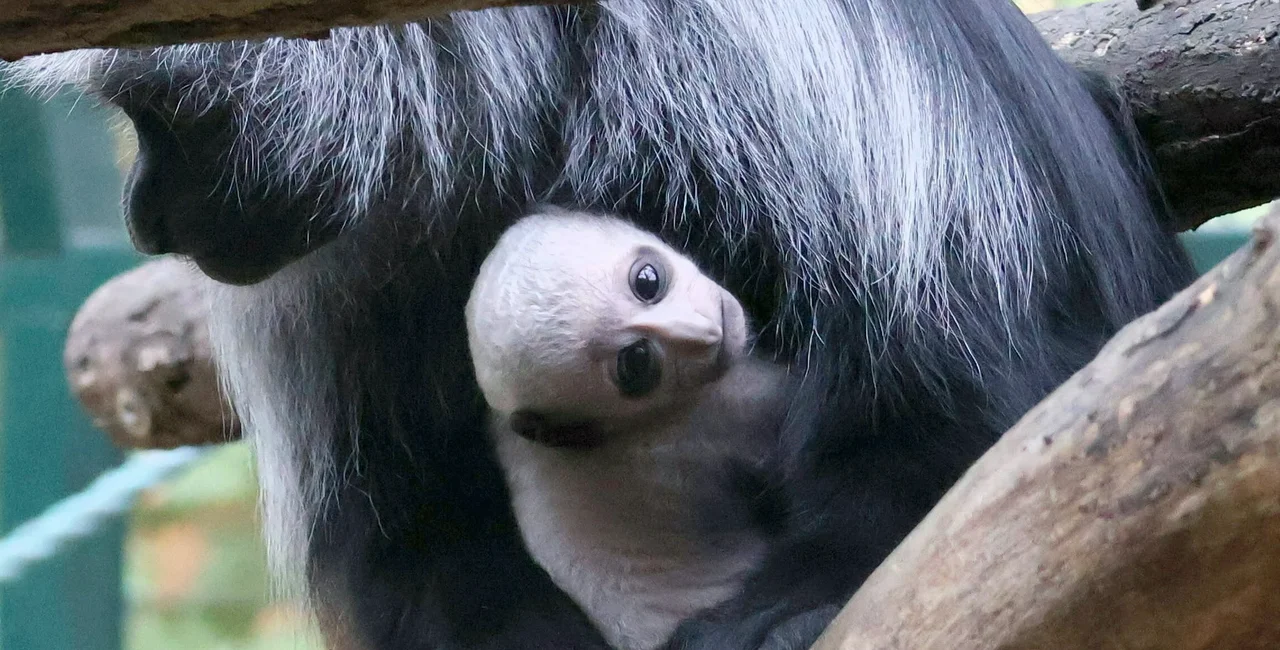
An endangered king colobus monkey has been born at Hodonín Zoo in South Moravia, where visitors can already spot the pale-colored infant alongside its dark-furred parents.
Born Oct. 12, the youngster is nursing and doing well, according to zoo zoologist Lenka Pacíková. Its 2-year-old sister has also taken an interest, occasionally taking the baby from its mother to help care for it.
Visitors can see the family in the primate pavilion’s indoor or outdoor enclosure, depending on the weather. Keepers are allowing the animals to move between the spaces without additional restrictions.
A growing family, with an attentive older sister
The infant’s light coloring makes it particularly easy to distinguish from the adults. Over the next few months, its coat will gradually darken, Pacíková said.
King colobus monkeys, also known as western black-and-white colobus monkeys, develop a striking adult appearance, with predominantly dark fur contrasted by white markings and a long white tail. The species is classified as endangered.
Hodonín Zoo began keeping the species in 2023. The female came from Vienna’s zoo, while the male arrived from Jihlava Zoo.
Their first offspring, born the following year, was the first baby of the species born in Czechia, according to zoo director Jiří Ingr. That youngster is now the older sister helping with the latest arrival.
The family’s breeding history has also included a loss. A second infant born earlier this year died because of a congenital defect, Ingr said. The zoo has not announced the latest baby’s sex or name.
A forest species threatened by hunting
In the wild, king colobus monkeys inhabit West African forests, where they spend much of their lives moving through the trees. Their white tails, which are longer than their bodies, help them balance during movement and long leaps between branches.
They also have a specialized, chambered stomach adapted to digesting a diet that includes leaves and seeds from unripe fruit. Young animals remain with their family group for several years before leaving.
Hunting for meat and the loss of forest habitat are major threats to wild populations. These pressures have contributed to the species’ endangered status.
Hodonín is one of Czechia’s smallest and youngest zoos, having opened as a small animal park in 1977. It welcomed more than 171,000 visitors last year, approximately 6,000 fewer than the year before. Its attendance record remains the more than 195,000 visitors recorded in 2019.