Reading time: 2 minutes

 Summary for: Czechia declines Finnish push for tighter EU visa rules for Russians
Czechia did not endorse a Finnish initiative seeking tighter restrictions on Russian citizens entering the European Union, Foreign Minister Petr Macinka confirmed Monday, arguing that the country already applies similar measures nationally.
Responding to reporting by Seznam Zprávy, Macinka said Czechia had backed an equivalent Estonian initiative in June that attracted broader support. He said the government would maintain its existing restrictions.

The decision drew criticism from opposition leaders, who argued that coordinated European action was needed to address Russian sabotage and other security threats. Czech national restrictions do not prevent Russian travelers from reaching the country through neighboring states.
Minister defends reliance on national restrictions
Finnish Foreign Minister Elina Valtonen asked Czechia and other EU countries to support a proposal restricting visas for nonessential travel, including tourism, according to a letter cited by Seznam Zprávy.
The letter linked visa policy to Russia’s war against Ukraine and threats within the EU, including sabotage and other hybrid operations. Czechia did not submit its support by Finland’s deadline last Wednesday.
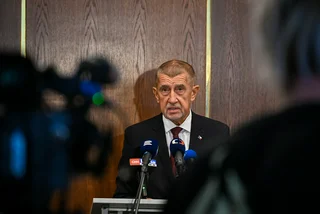
Macinka initially told Seznam Zprávy that most EU countries had not joined the initiative and that a Europe-wide solution was therefore unlikely. Czechia would continue relying on its national rules, he said.
At a press conference following Monday’s Cabinet meeting, he emphasized that Czech practice already aligned with the Finnish initiative’s objectives.
Macinka said only the three Baltic states and Romania had supported Finland’s appeal, while the Estonian initiative endorsed by Czechia in June had secured wider backing. Seznam Zprávy reported that the Finnish proposal’s overall support was not publicly clear.
The dispute concerns whether Czechia should endorse this particular diplomatic initiative. It does not represent an announcement that the government is lifting its national restrictions on Russian travelers.
Officials and opposition argue for joint action
According to Seznam Zprávy, several senior Foreign Ministry officials recommended supporting Finland’s proposal.
In internal assessments cited by the outlet, officials argued that the initiative matched established Czech positions and that joining it would be consistent with Czechia’s comparatively strict approach.
Jan Buben, director of the ministry’s Western European States Department, argued that supporting Finland would be a natural step given Czechia’s calls for less restrictive countries to act.

Opposition ODS leader Martin Kupka and STAN leader Vít Rakušan also criticized the decision.
Rakušan called it a major mistake, saying neither Czechia nor the EU could disregard the growing number of sabotage incidents on European territory. He argued that Czech historical experience strengthened the case for backing Finland.
The practical issue extends beyond national visa decisions. Russian travelers admitted elsewhere can move between countries within the Schengen area, limiting what individual states’ restrictions can achieve on their own.
EU countries issue nearly half a million tourist visas to Russians annually, with Italy and Spain among the leading issuers.
For now, Czechia’s existing restrictions remain in place, while the disagreement centers on how actively Prague should pursue tighter rules across the EU.