 Reading time: 4 minutes

 Summary for: EXPLAINED: Why Czechia’s public media funding dispute has spilled onto the streets
A monthly household payment of CZK 205 has become the focus of a dispute about who holds power over Czech public broadcasting. The government wants to abolish television and radio fees. Opponents fear the replacement would leave the broadcasters financially weaker and more exposed to political pressure.
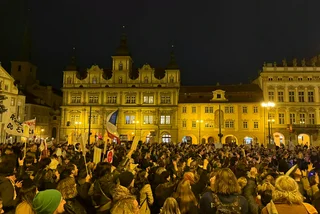
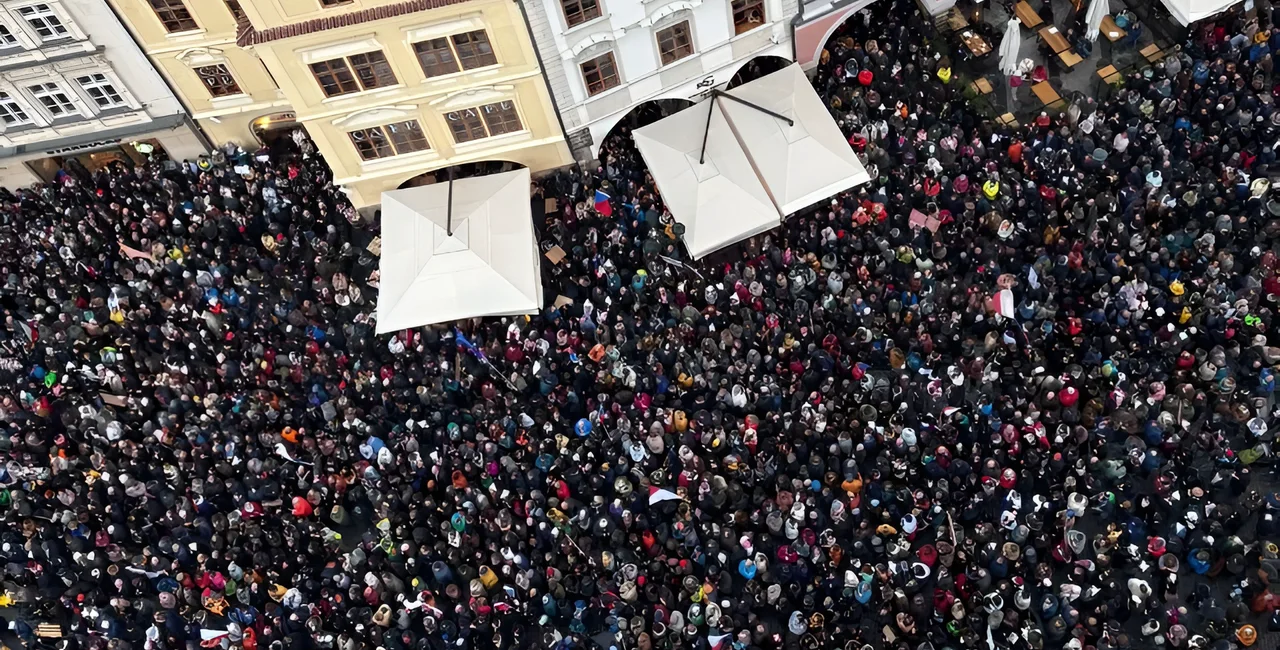
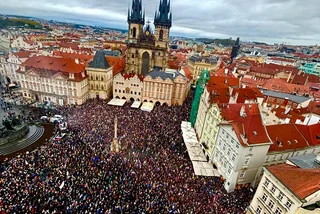
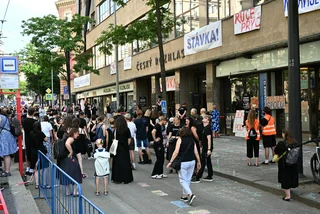
Thousands filled Prague’s Old Town Square and surrounding streets on Oct. 25, following demonstrations in Brno, Liberec and České Budějovice. Their immediate trigger was an overnight parliamentary debate that advanced the funding bill at 4:36 a.m. Saturday. The time itself became a protest chant; even Prague's public transport operator joined in.

But the argument extends beyond how Parliament handled the proposal. It concerns what public-service media should provide, how their independence should be protected, and whether removing a household bill represents a saving or simply shifts the cost elsewhere.
What would change: and why does the government want it?
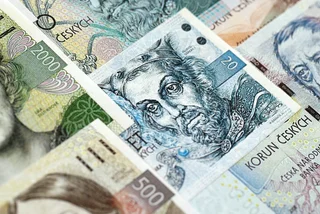
Czech Television (ČT) and Czech Radio (ČRo) currently receive much of their funding through compulsory broadcasting fees. The monthly household charges are CZK 150 for television and CZK 55 for radio: CZK 2,460 annually for households paying both.
These are statutory payments rather than subscriptions. The 2025 reform increased the fees and broadened the definition of receiving equipment to include internet-connected devices such as smartphones and computers. Watching only streaming services does not, by itself, remove a household’s obligation.
The government’s proposal would replace fee income with funding from the state budget. ANO pledged to abolish the fees before last year’s election, and the governing coalition presents the change as delivering that promise while requiring savings from the broadcasters.
Culture Minister Oto Klempíř, representing the Motorists, argues that budget financing is an established European approach. Prime Minister Andrej Babiš rejects claims that the change amounts to taking over public broadcasting.


Babiš said that payments would be guaranteed by law as mandatory spending and linked to inflation. In his account, this would give the broadcasters stability and prevent governments from arbitrarily cutting their money because they disliked the coverage.
However, the proposed starting amounts are lower. The government-approved plan allocated CZK 5.74 billion to ČT and CZK 2.065 billion to ČRo, approximately CZK 1.4 billion less combined than their expected 2026 fee income. That is a reduction of roughly 15 percent.
Abolition would therefore remove the separate household payment, but broadcasting would still require public money. The cost would move into the national budget, alongside competing spending priorities.

Why are critics worried: does state funding mean state control?
The opposition and protesters argue that changing the funding mechanism while reducing revenue would weaken institutions responsible for scrutinizing those in power.
Their concern has two parts: whether the broadcasters would have enough money to fulfill their responsibilities, and whether dependence on state funding would give politicians additional influence over them.

State-budget funding does not automatically make a broadcaster government-controlled. Equally, a license fee alone cannot guarantee editorial independence. The relevant questions include how payments are calculated, how easily politicians can alter them, and what protections exist for editorial decisions.
In an Oct. 23 joint statement, the European Broadcasting Union and other media organizations acknowledged that countries choose their funding models. They nevertheless warned that the Czech proposal threatened financial sustainability and allowed insufficient scrutiny.
The statement cited the European Media Freedom Act’s requirements for funding based on transparent, objective criteria established in advance, with adequate, sustainable and predictable resources that protect editorial independence. The organizations’ criticism is a warning about compliance, rather than a court ruling against the bill.
The backlash also reaches beyond parliamentary parties. Broadcaster employees, unions, university representatives, churches and international journalism organizations have raised objections.
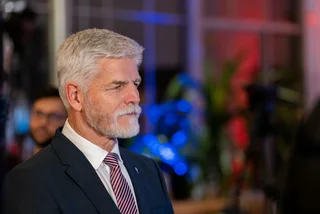
President Petr Pavel has called for calmer discussion and questioned the hurried parliamentary handling. These positions demonstrate the breadth of institutional concern, although demonstrations alone do not establish what the whole population thinks.
What happens next; and should households keep paying?
The bill has passed its first reading, rather than become law. It now faces committee scrutiny and further parliamentary consideration. Opposition parties failed to secure its rejection or return to the government and have pledged to continue resisting it.

Broadcaster employees have announced a strike for Nov. 3, while protest organizers have announced another Prague gathering at Letná on Nov. 15.
For households, the immediate position remains unchanged: existing payment obligations continue. A proposal to abolish fees is not grounds to cancel them. Czech Radio’s payment guidance explicitly distinguishes the legislation being considered from the law currently in force.
As the proposal progresses, the most useful details to watch are the final funding amounts, and what safeguards would prevent financial pressure on editorial work. Those provisions will determine how the government’s promise of stability measures up against the concerns that are bringing Czechs into the streets.