
 Reading time: 5 minutes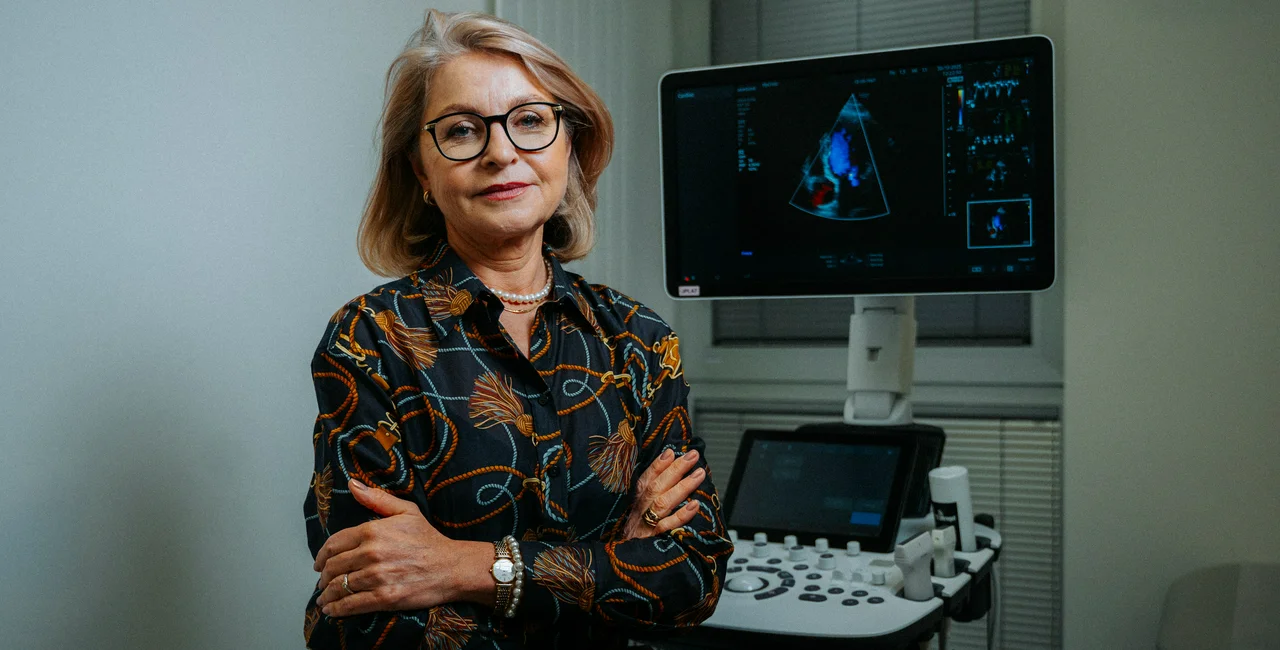

 Summary for: The heart-health checks many expats put off after moving
When moving abroad, finding a place to live, settling into a new job, and learning the local language are usually the main priorities. Healthcare however, is rarely at the top of the list, and preventive check-ups often get pushed aside for months or even years as you try to build your new life.
MUDr. Marcela Schejbalová, lead cardiologist at MY CLINIC in Prague, believes this is exactly when hidden health risks can go unnoticed – especially when it comes to your heart. According to the medical expert, preventive healthcare and rebuilding a clear picture of your medical history should be part of settling into a new life abroad.
“The decision to live and work in another country is a significant life step,” she says. “An expat should therefore be in good condition, because the fact that they live in a country with a different language, often a different culture, and a different pace of life brings increased demands on resilience, physical condition, and mental state.”
We spoke with Dr. Schejbalová to learn more about the state of cardiovascular health in Czechia, and what international residents should keep in mind to keep themselves heart-healthy.
A specialist at the forefront of cardiovascular innovation
Few Czech cardiologists have witnessed the field evolve as closely as Schejbalová. Her experience ranges across 30 years in medicine, with two decades at Na Homolce Hospital (now Motol and Homolka University Hospital in Prague 5), training at the University of Pittsburgh Medical Center, and helping establish Czechia’s first specialized outpatient clinic for chronic heart failure.
Schejbalová has increasingly shifted her focus toward prevention. Her work today at MY CLINIC centers not only on treating cardiovascular disease, but on identifying hidden risk factors before symptoms appear.

Her focus comes at a critical time. Globally, heart disease and stroke remain the leading causes of death, accounting for nearly 20 million deaths each year. Czechia has long ranked among the European countries facing elevated cardiovascular risk, Schejbalová points out, making prevention an important part of today’s healthcare conversation.
Many of the conditions linked to heart attack and stroke, from inherited cholesterol disorders and high blood pressure to poor sleep, chronic stress, and early plaque buildup in the arteries, can develop silently for years before a person feels unwell.
Why prevention matters for expats
Moving aboard can bring significant lifestyle changes. Stress levels may increase, routines shift, exercise habits change, and access to familiar healthcare providers disappears.
According to Schejbalová, many people postpone preventive care precisely when it may be most valuable. Some have not had a comprehensive health assessment in years, while others arrive with fragmented medical histories that make it difficult to identify long-term trends and build a complete picture of a patient’s health.
That challenge has shaped her current work at the private Prague 6 clinic.
“My current goal is to build at MY CLINIC a workplace connecting colleagues who are general practitioners, internists, endocrinologists, and others into a comprehensive whole focused on targeted prevention,” she says.






This coordinated approach, part of the clinic’s My Vitality program, can be particularly valuable for expats. Preventive assessments may include a consultation, physical examination, laboratory testing, blood pressure measurement, ECG, and specialist referrals when needed.
Physicians across multiple specialties work together, allowing patients to complete several examinations during a comprehensive one-day evaluation designed to establish a detailed health baseline.
The risk factors many people miss
Prevention is not simply about checking cholesterol levels or measuring blood pressure. It’s about asking better questions, and that starts with a detailed family history, a point, says Schejbalová, that commonly gets glossed over by patients and doctors.
One of the most important clues to future cardiovascular health is often hiding in plain sight. A history of heart attacks, strokes, sudden cardiac death, or inherited cholesterol disorders among close relatives can provide important clues about a person’s future cardiovascular risk. Yet many patients either do not know these details or are never asked about them in depth.
Genetics, however, is only part of the picture. Schejbalová points to a range of factors that are frequently underestimated during routine medical visits, including sleep quality, physical activity, smoking, alcohol consumption, and overall metabolic health. Understanding how often a patient exercises, how intensely they train, and whether they consistently get restorative sleep can reveal risks that a standard check-up may miss.

Mental well-being is another important consideration.
“A somewhat newer element should be an interview about the client’s mental state, sub-depressive mood, and the occurrence of anxiety disorders,” Schejbalová adds.
For expats adapting to a new country, those conversations can be particularly important. Major life changes, increased stress, and the challenges of navigating a different culture and healthcare system can all affect long-term cardiovascular health.
Looking beyond a standard check-up
Lifestyle habits and family history are important pieces of the puzzle, but they do not always tell the whole story.
Modern preventive cardiology increasingly relies on more advanced screening tools that can identify risks a routine check-up may miss, according to Schejbalová. These tests can provide additional information about inherited cardiovascular risk, hidden inflammation in the body, the number of cholesterol-carrying particles in the bloodstream, and even early signs of kidney damage.
Among these markers, one has become particularly important. Lipoprotein(a), commonly referred to as Lp(a), is a genetically inherited risk factor linked to heart attack, stroke, and other cardiovascular diseases. Unlike many other risk factors, Lp(a) levels are largely determined by genetics and are not significantly reduced through diet or exercise.

That means a person may eat well, exercise regularly, maintain a healthy weight, and still carry elevated cardiovascular risk because of high Lp(a). The risk becomes even more significant when combined with a family history of heart disease.
Other advanced markers, including apolipoprotein B (apoB), C-reactive protein (CRP), high-sensitivity CRP (hsCRP), and microalbuminuria, can help doctors build a more complete picture of a patient's cardiovascular and metabolic health.
Beyond laboratory tests, doctors at MY CLINIC may also recommend a carotid ultrasound, which has become an increasingly valuable preventive screening tool. This painless noninvasive examination allows doctors to identify early plaque buildup in the carotid arteries, which can develop silently for years before symptoms appear.
“An atherosclerotic plaque can really develop without specific difficulties and symptoms,” Schejbalová says.
For patients with elevated risk factors, detecting those changes early can provide an opportunity to intervene long before a heart attack or stroke occurs.
Building a health baseline in Czechia
Regardless if you are planning to move to Czechia for a few months, years or indefinitely, prioritizing your healthcare should be at the top of your check list.
Schejbalová recommends bringing previous medical reports, laboratory results, and records of past examinations to appointments whenever possible. Patients taking medication should also know the active ingredients and dosages, since drug names can vary from country to country. Photos of medication boxes can be particularly helpful, Schejbalová says.
Her advice for foreigners settling into life here is simple: Gather your records, understand your family history, and establish a clear health baseline before symptoms appear. By the time heart disease announces itself, the warning signs may have been there for years.