

Why Czechia remembers victims of the communist regime on June 27

June 27 is the Day of Remembrance of the Victims of the Communist Regime in Czechia, honoring political prisoners and those executed under communist rule.

Expats.cz Staff

Written by Expats.cz Staff Published on 27.06.2026 14:54:00 (updated on 27.06.2026) Reading time: 3 minutes

Every year on June 27, Czechia pauses to remember the victims of its communist past, a date that carries deep historical weight for the country.

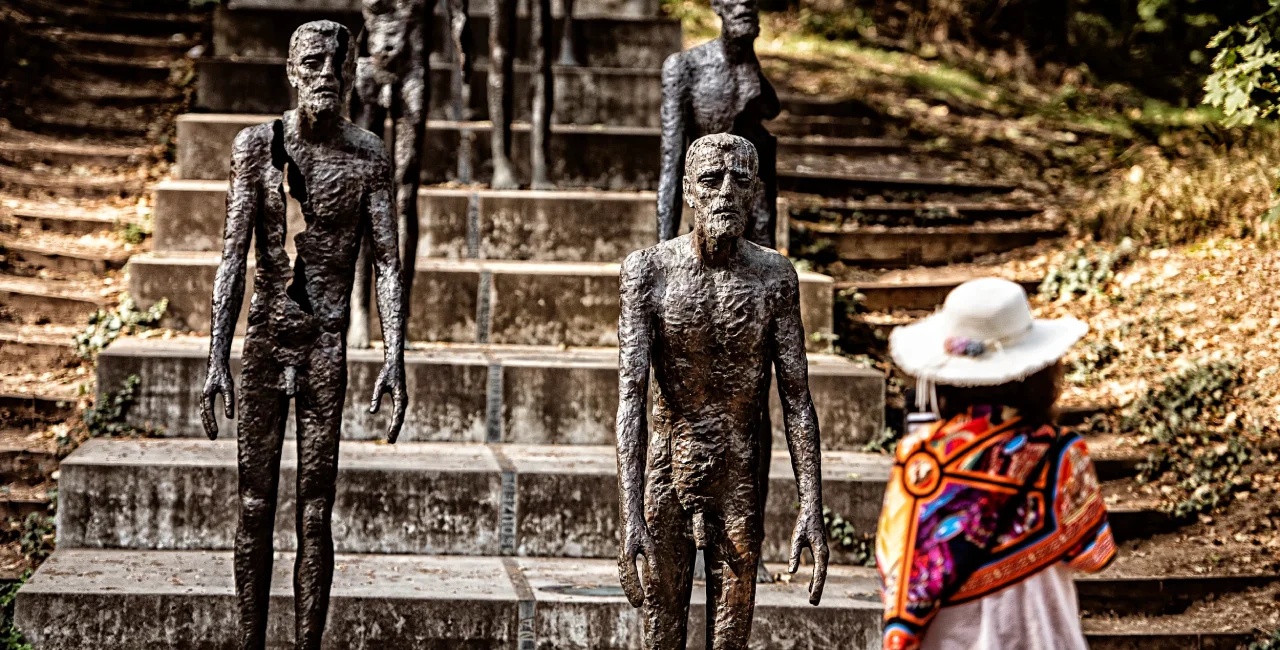
The Day of Remembrance of the Victims of the Communist Regime honors those persecuted, imprisoned, or killed under communist rule between 1948 and 1989, with ceremonies held at memorials across Prague, including the prominent monument at the foot of Petřín Hill.

For Czech society today, the day serves both as a national remembrance and a reminder of the broader human cost of totalitarian systems.

A legacy of persecution across decades

Between 1948 and 1989, the communist regime in Czechoslovakia convicted more than 200,000 people for political reasons, according to historical estimates. Of those, 248 were executed, around 4,500 died in prisons, and 327 were killed while attempting to cross the border. Nearly 171,000 people emigrated, many under pressure or in exile.

The repression extended across all levels of society, targeting political opponents, intellectuals, religious figures, and ordinary citizens accused of anti-state activity. Thousands were subjected to long prison sentences, forced labour, or surveillance by the secret police.

While Czechoslovakia is often compared with other communist states in Central and Eastern Europe, historians note that its system of political trials and repression was particularly intense in the early 1950s, shortly after the 1948 communist coup.

But victims of communism extend far beyond Czechoslovakia. Estimates cited by researchers and memorial institutions suggest that tens of millions of people have died under various communist governments worldwide, including in the Soviet Union, China, Cambodia, and North Korea, although exact figures remain debated among historians.

Globally, Nov. 7 is designated as the Day of Remembrance for the Victims of Communism; it marks the anniversary of the 1917 Bolshevik Revolution, following which the first communist regime was formally established. But in Czechia, the June 27 date has a special significance.

Milada Horáková and the June 27 executions

The significance of June 27 in Czechia is rooted in the execution of Milada Horáková, a democratic politician and former resistance member, who became the most prominent victim of a politically staged show trial in postwar Czechoslovakia.

Horáková was arrested in 1949 and accused of espionage and treason in a trial widely regarded as orchestrated by the communist authorities.

Despite international appeals for clemency, including from figures such as Albert Einstein and Eleanor Roosevelt, she was sentenced to death along with Oldřich Pecl, Jan Buchal, and Záviš Kalandra. All four were executed by hanging on June 27, 1950, at Pankrác Prison in Prague.

The trial became a defining example of political repression in the early communist era and remains one of the most studied cases of judicial manipulation in Czech history.

Memorial in Prague and national remembrance

The central commemorative site in Prague is the Memorial to the Victims of Communism, located on the eastern slope of Petřín Hill. Created by sculptor Olbram Zoubek in collaboration with architects Zdeněk Hölzel and Jan Kerel, the monument features a descending series of human figures gradually deteriorating as they ascend the staircase.

The artwork symbolizes the physical and psychological destruction inflicted by the regime, while also representing resilience. On the lower section of the memorial, inscriptions list the estimated numbers of those convicted, executed, imprisoned, or forced into exile.

Since its unveiling in 2002, the memorial has become a focal point for annual remembrance ceremonies, with political leaders, historians, and the public gathering each year on June 27.

For many in Czechia, the date serves not only as a historical reference point but also as a broader reflection on democracy, freedom, and the long-lasting consequences of authoritarian rule that remains relevant to this date.

Did you like this article?

Want to see more from us? Select Expats.cz as a preferred source on Google.