



 Reading time: 2 minutes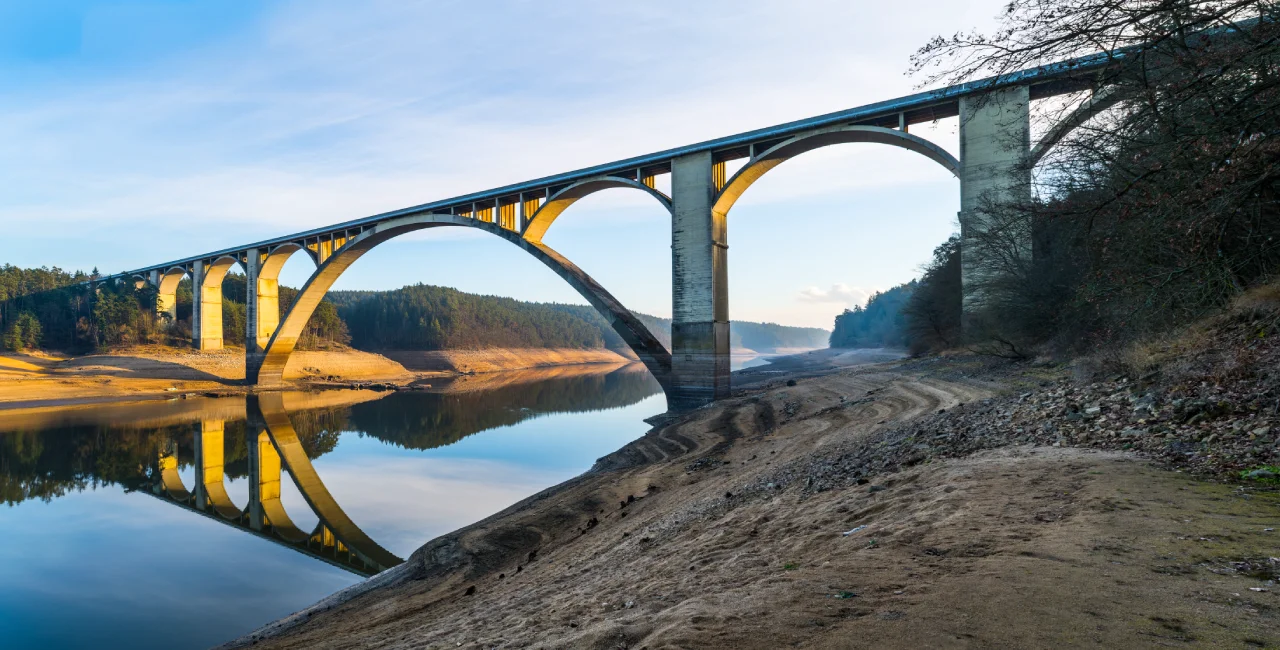

 Summary for: Czechia faces worst drought in decades as water levels hit 44-year low
Czechia is facing an exceptional shortage of water this summer, with rivers and reservoirs across the country recording some of their lowest levels in decades. The Orlík Reservoir, the country’s largest, is receiving less water than at any point since 1982.
The situation is visible across the country, from the Vltava and Otava to the Labe, Sázava, Morava and other waterways. Some smaller rivers and streams have dried up completely, while cities including Strakonice have introduced restrictions on taking water from rivers or filling swimming pools.

At Orlík, the water level is now about 10 meters below its normal level. If dry conditions continue, the reservoir could fall by another meter each week through the end of August, according to Vltava River basin authority Povodí Vltavy.
Orlík Reservoir reveals scale of drought
The reservoir entered 2026 with its storage capacity 94 percent full, but inflows have remained below the minimum amount being released downstream since April 10. Water managers have since released about 180 million cubic meters from the Vltava cascade, gradually lowering the level at Orlík.
Orlík and the nearby Slapy Reservoir are currently about 60 percent full combined. Water managers say the current conditions qualify as an extraordinary event, even though the current hydrological year has not yet ended.
The low water level is also disrupting recreation and tourism. The reservoir’s boat lift, which was renovated and extended at a cost of more than CZK 122 million in 2022, has been out of service since July 9 because its tracks no longer reach the water.

Boat operators are also reporting major losses. Martin Zoch, managing director of cruise company Quarter, told iDnes.cz that the company has had to abandon its route toward the Orlík dam and estimates that passenger numbers have fallen by about 65 percent.
The low level is not being caused by electricity generation at the Orlík hydroelectric plant, according to Povodí Vltavy. The authority said the plant is being operated only to maintain the required minimum downstream flow of 40 cubic meters per second.
Experts warn drought could become record-setting
Hydrometeorologist Tomáš Vlasák described the current water deficit as the most severe in at least 40 years, with many monitoring stations recording their lowest flows in three decades.
Significant rainfall would be needed to reverse the trend. Vlasák said rainfall totals of 50 to 100 millimeters could improve conditions, while continued high temperatures and evaporation would require more than 150 millimeters of August rainfall, which is considered highly unlikely, to make a substantial difference.
Czechia is experiencing one of its most severe droughts in decades, with water levels in rivers and reservoirs falling sharply. How concerned are you about the current water shortage?
The drought is not necessarily guaranteed to continue through the end of the year. Meteorologists will continue monitoring conditions through October, and a major rainfall event could rapidly change reservoir levels.
In August 2002, for example, the Orlík Reservoir received as much water in just nine days as it had received during the previous nine months. Of course, that also led to torrential flooding across the country.

For now, however, the combination of low rainfall, high temperatures and increased evaporation is leaving much of Czechia’s water network under significant pressure.