 Reading time: 3 minutes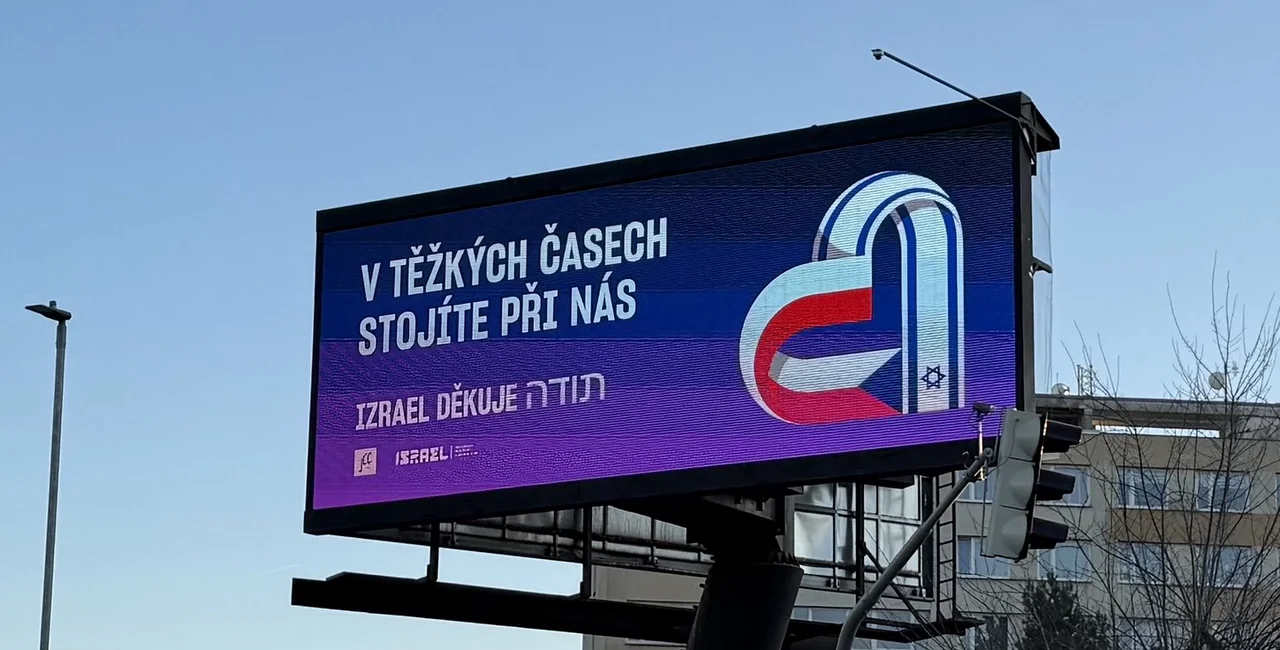

 Summary for: Why does Czechia remain so closely aligned with Israel?
Israel's rejection of a US-backed 15-point plan for Gaza puts renewed attention on the country's close relationship with Czechia, one of its strongest allies in Europe.
Israeli Prime Minister Benjamin Netanyahu said Sunday that Israel rejects the plan and will not withdraw its forces from Gaza until Hamas is “genuinely” disarmed.
The plan, backed by US President Donald Trump, calls for the disarmament of Hamas, an Israeli military withdrawal from Gaza and the reconstruction of the territory. Hamas has said it is prepared to engage with the plan but has linked the handover of its heavy weapons to an Israeli withdrawal.
Czechia remains one of Israel's closest European partners
The Czech-Israeli relationship dates back to 1947, when Czechoslovakia supported the creation of Israel at the United Nations and supplied the new state with military equipment and weapons during its early struggles for independence.
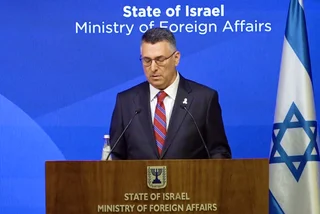
Czechia's support for Israel has also remained visible in its current foreign policy. Foreign Minister Petr Macinka has recently reiterated Prague's opposition to further EU trade sanctions against Israel, while Czech officials have continued high-level contacts with Israeli leaders.
Excellent meeting in Prague with new Czech FM @petr_macinka. Relations with the Czech Republic are extraordinary and important. I came to Prague to establish the ties with the new government.
— Gideon Sa'ar | גדעון סער (@gidonsaar) January 20, 2026
Minister Macinka signed during our meeting on the appointment of the Special Envoy for… pic.twitter.com/ixEfMuHr7r
But history is only part of the explanation for Czech alignment toward Israel, according to Bronislav Ostranský, an expert at the Czech Academy of Sciences' Oriental Institute.
Czechs also tend to view Israel as part of the Western world, while Palestinians are more often perceived as belonging to a different, Eastern world, Ostranský told ČTK.
The distinction is significant in how the conflict is understood in Czechia, he said, although it is not the only factor shaping public opinion.
Media coverage reduces conflict to 'Slavia vs. Sparta'
Ostranský also criticized Czech media coverage of the war for reducing a complex conflict to a choice between two opposing sides.
“Commentators in various newspapers have reduced the conflict as if it were a football match. And you’re either rooting for Sparta or Slavia,” Ostranský said.
Media coverage can reinforce existing public sympathies, he said, by giving people the clear-cut positions they want to hear. He compared this with the way the media handled the migration crisis a decade ago.
A Czech idea of the “Orient”
Ostranský said the distinction between the Western and Eastern worlds has deep historical roots. The so-called Orient was long surrounded by stereotypes, partly because the region was difficult for Europeans to access. Travel to the East was once largely limited to pilgrims, missionaries and diplomats, with modern tourism emerging in the 19th century.
Czech writer and poet Jan Neruda was among the early figures in Bohemia to take an interest in travel to the East, Ostranský said.
The concept of the Orient has also always been relative, he noted. What counted as “the East” depended on where the observer stood.
“The Orient began where ‘ours’ ended,” Ostranský said. “Our world, our values and our civilisation, and where ‘theirs’ began.”
He said Western and Eastern societies have historically been presented as opposites, with the West associated with rationality and democracy and the East with fanaticism, superstition and authoritarianism.
Some of these stereotypes persist today, Ostranský argued, pointing to similarities between a 17th-century Czech religious polemic against Islam and rhetoric used by Czech anti-Islamic movements in more recent years.
A relationship that remains complicated
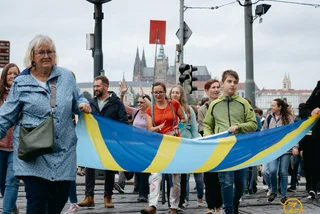
Czech public opinion on Israel is not uniform, however. Recent polling has shown significant divisions over Israel's military campaign in Gaza, even as Czechia remains among Europe's more sympathetic countries toward Israel.
For Czechia, its longstanding relationship with Israel means developments in the Gaza war continue to carry particular political and public significance.