



 Reading time: 4 minutes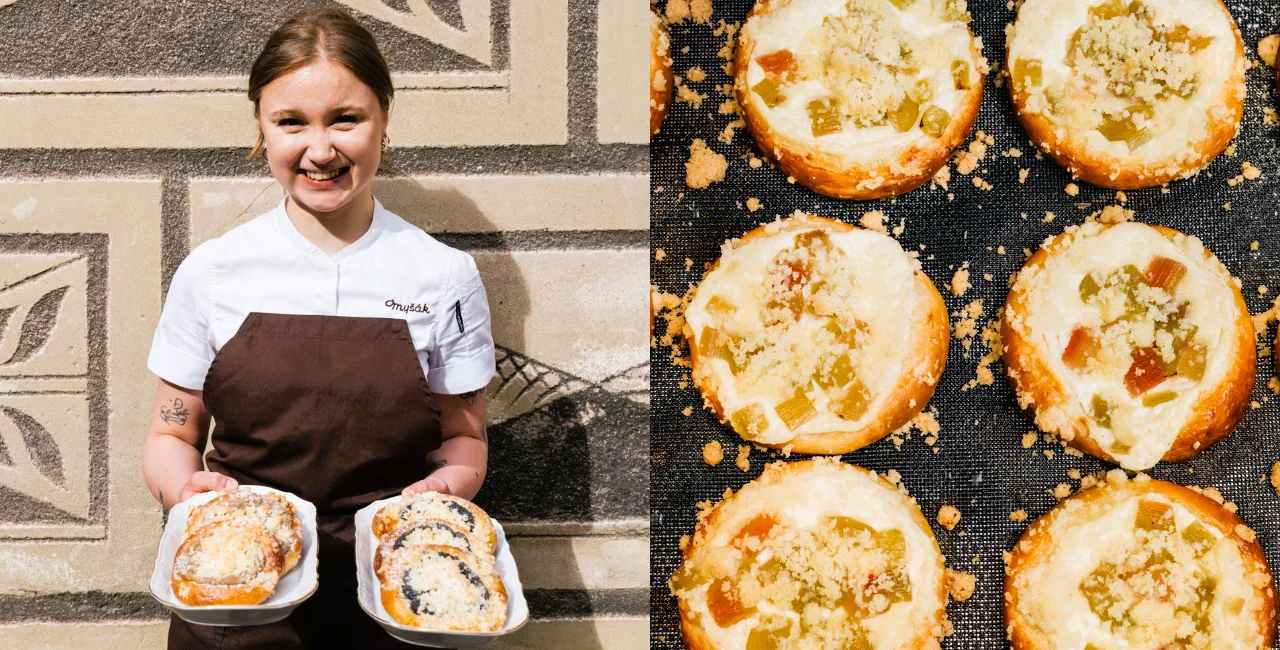

 Summary for: Skip the cinnamon chimney: This Czech pastry is worth trying instead
One sign you’ve moved beyond Prague’s most tourist-heavy streets is that trdelník begins giving way to trays of more traditional Czech pastries. Despite its frequent billing as an Old Bohemian specialty, the chimney cake’s roots are thought to lie in Transylvania, with the recipe spreading through Hungary and Slovakia before reaching the Czech lands.
Trdelník may dominate the tourist center, but locals understand that kolache offer a far more revealing taste of Czech baking tradition. The circular treat may look simple, but getting the dough, filling, and proportions right takes skill.
“People eat with their eyes,” says Anežka Janurová, pastry chef at Myšák Pražský Hrad. “To me, a good kolache should have a beautiful round shape with visible edges.” Then, when you bite into it, “it should be light, soft, and tender. Most importantly, it should never feel dry or have too little filling.”
Behind that familiar shape lies a pastry with deep ceremonial roots, striking regional variations, and a baking process that can take an entire day. Here is how kolache became a Czech staple, and what separates an exceptional one from the rest.
From celebration pastry to Czech bakery icon
These round, yeasted pastries take their name from the Czech word for wheel, kolo. Their modern form emerged gradually from Central European baking traditions, becoming closely associated with Czech celebrations by the 18th and 19th centuries.
At the time, kolache were largely reserved for special occasions, explains Janurová, who oversees the traditional pastry selection at Myšák’s Prague Castle outpost.
“Kolache used to be considered quite a luxurious dessert,” she elaborates. “The ingredients to make them were not cheap, which is why they were mainly associated with celebrations and special occasions, such as carnival feasts, maypole festivities, and weddings.”
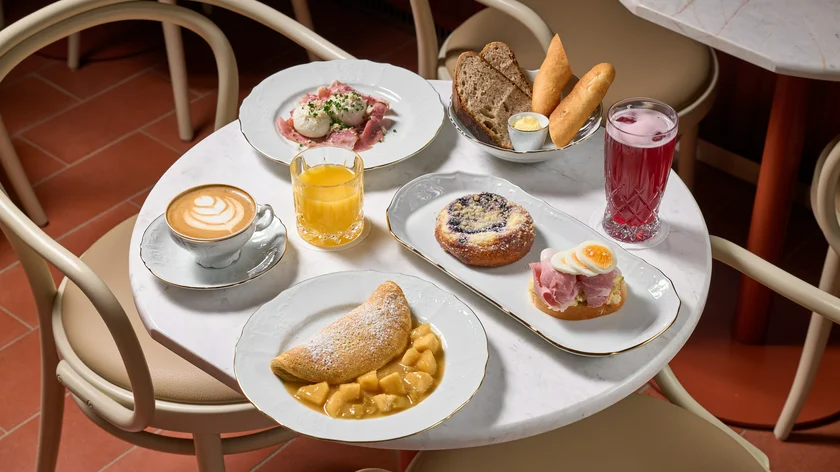
Traditional flavors include poppy seed, prune or plum jam, and tvaroh, but at bakeries throughout Prague, it’s possible to find kolache topped and stuffed with any number of sweet and savory ingredients: berries, rhubarb, almonds, chocolate, cinnamon, caramel, gorgonzola, brie, beetroot, squash, pink peppercorn, and more.
“When it comes to fruit-filled kolache, I believe in following the seasons and using whichever fruits are naturally at their best,” the master baker advises. “I’ve come across apricot kolache flavored with elderflower, as well as versions made with different kinds of preserved fruit, or fruit infused in black tea syrup.”
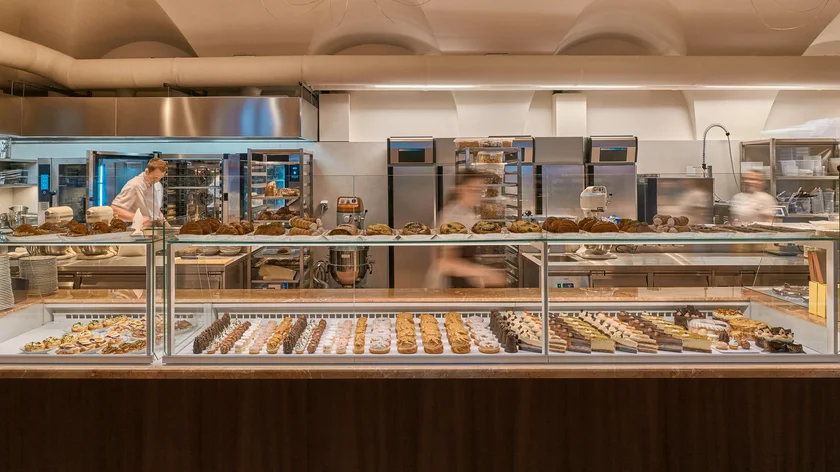
Today, you can find kolache on just about every Prague street outside the tourist areas, even in chain supermarkets like Albert, Tesco, and Lidl. Still, supermarket versions rarely show the pastry at its best. For the real deal and greater variety, seek out bakeries that prepare their kolache fresh throughout the day.
Different tastes across Czechia, and around the world
“Kolache definitely varies from region to region, whether in size, shape, or decoration,” explains Janurová. “But what they all have in common is delicate yeasted dough.”
In southwest Bohemia, foodies will discover Chodské koláče. Here, plum and poppy filling is piped on as geometric shapes, floral motifs, and lace patterns atop a canvas of sweet tvaroh.
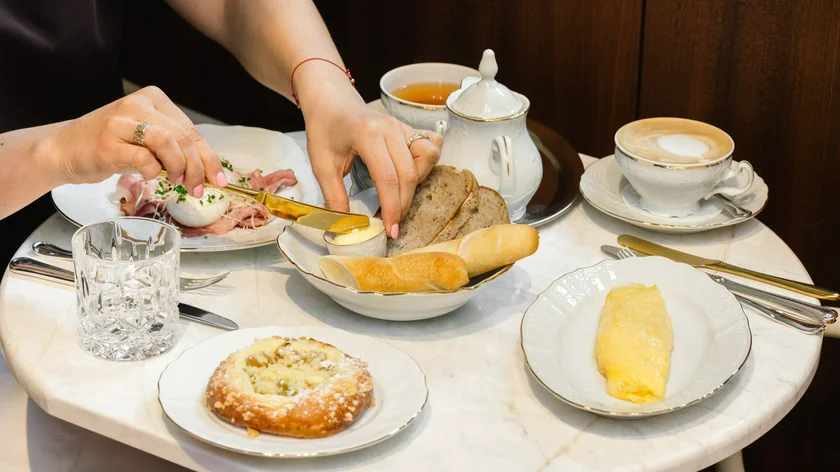
In Moravia, kolache often double up on fillings, with tvaroh baked inside the dough to pair with whatever’s on top. In Moravian Slovakia, kolache shrink to bite-sized versions called Slovácký koláček.
Head north from there into Moravian Wallachia, and kolache takes on a pizza-like appearance to become frgál, a large, round pie sliced into triangles. So distinct is this version of kolache that it received Protected Geographical Indication status from the EU in 2013.
Czech immigrants carried the pastry to the United States, where it evolved into distinctly American versions, particularly in the Texas Czech Belt. Here, find the pastry packed with peach, pineapple, pecan, key lime, cream cheese, jalapeños, smoked sausage, chorizo, bacon, brisket, scrambled eggs, and even peanut butter and jelly. Savory Texas kolache, commonly called a klobasnek or klobásník, tends to encase ingredients like a pig in a blanket or bun, making them somewhat unrecognizable to Czech eyes.
How to recognize a properly made kolache
What makes one kolache better than another, however, comes as much down to preparation as ingredients. Proofing the dough is particularly important to get the right texture, which should be “soft and light” according to Janurová.
Nor should good kolache be rushed, she emphasizes. At Myšák, the process takes about 24 hours from start to finish. It includes preparing and proofing the dough, dividing it into portions, and shaping it into balls. That’s followed by a second proof overnight in a cool environment and a third the next morning in a warm place.
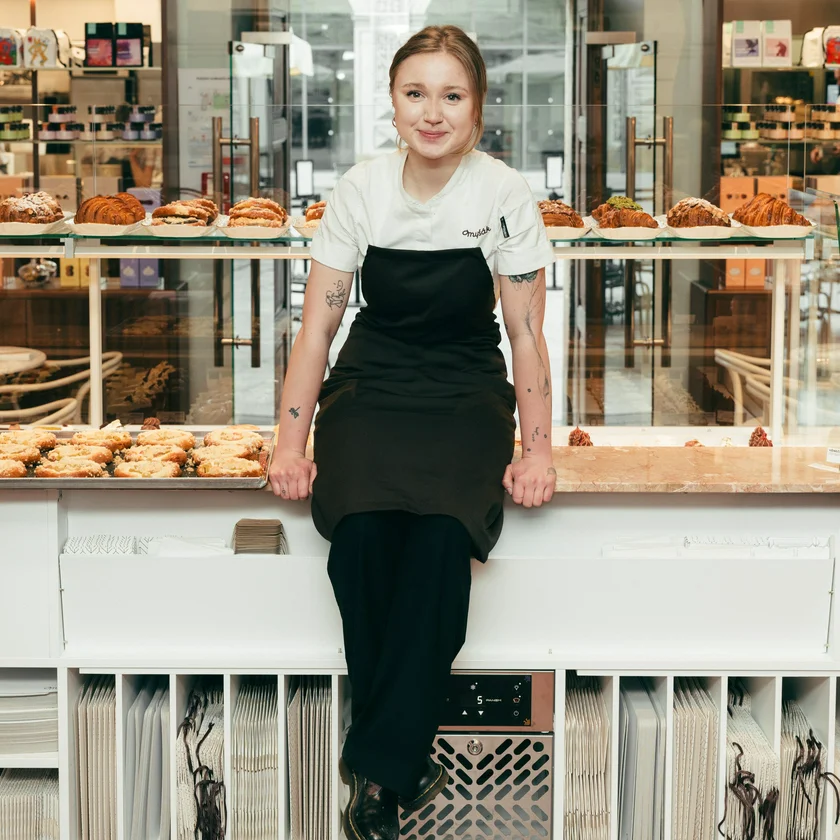
Only then is the dough ready to press, fill, and bake.
In the oven, temperature is key, stresses Janurová. “There’s a big difference between baking kolache in a home, commercial or wood-fired oven,” she states. “In general, the ideal baking temperature is usually between 170–180 degrees Celsius.”
Timing can make or break a kolache experience, too. “A kolache is, of course, at its very best when it's freshly baked and still slightly warm,” the master baker expresses. It’s one reason some bakeries in Prague, like Kus koláče, advertise specific baking times and are only open at what may seem like odd hours (but peak kolache freshness).
At Myšák, Janurová takes the tried-and-true approach, informed by centuries of baking history and years of baking experience. “We strive to stay true to tradition,” she emphasizes.
After visiting Prague Castle, make sure to grab a traditional pressed kolache, with poppy seed, walnut, or tvaroh fillings, paired with either seasonal fruit or plum preserves. It is a fitting end to a pastry trail that stretches from historic celebrations to supermarket shelves, regional specialties, and modern bakery counters.