 Reading time: 4 minutes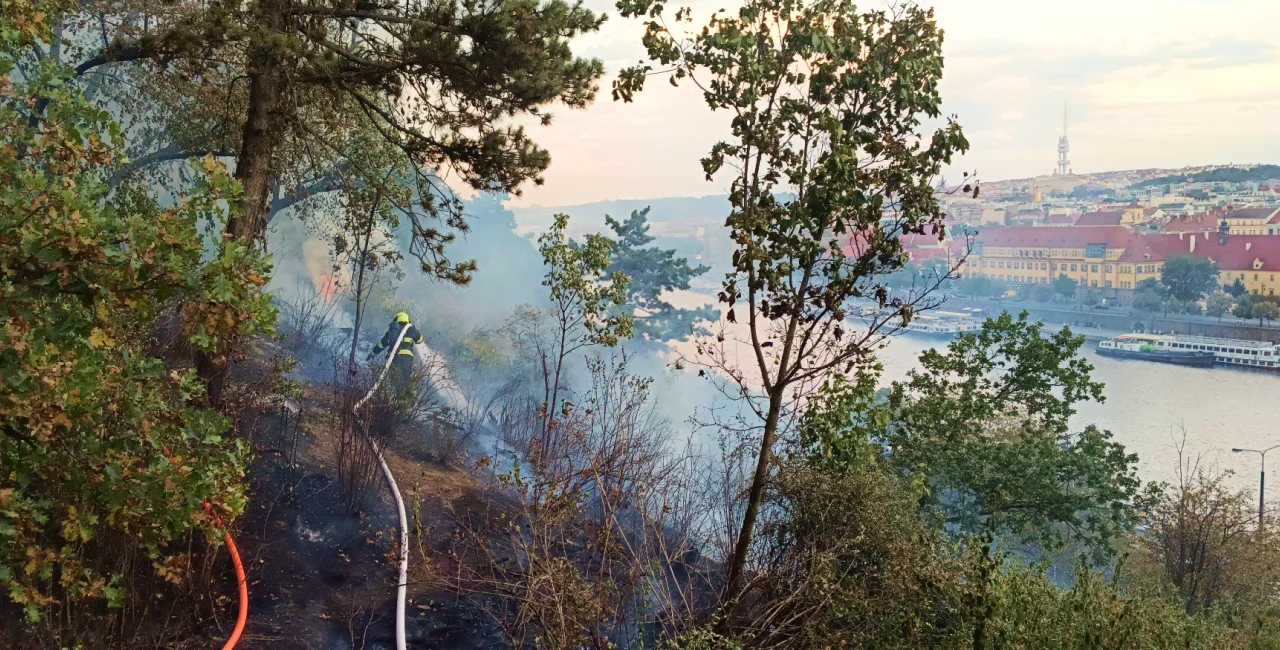

 Summary for: From fire in Letná to hunger stones: Czechia’s drought is intensifying. When will it end?
A vegetation fire broke out on the slope of Prague’s Letná Gardens Monday evening, spreading across an area of roughly 6 by 50 meters and prompting firefighters from several stations to respond. Trams on lines 12 and 15 were temporarily diverted while crews worked.
Firefighters extinguished the blaze shortly before 9 p.m. and sprayed surrounding vegetation as a precaution.

The fire in Prague's second-largest park came as much of Czechia is experiencing an increasingly serious water shortage. Rivers and streams are running exceptionally low, groundwater levels have fallen, and a hydrological drought warning is in effect across most of the country.
According to the Czech Hydrometeorological Institute (ČHMÚ), almost all monitored watercourses are below their average flow for this time of year. Many are at extremely low levels, while some smaller streams have dried up completely.
AktuálnÄ› zasahujà jednotky ze stanic HoleÅ¡ovice, Sokolská, PetÅ™iny a hasiÄský útvar Pražského hradu u požáru porostu v Letenských sadech. Zasažená plocha je cca 6x50m. Jsou nasazeny 4C proudy. pic.twitter.com/ghToLcW8JK
— HasiÄi Praha 🚒 (@HasiciPraha) August 10, 2026
Rivers are reaching historic lows
The extent of the drought is particularly visible in Czechia’s rivers.
The Elbe is running at one of its lowest levels in the history of measurements, while the Morava at Olomouc has reached its lowest early-August flow on record, below the level recorded during the severe drought of 1921.
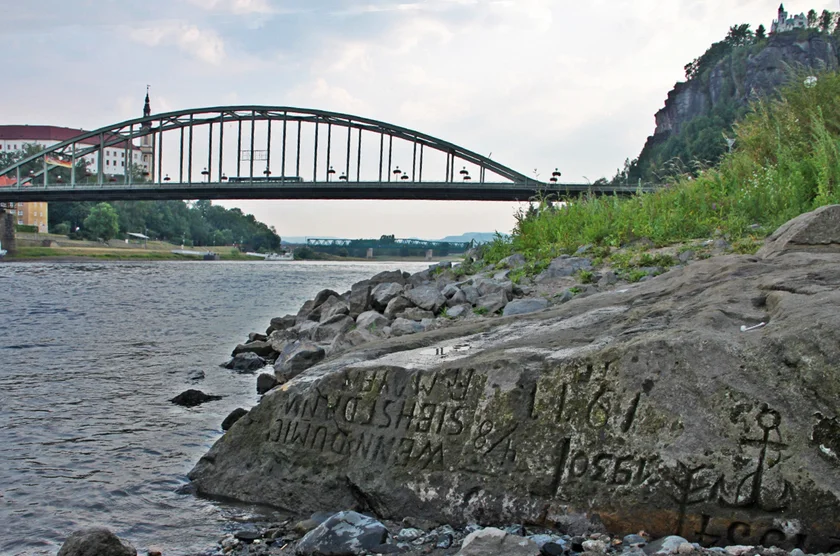

Low water levels have also exposed the “hunger stones” found along the Elbe. The stones were historically used to mark exceptionally low water and warn of the difficult conditions that could follow.
The best-known example, near Děčín, carries a warning traditionally translated as “When you see me, weep.”
Orlík is nearly 10 meters below normal
The situation is also visible at Czechia’s reservoirs.
At Orlík, the country’s largest reservoir, the water level is currently about 10 meters below normal. Inflows have remained below the minimum amount being released downstream since April 10, according to Povodí Vltavy.
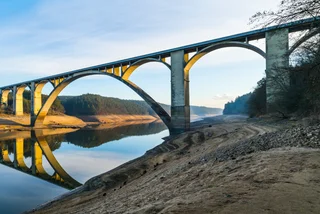
The reservoir is receiving less water than at any point since 1982.





The water shortage is also affecting recreation. The boat lift at Orlík, renovated and extended at a cost of more than CZK 122 million in 2022, has been out of service since July because its tracks no longer reach the water.
So when will the drought end?
The immediate answer depends on rainfall, and there is currently little of it in the forecast.
Hydrometeorologist Tomáš Vlasák described the current water deficit as the most severe in at least 40 years, according to reporting cited in the Aug. 8 drought update.
He said 50 to 100 millimeters of rain could improve conditions, while more than 150 millimeters could be needed if high temperatures and evaporation continue.
current restrictions
Fire: Open fires, smoking, and fireworks remain restricted in Prague. The rules apply to parks, forests, forest parks, and other high-risk areas.
Water: Across Czechia, authorities have also introduced local restrictions on taking water from rivers and other sources as flows fall.

More significant rainfall could arrive later in August, but forecasts remain uncertain.
And a single heavy storm would not necessarily end the drought. After months of low rainfall and depleted water reserves, sustained precipitation is needed to replenish rivers, soil and groundwater.
Czechia has seen how quickly conditions can change. In August 2002, Orlík received as much water in nine days as it had received during the previous nine months, contributing to the catastrophic flooding that followed.
Czechia's drought by the numbers
10 meters
How far the water level at Orlík is currently below normal.
44 years
The period since Orlík last experienced similarly low inflows.
50–100 mm
The amount of rainfall meteorologists say could improve current conditions.
150+ mm
Potential rainfall needed to substantially improve the situation if high temperatures continue.
1921
The previous early-August flow record for the Morava at Olomouc, now surpassed by the current drought.
2040
The year used in the JRC's projections for increased desertification risk in parts of Czechia.
Is this becoming a longer-term problem?
The current drought is also drawing attention to longer-term changes in Czechia's landscape.

A new study from the European Commission's Joint Research Centre (JRC) examines the risk of land degradation and desertification across Europe. Its projections show increased risk in parts of Czechia by 2040, particularly in southern Moravia and the Polabí region.
The term desertification does not mean that Czechia is expected to turn into a desert. In the JRC's context, it refers to the degradation of land in areas affected by increasing dryness, reducing its ability to support vegetation and agriculture.

The study estimates that around 1 million square kilometers of EU land could be at risk of desertification by 2040, more than 12 times the area of Czechia.
But Czechia is not facing the drought alone. Much of Europe is experiencing unusually dry conditions this summer, with low rainfall and high temperatures pushing rivers and reservoirs to exceptionally low levels.
A European problem
The Danube, Rhine and Vistula have also recorded unusually low water levels, while drought conditions are affecting agriculture, transport and water supplies across the continent.

For Czechia, the immediate outlook will depend largely on how much rain arrives in the second half of August. With rivers at exceptionally low levels, groundwater reserves under pressure and another period of high temperatures approaching, sustained rainfall will be needed to begin reversing the trend.
The broader picture, however, extends far beyond Czechia. Across Europe, hotter temperatures and prolonged periods of low rainfall are putting increasing pressure on rivers, reservoirs and the land itself.