

 Reading time: 2 minutes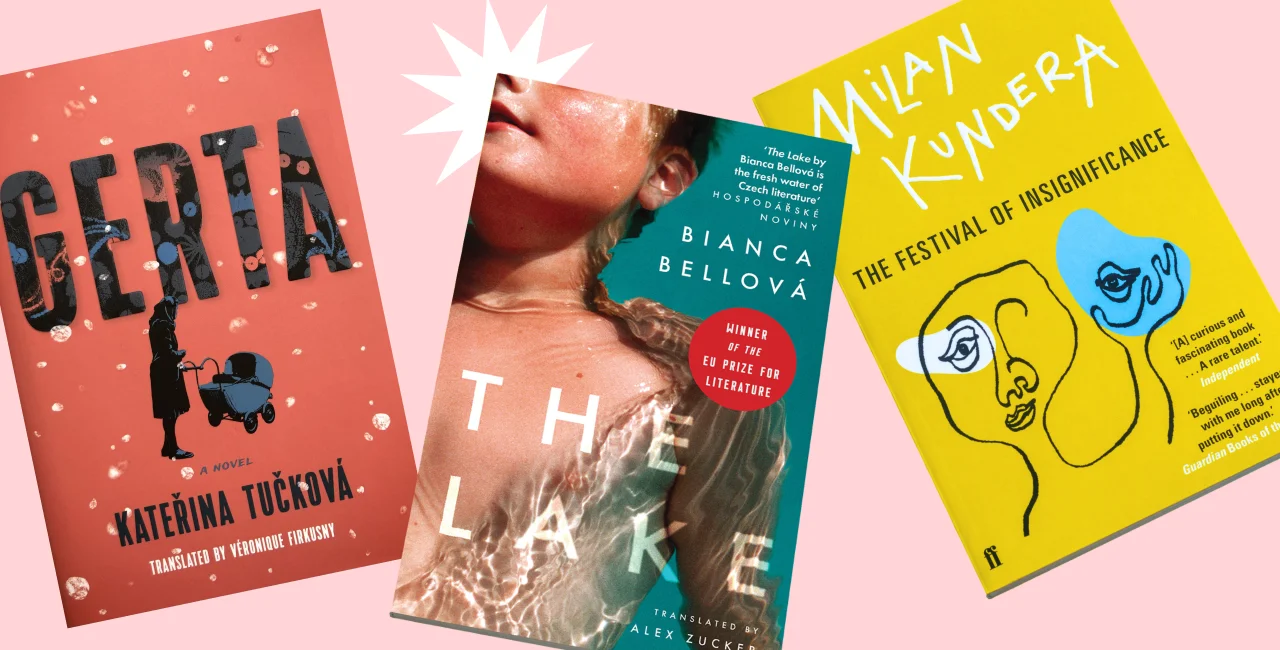

 Summary for: Dark humor and irony: Why Czech literature captivates readers worldwide
The distinct combination of dark humor, irony, and the grotesque remains the defining characteristic that sets Czech literature apart on the global stage, international experts revealed this week in Prague. Speaking at the 7th World Czech Studies Congress, scholars highlighted how these unique local traits continue to fascinate readers and students across the globe.
The congress, titled "Literature and language(s) in dialogue," runs in the Czech capital from June 29 to July 3, bringing together bohemists from dozens of countries to discuss the evolving footprint of the country's literary output.
The power of "Prague Irony"
For international students discovering Czech authors, the jarring mix of heavy themes and comedy is often a revelation. Alessandro Catalano from the University of Padua noted that this specific "dark irony," which Milan Kundera categorized as Central European humor and Bohumil Hrabal termed "Prague irony," still deeply surprises readers today.
According to Catalano, Ladislav Fuks’s macabre 1967 novel Spalovač mrtvol (The Cremator) remains a firm favorite among Italian students.
Minami Toyoshima from the University of Tokyo shared a similar perspective, stating that such a combination of serious themes and humor is virtually unimaginable in Japanese literature, where comedic elements are strictly reserved for lighter topics. Toyoshima pointed to Lucie Faulerová’s 2020 novel Smrtholka (Deathmaiden) as a prime contemporary example of this enduring tradition.
A shift to ordinay lives and female voices
Beyond dark comedy, experts pointed out that Czech literature excels at viewing major historical events through the lens of ordinary, otherwise overlooked characters. This approach is highly visible in the works of Josef Škvorecký, Alena Mornštajnová, and Kateřina Tučková.

Milan Kundera called it Central European humor, but I think it's much more evident in Czech literature, a certain sense of dark irony," Catalano said. "It used to be called 'grotesqueness'; Hrabal called it Prague irony. And that's something that still really surprises students today.
The scholars also emphasized a massive structural shift in the country's literary landscape over the last three decades. "Something that really characterizes the last 30 years is the truly remarkable rise of Czech women writers," Catalano told the Czech News Agency (ČTK), noting that 20th-century Czech literature had previously been a heavily masculine affair.

Global impact and translations
When it comes to global influence, Karel Čapek and Milan Kundera remain the most widely imitated Czech authors internationally. Catalano argued that this global impact is vastly underestimated within Czechia itself, noting that Čapek's plays remain immensely popular in Japan, while Kundera’s narrative model has heavily inspired contemporary Italian writers.
He noted that Patrik Ouředník became a literary star in Italy roughly 15 years before he gained comparable recognition at home, and that Bianca Bellová and Kateřina Tučková's The Goddesses of Žítková (2012) later became major successes abroad as well.
Currently, the appetite for Czech stories sees about eight to nine Czech books translated into Italian each year, compared to two to three titles translated into Japanese.