



 Reading time: 4 minutes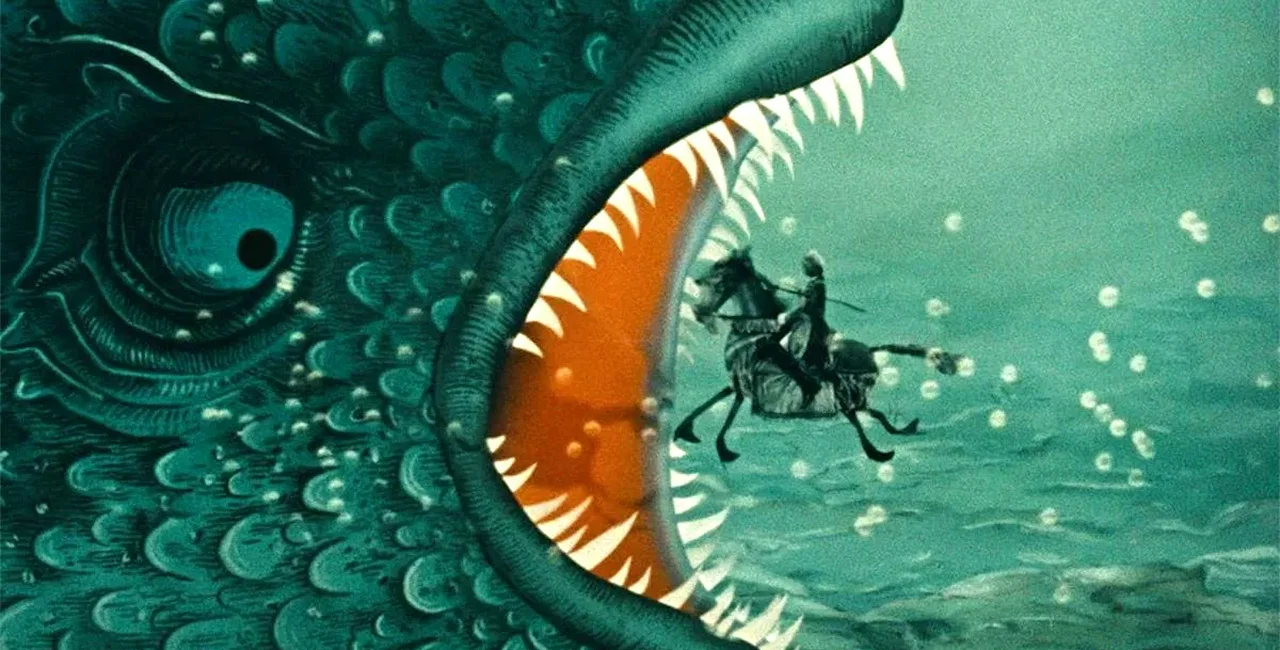

 Summary for: Czech filmmaker who inspired Tim Burton and Terry Gilliam, returns to screens in English
The Karel Zeman Museum is easy to miss. You descend a staircase from Charles Bridge (a useful escape hatch on a sweltering summer afternoon), past a gelato stand, through a courtyard that opens into a museum dedicated to one of Czechia's most visionary filmmakers.
If the name Karel Zeman doesn't immediately ring a bell, the names singing his pioneering praises probably will.

Director John Stevenson, who co-directed Kung Fu Panda, has argued that Zeman deserves to be remembered alongside cinema's great pioneers of fantasy filmmaking, while directors including Tim Burton and Terry Gilliam have long acknowledged his influence in their own boundary-pushing work.
For those unfamiliar with the Czech icon, a major restoration project is bringing Zeman's most acclaimed films back to Prague cinemas with English subtitles, giving fans and film geeks a rare chance to experience them on the big screen.
Return to cinemas
Led by the Karel Zeman Museum and supported by the Czech Ministry of Culture and European funding, The Restoring the World of Fantasy project's initial aim was not to modernize the films, but to return them as closely as possible to how audiences saw them when they first premiered.
Commencing in 2014, it began restoration of Invention for Destruction, The Fabulous Baron Munchausen, and Journey to the Beginning of Time.
The project is being overseen by restoration specialists together with representatives from the National Film Archive and Zeman's daughter.



Restorers focused on repairing decades of damage caused by scratches, fading, mold, and deterioration while preserving the handmade quality that defines his films.
“It’s amazing that today’s technology allows us restore and retain any form of artworks in the world so that it can shine again and give humanity the same aesthetic and artistic experience as their originals, many years ago," said Zemanová, who worked on some of her father's later productions, serves as an artistic consultant.
The project entered its second phase in 2025, and the museum has now begun restoring a further four feature films, with The Sorcerer's and The Stolen Airship returning to cinemas this summer. Additional titles are scheduled for release over the coming years.
A fantastical body of work
Zeman's fantastical body of work combines live actors with animation, miniatures, puppetry, painted scenery, and visual effects unlike anything being made elsewhere. His films took audiences to prehistoric worlds, Jules Verne-inspired adventures, magical kingdoms, and impossible landscapes that feel surreal and yet surprisingly modern today.
The film that established Zeman's international reputation, Invention for Destruction (1958), wowed the jury and public at the 1958 EXPO in Brussels, winning first prize. The film was so successful that it was screened in 96 theaters simultaneously in New York alone.

Inspired by the novels and illustrations of Jules Verne, it places live actors inside a world that resembles a nineteenth-century adventure engraving brought to life. Nearly seventy years later, it still looks unlike anything else, though Wes Anderson's The Life Aquatic with Steve Zissou comes to mind (Anderson has cited Zeman as an influence).
A day at the museum
The museum devoted to the filmmaker's legacy reveals how all of these worlds were created. There are hand-painted backdrops, paper cut-outs, puppets, miniature sets, and displays that reveal how entire worlds were created decades before computer-generated effects existed. Video screens playing clips from Zeman's films illustrate the concepts.
Visitors can experiment with forced perspective, foreground paintings, layered images, and other techniques that Zeman used throughout his career. Each room is both an exhibition and a hands-on lesson in practical effects. Displays are English friendly.
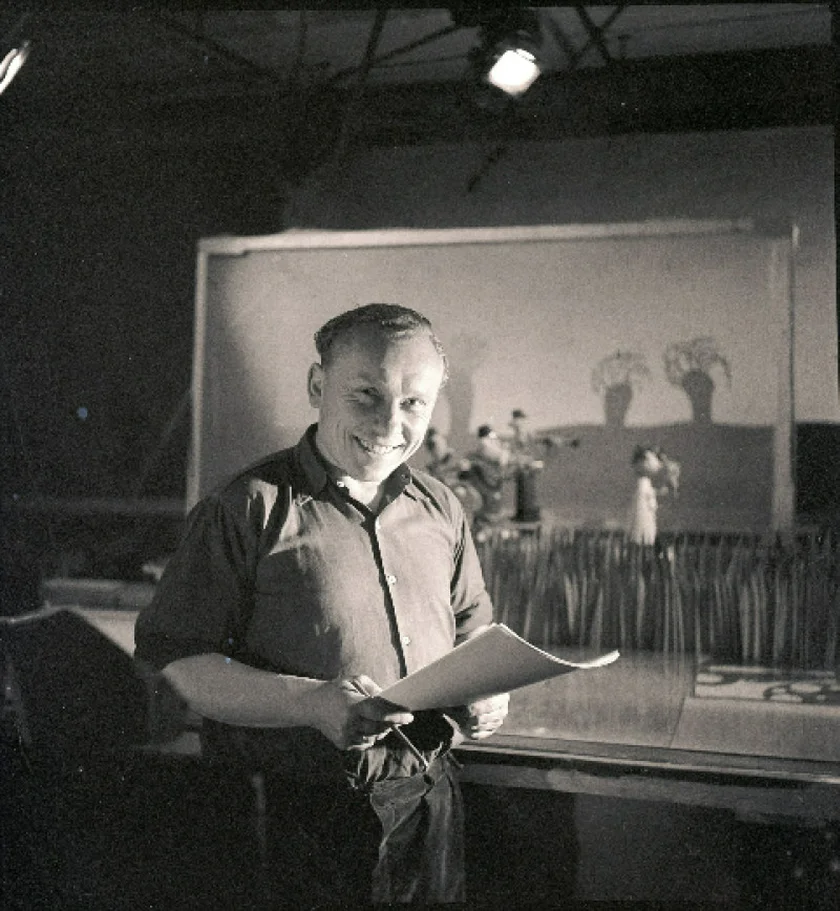
"He had every film planned out in detail, including individual shots and budgets. And then, years later, my daughter and I found it all," Zemanová said in a recent interview with Czech Radio.

"The Japanese, who were preparing an exhibition about my father at the time, were thrilled with it. And it was thanks to the great interest from abroad that the idea of building the Karel Zeman Museum in our country arose."
One of the most fascinating displays recreates a technique used during the filming of Journey to Prehistory. To hide modern features along the riverbank, the crew simply held up a painted canvas that blended seamlessly into the real landscape behind it. The illusion was so effective that even its reflection in the water appeared natural.
On one wall of the museum, a display shows how actors were filmed against empty backgrounds before dinosaurs and prehistoric landscapes were added later, frame by frame. Elsewhere, visitors can try some of Zeman's visual tricks for themselves using their phones.
Stevenson has said it was only after visiting the museum and seeing the effect recreated that he finally understood how it worked.
Where to begin: Karel Zeman's restored films
Journey to Prehistory (1955)
Four boys travel back through time, encountering mammoths, giant birds, and dinosaurs. Animation, puppets, miniatures, and painted artwork appear within single sequences.
The Fabulous Baron Munchausen (1961)
An astronaut lands on the Moon and is swept into the Baron's impossible adventures. The film most often linked to Terry Gilliam's visual imagination.
The Stolen Airship (1966)
Five boys accidentally board a giant airship and find themselves tangled up with inventors, secret formulas, mysterious islands and Captain Nemo.
Tales of 1001 Nights (1974)
Sinbad the Sailor rendered in flat, vivid animation that recalls Persian miniature painting. Its restoration required repair of more than 130,000 individual frames.
The Sorcerer's Apprentice (1977)
The one that gave Czech children nightmares. The unsettling cracked face of the Master Sorcerer was created by accident, a clay model split during production. Zeman kept it.

The Karel Zeman Museum is located at Saská 3, Prague 1, just below Charles Bridge on the Malá Strana side, and is open daily.
Current Prague screenings include: Tales of 1001 Nights at Edison Filmhub, Wednesday, June 24, at 7 p.m., in Czech with English subtitles, followed by a Q&A.
The Stolen Airship, Kino Atlas, Saturday, July 12, at 3:15 p.m., in Czech with English subtitles. Additional screenings are expected as the restoration project continues.