



 Reading time: 3 minutes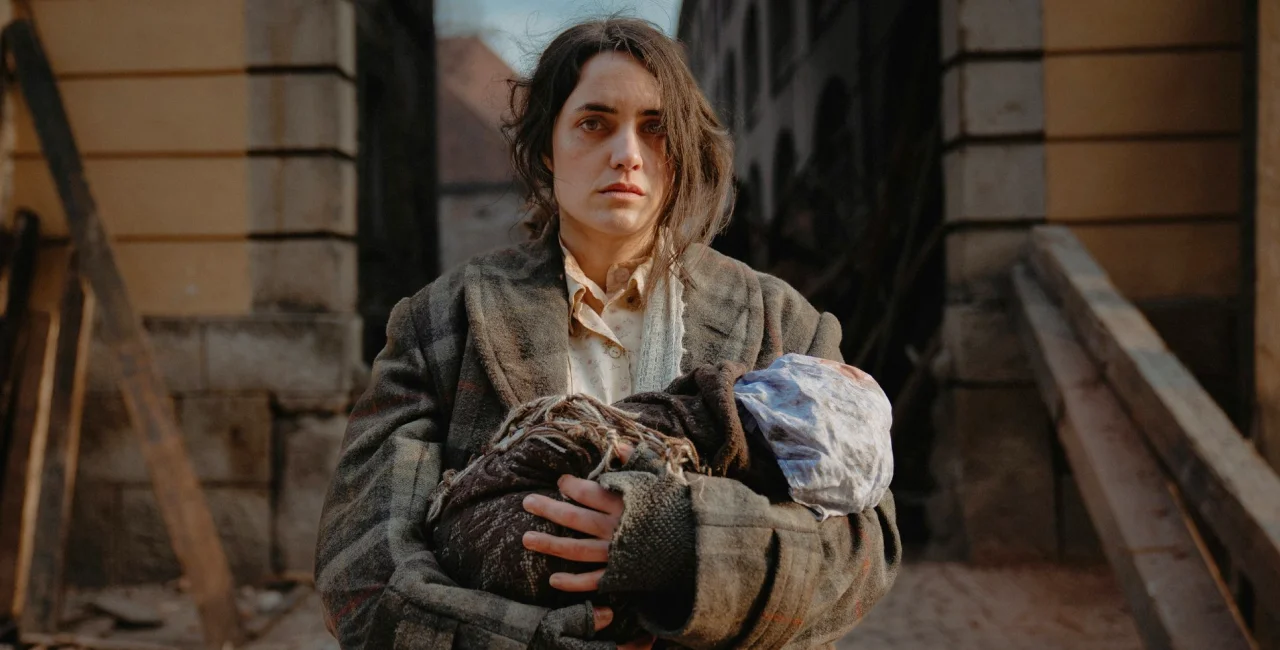

 Summary for: Why you need to watch 'Gerta Schnirch' to understand Czech culture
When Kateřina Tučková's novel The Expulsion of Gerta Schnirch first appeared in 2009, readers often debated with her "aggressively" about the Czech-German postwar settlement.
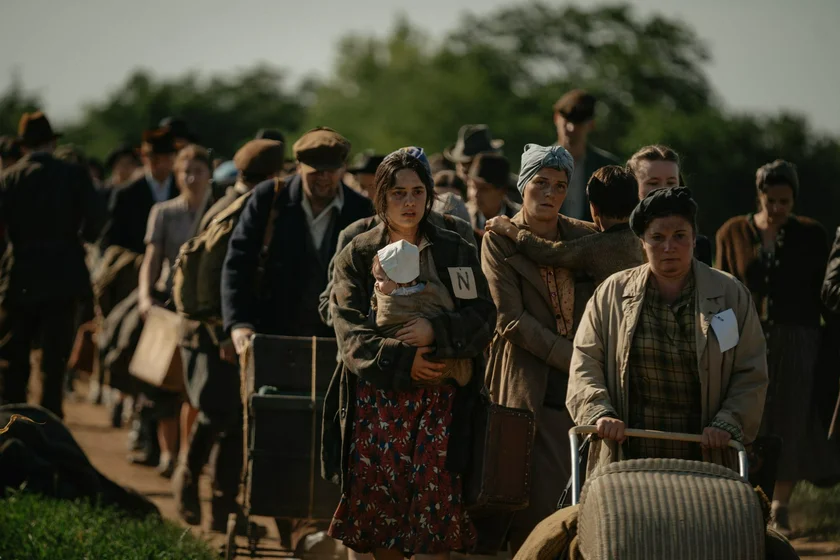
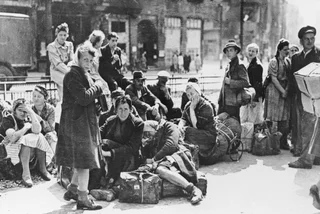
Hardly a surpise as Tučková's novel, published in English as "Gerta," in 2021, examines one of Czechia's most painful and contested chapters: the Brno death march during which approximately 20,000 ethnic Germans—predominantly women, children, and elderly—were forced to walk 50 kilometers to Austria.
The two-part adaptation Gerta Schnirch, now streaming on HBO Max, offers those unfamiliar with the notorious events of May 1945 an increasingly relevant look at the ways in which nationality in the Czech lands doesn't follow neat geographic or political lines and how those in power tragically failed to recognize these complexities.
Brutal history erased by textbooks
Directed by Tomáš Mašín (whose previous work includes the Czech Oscar submission Brothers), the miniseries follows Gerta from age 17 to 70. The title role is played by Barbora Váchová, with Milena Steinmasslová portraying the character in later stages of her life, alongside German actor Johann von Bülow as Gerta's father.
What makes Gerta's story required reading/viewing is how it illuminates the brutal history textbooks erase. Gerta grows up in a Czech-German family torn apart by the war. While her father and brother support the Third Reich, Gerta and her Czech mother stand opposed.
Even before the expulsion, Gerta's life is defined by ethnic violence at the hands of her German-speaking father, who bans her and her mother from speaking Czech. After her mother dies of tuberculosis in 1942, her father rapes and impregnates Gerta during the Nazi occupation. She gives birth in bombed-out Brno, where she remains until being cast out with her infant daughter.
On the night of May 30-31, 1945, Gerta begins the forced march toward the Austrian border, with paramilitaries committing unthinkable atrocities—rapes, beatings, and executions—along the way. The march ends in a refugee camp near the Austrian border town of Pohořelice, where starvation, typhoid, and dysentery run rampant.

Taken in by an elderly woman, Gerta and her daughter survive by doing forced labor on farms in South Moravia, shielded, if only partially, from the xenophobic villagers.
Eventually, Gerta reclaims her Czechoslovak citizenship and returns to Brno, where she must navigate life through Stalinism, normalization, and ultimately the Velvet Revolution of 1989 as a marginalized Czech-German.
Series timing significant
Tučková has been explicit about her intentions to bring public awareness to the many displaced families who were actually anti-fascist, anti-Nazi, or even pro-Czech. Among them people who were Czech citizens, spoke Czech, and yet were punished based on ethnicity alone.
"After publishing, I devoted myself to education, traveling to lectures and various meetings, demonstrating through Gerta's story the absurdity of collective guilt," that targeted an entire ethnic group regardless of individual actions or beliefs.
The fact that Brno officials issued a formal apology in 2015—an event Tučková describes as bringing her "immense joy"—shows how far public conversation has evolved, even as debate continues.

The timing of the series' release is particularly significant. In May 2026, just months after the premiere, Brno will host the Sudeten German Landsmannschaft's annual congress, the first time it's been held in Czechia.
In January, the SPD party launched petitions and plans protests against the "unacceptable and deeply insensitive event" an attempt that seems to endorse the collective guilt that Tučková's heroine symbolizes.
Director Mašín is blunt about the film's contemporary relevance: "Our film is a story of the past century, but for me it is equally relevant today, in a time of new wars and migration crises."
Generational trauma at the heart of series
For her part, creative producer Kateřina Ondřejková, emphasizes that while the adaptation doesn't shy from Czechia's unsettling 20th-century history, "the script for Gerta Schnirch is more about the relationship between mother, daughter, and granddaughter, and about forgiveness, without which it is very difficult to move forward."
"After watching the first episode, I was in tears," Tučková said of the completed film. "It's a relief to see Gerta's story in the hands of someone who treated it with such great respect."

Gerta Schnirch is now streaming with English subtitles on HBO Max. A stage adaptation of Kateřina Tučková's 2022 novel Bílá Voda (White Water) will premiere at Estates Theatre on March 23.