



 Reading time: 3 minutes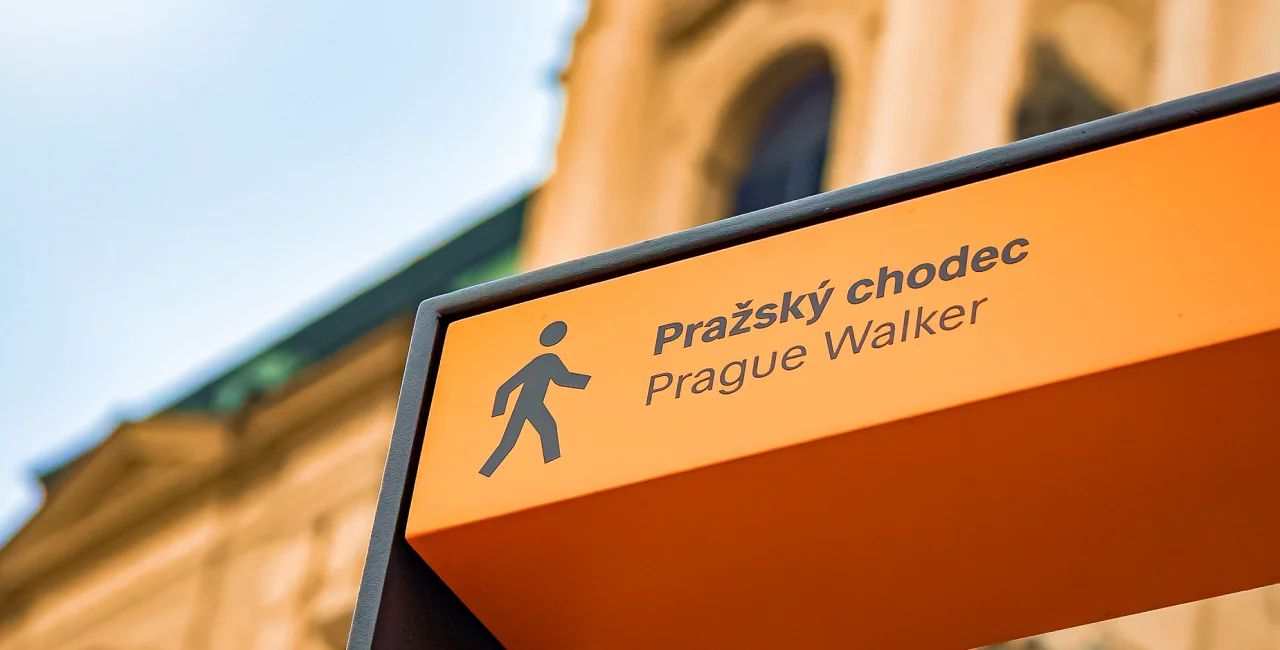

 Summary for: Prague Walker challenge: Can you find Letná from Old Town without your phone?
The City of Prague has officially completed the installation of a new pedestrian navigation system, nicknamed "The Guillotines," on a four-kilometer central route stretching from Wenceslas Square to the Exhibition Grounds in Holešovice.
The Prague Walker system, launched this week, replaces obsolete brown tourist signs with 23 new black obelisks and signposts (15 obelisks and eight complementary signposts in this initial phase).

The system’s goal is to ease orientation, encourage walking, and reduce unnecessary public transport use in the city center. Maps use gold highlights and silhouettes to show key destinations, and concentric rings to denote 5- and 15-minute walking distances for quick time-based information.

The intuitive design is key to changing visitor behavior. Petr Tomčík, director of ROPID, said in a press statement: “Many tourists also unnecessarily overload the metro or trams for short sections in the center because they do not know that walking can be much faster.”
The project arrives at a critical time as central Prague continues to grapple with the strain of mass tourism on its infrastructure.
The city hopes that mapping out alternative, less-traveled routes, including those combining the historic center with parks and residential areas, will redistribute foot traffic away from the most congested areas, such as the famous Royal Route.
Prague Walker: Scenic Route from Old Town to Výstaviště
Total estimated walking time: 36 minutes (2.5 km)

- Stop 1: Old Town Square (Navigation Cue): Start by locating the obelisk near the clock. Follow the signs marked in gold toward the river and Letná Park. Head down Pařížská Street toward the river.
- Stop 2: Pařížská Street (Scenic Stop): Before crossing the river, make a slight detour into the Jewish Quarter (Josefov). The maps on the obelisks will show these points near your path.
- Stop 3: Vltava River Crossing (Scenic Stop): Cross the Čechův Bridge. Stop mid-bridge for a stunning, unobstructed panoramic view of Prague Castle and Charles Bridge.
- Stop 4: Ascent into Letná Park (Scenic Stop): Follow the path marked for Letná Park. Walk up to the Metronome for the best free panoramic view of the Old Town bridges and river bends.
- Stop 5: Letná Plateau (Scenic Stop): As you walk across the plateau, consider a quick break at the massive Letná Beer Garden (if open) for refreshments with a view.
- Stop 6: Final Approach (Holešovice) (Scenic Feature): As you descend from the park, the route guides you past the National Gallery (Veletržní Palace).
- Stop 7: Destination (Navigation Cue): Follow the directional signs clearly marked for Výstaviště (Exhibition Grounds), which will lead you directly to the main entrance.
The project is modeled on London’s successful Legible London system, which previously saw a 5 percent increase in pedestrian traffic and a 60 percent decrease in the number of people who felt lost.
The most visible element, the obelisk on Old Town Square, cost approximately CZK 62,000, with the total installation for the first route totaling CZK 1.6 million, according to the city.

The Prague Walker system has faced criticism for being an analogue tool masquerading as a digital one: people instinctively touch the panels, which resemble displays, in vain because they are not interactive. Prague 1 Transport Councilor Vojtěch Ryvola, speaking to Novinky.cz, said:

"The only thing I don't understand is why they aren't solved digitally, when today there is a screen in every toilet in a shopping center."
Deputy Mayor for Transport, Zdeněk Hřib, reinforced the project's broad goal: "The goal of the Readable Prague project is to enable people to move around the city intuitively, without having to search for directions or rely on their mobile phones."
ROPID director Tomčík added, "Even though today each of us has maps and navigation on our phones, it would be a shame to look at our mobile phones instead of enjoying the beauties of the metropolis."
Prague plans to significantly expand the system over the next year, installing at least 50 more elements around major hubs, including Wenceslas Square, náměstí Republiky, Masaryk Station and Prague's hlavní nádraží, Prague Castle, and Letná.