




 Reading time: 4 minutes

 Summary for: Is Czechia prepared for a hotter future? Record heat fuels political debate
Czech meteorologists recorded 41.1°C in Doksany, in the Litoměřice region, on Sunday, the first time a Czech weather station has measured more than 41°C. The reading broke the national record set only a day earlier.
Prague's rescue service responded to 85 heat-related callouts over the past three days, more than twice the number recorded during the whole of June last year.
The record temperatures and rising demand on emergency services framed Sunday's Czech Television political debate, where ministers and opposition politicians clashed over whether the government is adequately preparing for more frequent extreme heat.
What the science shows
Researchers at CzechGlobe, part of the Czech Academy of Sciences, have used AI to analyze how heatwaves have developed across six Central and Southeastern European countries since 2000. Their findings show heatwaves, defined as at least three consecutive days above 30°C, are becoming more frequent and lasting longer.
"Since 1961, when we have measurement results from the station network, we have observed an extension of heat waves in the Czech Republic, especially in the lowlands," said Monika Hojdanová of CzechGlobe. Climate models indicate the trend will continue, with hotter, longer and more frequent heatwaves by the end of the century.
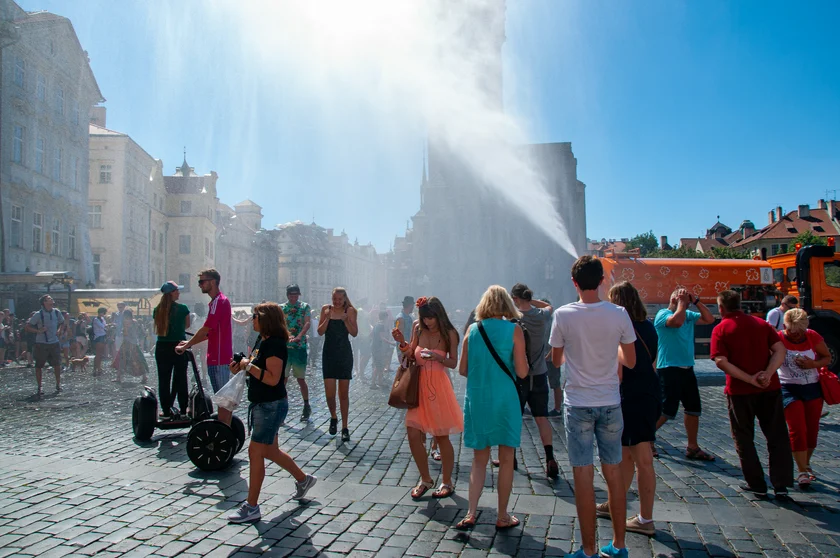
The lowland regions of Polabí, Poohří and South Moravia remain the most exposed.
The impacts are already evident. The longest recorded Czech heatwave lasted 36 days in 2015. At its peak, cardiovascular deaths were 17 percent above the seasonal average, equivalent to around 22 excess deaths a day.

Hojdanová said excess mortality remains the most serious consequence, alongside crop losses, lower economic productivity and damage to ecosystems. Central Europe experienced five separate heatwaves during the summer of 2019.
Prague rescue services also say the profile of patients is changing.
"The situation was more critical this year during the working week," spokesman Karel Kirs said, adding that heat exhaustion and dehydration are increasingly affecting working-age people as well as elderly and chronically ill residents. Since the start of summer, Prague paramedics have attended around 200 heat-related incidents.
Political divisions
On a televized Sunday debate, MP Gabriela Svárovská (Greens/Pirates) argued the government was unprepared both in communicating risks and planning for extreme heat. She called for the State Security Council to meet and urged ministers to prepare contingency plans for hospital overcrowding and potential drinking water shortages, including in areas where private wells are already running dry.
Foreign Minister Petr Macinka dismissed the concerns, saying: "It's hot in the summer, it's cold in the winter, it's dark at night." Although his ministry is not responsible for climate policy, the remark drew criticism from opponents.
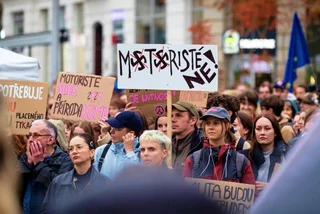

Environment Minister Igor Červený (Motoristé) said ministries were providing advice on heatstroke prevention and outdoor activity. Former environment minister Petr Hladík (KDU-ČSL) argued that information published online did not amount to a public awareness campaign.
"Someone writing it on Facebook or on a website is not a communication campaign," he said, pointing to Madrid's network of publicly air-conditioned buildings as an example of the adaptation measures Czech cities should consider.
He also warned that drinking water shortages would become more common and called for faster urban greening projects.
SPD deputy chairman Radim Fiala backed adaptation measures while rejecting the scientific consensus on human-driven climate change.
"Climate change has been going on since the planet was a planet," Fiala said after the moderator referred to the broad scientific agreement on the role of human activity.
Pressure on institutions
The debate also turned to staffing cuts at the Ministry of the Environment. Červený confirmed dozens of positions had been eliminated but said the Czech Hydrometeorological Institute, which operates the country's weather monitoring and forecasting network, would not lose staff. He said he had discussed the issue with Finance Minister Alena Schillerová.

Opposition politicians also criticized two recent appointments: a Motoristé election candidate to lead the Czech Environmental Inspectorate and a new director of Krkonoše National Park whom Svárovská said lacked the confidence of local authorities and environmental organizations. Červený defended both appointments.
More heat, then storms
Hot conditions will continue on Monday in Moravia and Silesia, where temperatures are forecast to reach 35–39°C and further local records are possible. Western Bohemia is expected to cool as a cold front moves through, with temperatures falling to around 28°C and as low as 20°C in some northwestern upland areas.
The Czech Hydrometeorological Institute has also warned of severe thunderstorms developing from the west on Monday afternoon and evening, bringing torrential rain of up to 50mm, wind gusts of 70–90 km/h and hail larger than two centimeters.
Výhled poÄasà na pÅ™ÃÅ¡tà týden
— ÄŒeský hydrometeorologický ústav (ÄŒHMÚ) (@CHMUCHMI) June 28, 2026
NadcházejÃcà týden pÅ™inese jeÅ¡tÄ› zpoÄátku velmi teplé poÄasÃ, poté nás zchladà srážky a ve druhé polovinÄ› týdne nás Äeká již pÅ™Ãjemné poÄasà s teplotami kolem normálu.
🥵Po mimořádnÄ› teplé noci nás v pondÄ›là Äeká od západu možnost pÅ™ehánÄ›k a bouÅ™ek… pic.twitter.com/nYOzRG3aJX
The political debate made clear there is little agreement over how Czechia should prepare for increasingly frequent extreme heat, even as the temperatures continue to break records.