
 Reading time: 3 minutes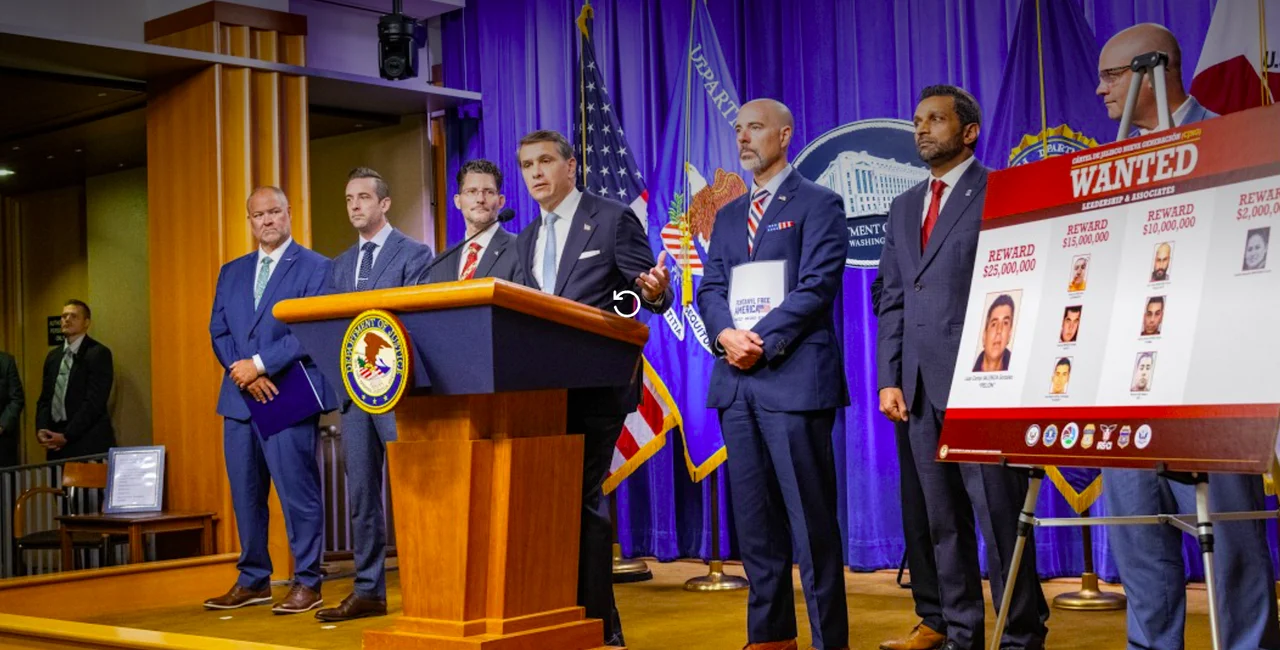

 Summary for: Why was a Mexican drug cartel shopping for weapons in Czechia?
Four suspected members of Mexico's powerful Jalisco New Generation Cartel, or CJNG, were arrested in Czechia in June after allegedly negotiating a deal to acquire military-style weapons on Czech territory, Czech Justice Minister Jeroným Tejc confirmed to the Czech Press Agency (ČTK).
According to the US indictment, the alleged deal involved European machine guns, rocket-propelled grenade launchers, mortars, ammunition and other military equipment. The weapons were allegedly intended for use against rival cartels, civilians, police and military personnel in Mexico.

In return, the defendants allegedly offered fentanyl and methamphetamine destined for distribution in the United States, effectively turning Czechia a marketplace for an alleged transatlantic arms-for-drugs deal.
The United States has subsequently requested their extradition on charges including drug trafficking, firearms trafficking, and suspected narco-terrorism. Two of the men agreed to extradition and were taken to the US on Aug. 7, while the other two remain in Czech custody as prosecutors review the US request.
Why Czechia?
An arms-producing country
Czechia has a long-established reputation as an arms producer and exporter, dating back to the former Czechoslovakia. That history has helped make the country a significant player in the European defense industry.
Americanist Lukáš Perutka told Czech Radio that this reputation could be one reason the cartel sought to conduct its alleged weapons deal in Czechia.
The Justice Department unsealed indictments on Tuesday against four members of one of Mexico's most powerful drug cartels accused of seeking to purchase arms and ammunition in exchange for drugs in the Czech Republic. https://t.co/qtCiXiVhOP
— CBS News (@CBSNews) August 12, 2026
"In my opinion, the situation 'improved' after the invasion of Ukraine, when the Czech Republic became an arms power again. For example, we also supplied rifles to the police in Mexico, and of course the cartels knew about it. So I would say that advertising is the first reason."
Perutka also pointed to diversification as a possibility. Mexican cartels have traditionally obtained weapons from the United States, but CJNG has developed international contacts and may be looking for alternative sources, he said.
Czech police have declined to say who the alleged weapons suppliers were, and the Czech Ministry of Justice said it does not have information about the weapons purchase.
Drugs-for-weapons deal
The other half of the alleged transaction points back to the cartel's core business.
According to US prosecutors, the men were not simply offering cash for the weapons. The alleged payment was fentanyl and methamphetamine, with the drugs ultimately intended for the US market.
The indictment says the defendants negotiated the sale of weapons in Czechia while also discussing the distribution of more than 400 grams of fentanyl and more than 500 grams of methamphetamine.


The drugs were not, however, being sourced from Czechia. One of the defendants, Noé Díaz Jiménez, is alleged to have operated a synthetic-opioid laboratory in Mexico.
Mexican authorities dismantled a laboratory allegedly linked to him in Jalisco on June 12, one day after the four men were arrested in Czechia.
"If we talk about the scope, this cartel currently operates throughout Mexico, but of course also in the United States and Europe. It has contacts with Italian mafias, for example, and we can also talk about cooperation with Hezbollah and other terrorist groups."
Perutka told Czech Radio that Mexican cartels have expanded their networks into Europe and have established contacts with other organized-crime groups, including Italian mafia organizations.
What happens next?
Two of the four suspects, Edgar Lopez Velasco and Jose Alvarado Morales, consented to extradition and were sent to the United States on Aug. 7. Spanish newspaper El País reported that both appeared in a Florida court on Monday.

The remaining two suspects, Noé Diaz Jimenez and Leobardo Gaxiola Lopez, remain in Czech custody.
A Czech prosecutor will ask a court to determine whether their extradition to the US is legally admissible. Tejc will then decide whether to authorize their surrender. The minister said extradition proceedings normally take several months.

Czech authorities remain tight-lipped about the alleged weapons deal.
“We can only say that we have cooperated with our American colleagues,” Czech police spokesman Ondřej Moravčík told ČTK. “However, given the nature of the case, we are unable to comment further at this time.”
The US Embassy in Prague thanked Czech security forces for their “outstanding assistance” in the arrests and extraditions.