 Reading time: 2 minutes

 Summary for: Czech news in brief for August 16: Sunday's top morning headlines
 Severe drought covers most of Czechia
Czechia continues to face widespread drought, with severe conditions affecting nearly 90 percent of the country as much-needed rain remains uncertain. Meanwhile, cyanobacteria have made several popular swimming spots unsafe, while Czech firefighters stand ready to send a helicopter to a major wildfire in Belgium. Good morning, here's your Sunday headline mix.
This morning's top story
Severe drought covers most of Czechia
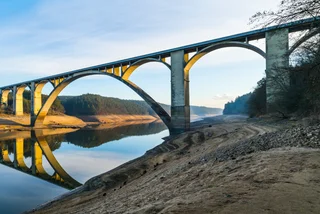
Severe, exceptional or extreme drought currently affects nearly 90 percent of Czechia, with extreme drought alone covering 60 percent of the country, according to data from Czech hydrometeorologists. The country has received about one-third less rainfall than usual since the start of the year, while high temperatures have increased evaporation.
Rainfall needed: Experts say rainfall is needed to replenish depleted soil, rivers and groundwater. Forecasts suggest rain could arrive from Monday, but its timing and amounts remain uncertain.
More top headlines
Cyanobacteria found at popular Czech lakes
Cyanobacteria have caused swimming bans at several Czech water bodies as a heat wave continues, with authorities reporting particularly poor water quality in the Vysočina region. The Sedlice reservoir was newly added to the list of sites where swimming is prohibited, joining Trnávka and Kachlička. Swimming bans also remain in place at Orlík, Džbán and other locations.

Risky locations: Máchovo jezero has also recorded worsening water quality, with all five monitoring stations rated orange. Cyanobacteria can cause skin and respiratory problems, while heavy rain can temporarily increase infection risks.
Czech helicopter ready to fight Belgium fire
Czech firefighters are preparing to send a helicopter to Belgium to help battle a major wildfire in the High Fens nature reserve. The fire has burned more than 1,600 hectares since Friday and remains uncontrolled, with Belgian authorities saying aerial resources are crucial to containing it.
Awaiting approval: Czechia is awaiting approval and supporting documents from Belgium before deployment. The EU is coordinating additional aid, including two Dutch helicopters and two Swedish water-bombing aircraft.
Turnov seeks UNESCO status for gemstone cutting
The Regional Museum in Turnov is preparing a UNESCO nomination for the region’s traditional hand-cutting of gemstones, known as lapidary. The museum plans to submit the application by the end of 2026. The craft has been included on Czechia’s national intangible cultural heritage list since 2024.
Key details: Turnov is the country’s only center for this craft, with a history dating back about 7,000 years. Local artisans have worked on major commissions including the Saint Maurus reliquary and Czech crown jewel replicas.

News you can use
Over-the-counter medication recalled
Czechia’s State Institute for Drug Control (SÚKL) is recalling two batches of Rowatinex, an over-the-counter medicine used to treat and prevent urinary and kidney stones. The recall covers batches 8781L, expiring in October 2026, and 8706L, expiring in April 2027.
Why it was recalled: Manufacturer ROWA Pharmaceuticals ordered the withdrawal after a quality defect was identified, involving an out-of-specification result for the peroxide value parameter.