



 Reading time: 4 minutes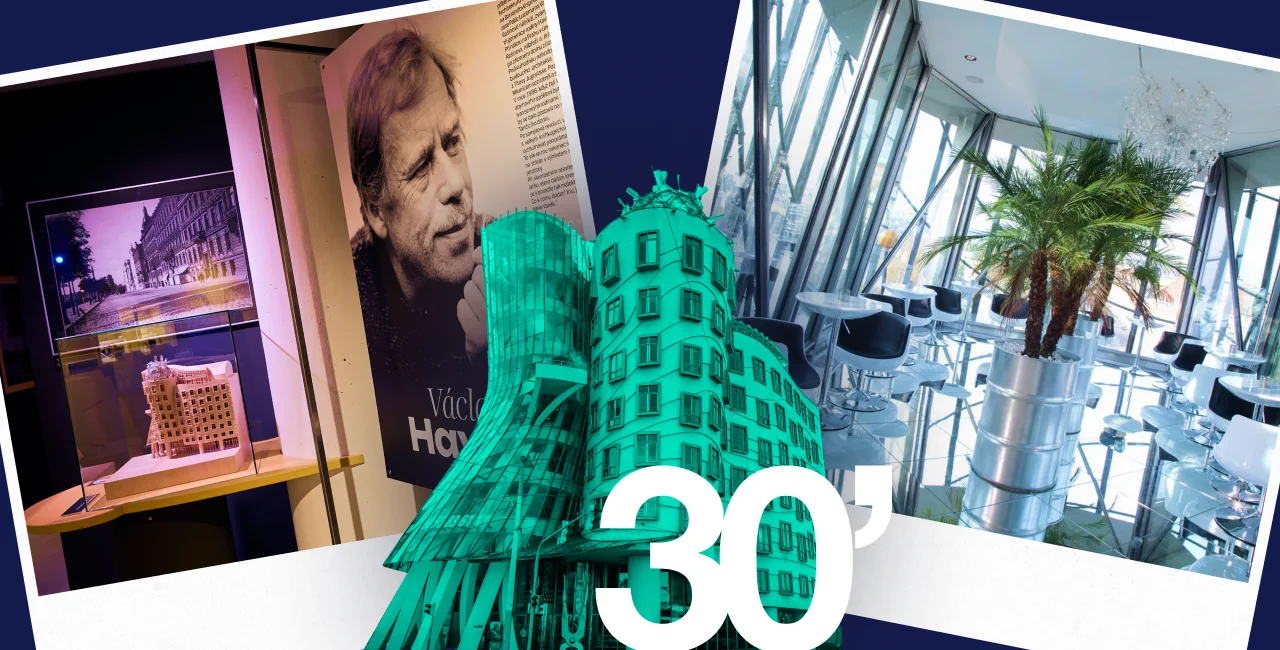

 Summary for: Dancing House at 30: Go behind the scenes of Prague’s most photographed building
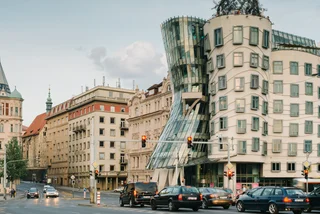
It divided Prague when it opened. Thirty years on, the Dancing House has become one of the most photographed buildings in the city, and for the first time, visitors can go behind the scenes.
A new exhibition opening April 22 at the Galerie Tančící dům marks the anniversary of Frank Gehry and Vlado Milunić's iconic building on the corner of Jiráskovo náměstí and Rašínovo nábřeží, which was inaugurated on June 20, 1996.
The Dancing House: the story of an iconic building (Tančící dům: příběh ikonické budovy) brings together never-before-published archive photographs, original 1990s interior elements, and access to technical spaces that have never been open to the public.
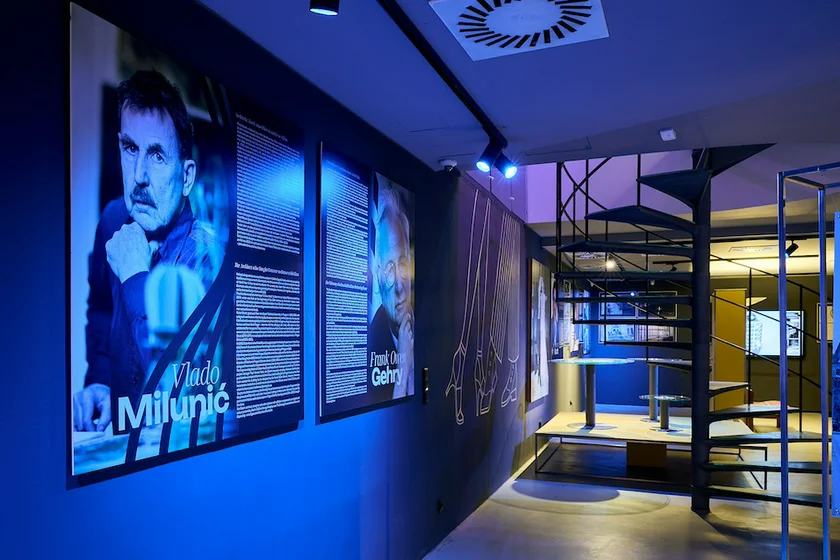
"In the 12 years we have been here, we have prepared more than 40 exhibitions," said Robert Vůjtek, director of the gallery. "We are always trying to show how the story of the Dancing House is connected with Václav Havel and what else visitors can discover here."
The exhibition is organized in collaboration with the Frank O. Gehry Foundation and takes place under the auspices of Vize 97, the foundation of Dagmar and Václav Havel.
What's inside
The show spans floors minus one and minus two of the building, and curator Jana Sommerová has filled them with objects that have not seen the light of a gallery in decades, in some cases, ever.
"We found archive photographs that no one had taken out since 1932," she said. "I was really happy about that, because they are authentic and beautiful."

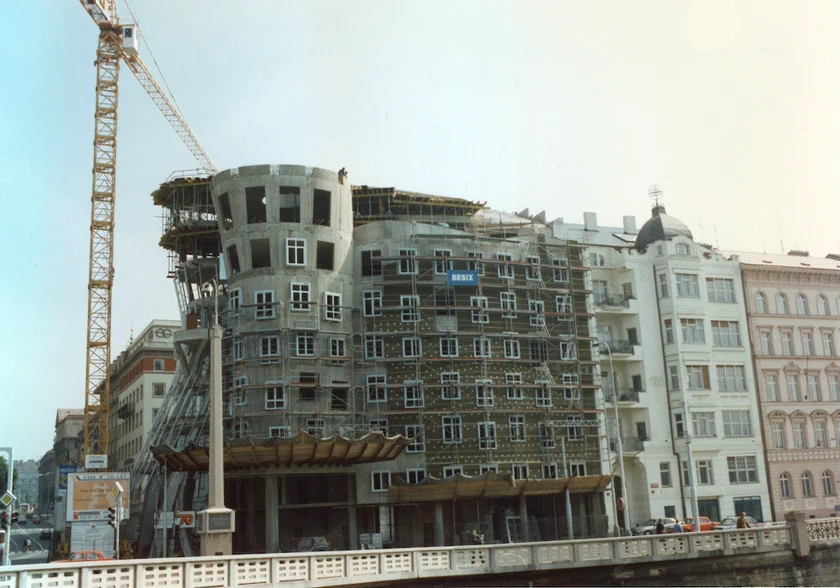
On display are original glass tables designed by architect Eva Jiřičná, original doors, lighting, and office furniture from the 1990s. "We took down the doors, the benches, the tables, everything we could fit in here," Sommerová said. "Even the lights above us are original."
The centrepiece of the architectural section is a model of the Dancing House by Gehry and Milunić on loan from the National Gallery Prague.
Alongside it stands a newly commissioned 1:18 scale model of the building, over two metres tall, engineered to the same exacting specifications as the building itself.
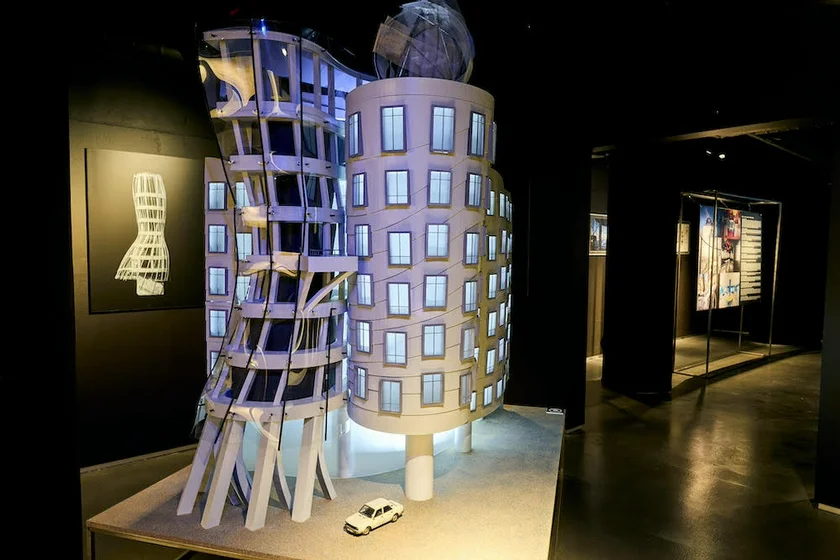
"The Dancing House kept surprising us," Sommerová noted, "because nothing there is completely regular. Every time you measure something, it is different around the corner. The floors are all different. That is what makes the building so special."
The building that shouldn't have worked, but did
The exhibition also makes space for the story of how the building came to exist at all, and the people behind it.

Architect David Tichý, who worked on the project as a student, recalled the unlikely partnership between Milunić and Gehry. "They were actually very similar, both emigrants, similar age, similar experience, both from Jewish Polish families. They understood each other very naturally, especially in the sculptural thinking behind the building."
The building's better-known nickname, Ginger and Fred, after the dancers Fred Astaire and Ginger Rogers, was actually Gehry's own invention. He later dropped it himself, deciding he didn't want to "import American Hollywood kitsch to Prague." Milunić, however, told Radio Prague in a 2003 interview: "I call this building the Dancing Building because it's a dance after the Velvet Revolution."
The design, he stressed, did not begin as the sinuous form the world now knows. "It did not start as a sculpture at all. It started from rational urban and functional design. Only with the final shaping and analysis did it become what people later described as dancing."
The technical achievement behind those curves was considerable. "At that time, architecture like this was extremely difficult," said Tichý. "Gehry's office used software originally developed for aircraft construction. Every panel of the façade is different, each one had to be modelled separately."
Architect Josef Pleskot, who supported the project when it was first presented publicly, remembers a city genuinely split by the design.

"People were divided into two camps. Society was really divided by this building. Today people are divided by other nonsense, but back then architecture itself became a public issue."
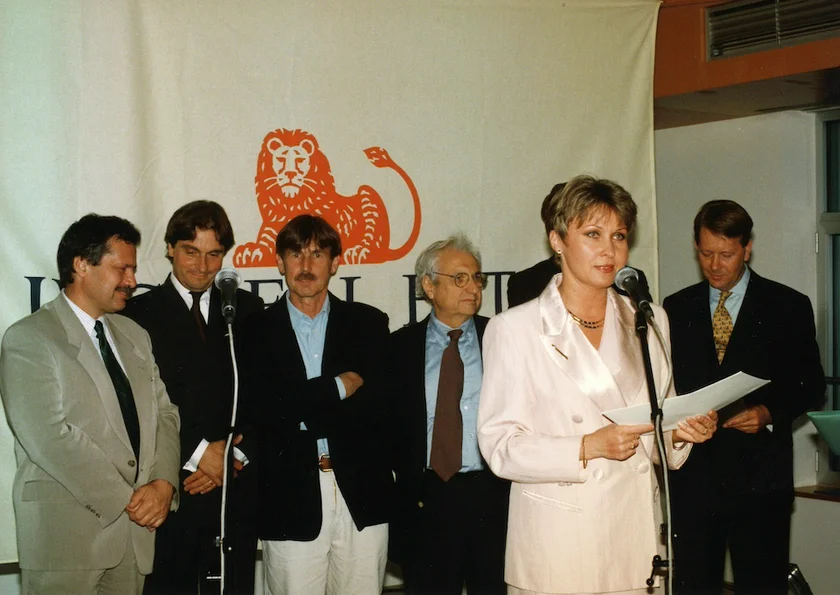
He has no regrets about where he stood. "I am glad I had that opinion then, and I have not changed it."
For Rita Milunić, the exhibition carries particular weight. "For my father, this was really a life project," she said. "It was not just another building, it was something personal, something he believed in deeply, and something he wanted to leave behind in Prague."
Going further inside
From May, the exhibition expands into guided tours that will take visitors into parts of the building that are normally off-limits entirely.
"Not only the technical facilities," Vůjtek said, "but during the guided tours we will also take visitors to the upper floors. We will show what the hotel rooms look like today, what Eva Jiřičná's offices look like, and we will continue to the viewpoint where you can see Prague from above."

The gallery is also preparing a new book on the history and architecture of the Dancing House, a follow-up to the 2003 publication by Gehry, Milunić, and Irena Fialová, long out of print. It will include photographs from the exhibition and images that have never previously been published.
Vůjtek traces the building's endurance to the vision Václav Havel had for it from the beginning. "For Václav Havel, culture was really the soul of the whole building and actually the whole symbol of the Dancing House."
Pleskot puts it more simply: "The building has one huge advantage, it did not need any major promotion. It simply had its own way of promoting Prague and our country, and that is the absolute best thing that can happen."
The Dancing House: the story of an iconic building opens April 22, 2026 at Galerie Tančící dům, Jiráskovo náměstí 6, Prague 2. Guided tours begin in May; dates at galerietancicidum.cz.