



 Reading time: 3 minutes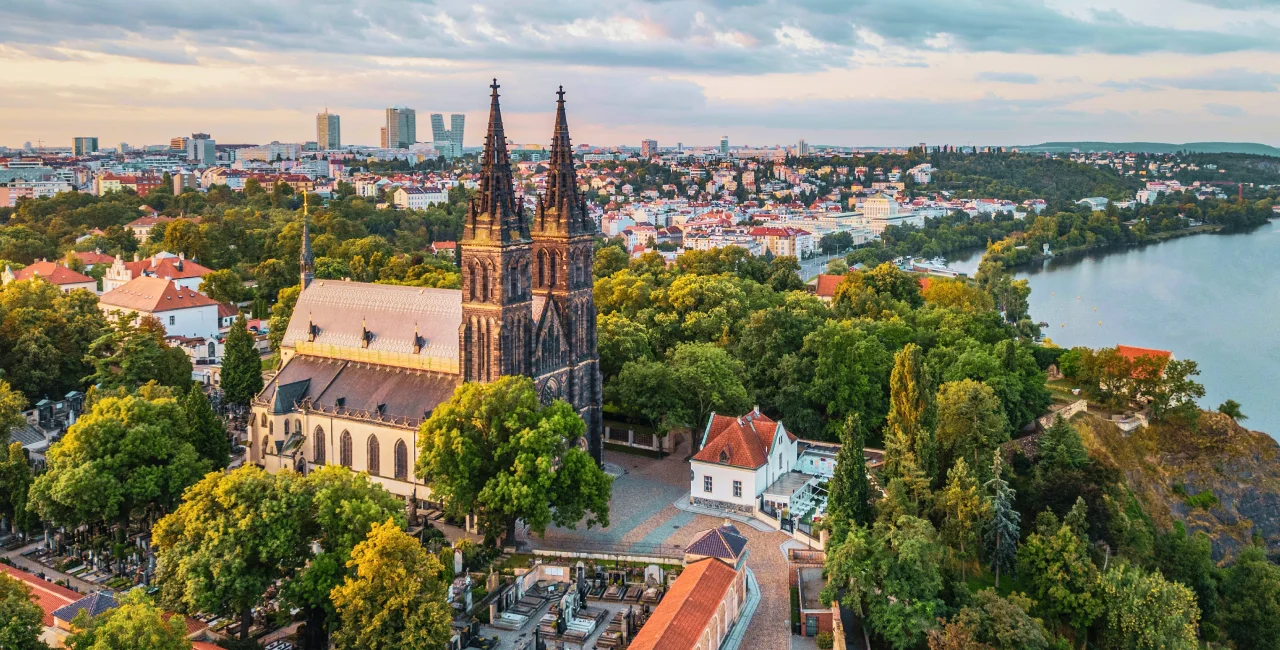

 Summary for: Vyšehrad in 2026: Why Prague’s ‘second castle’ is worth revisiting
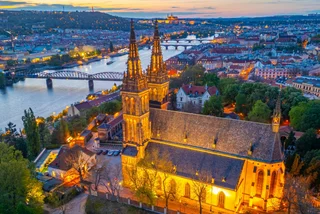
While Prague Castle receives the bulk of the city’s tourism traffic each year, Vyšehrad remains comparatively quiet – despite offering some of the capital’s most impressive views, oldest surviving architecture, and deepest historical roots.
The Vyšehrad National Cultural Monument has now kicked off its 2026 season with new offerings and events. If you haven’t visited lately, now is a good time to go.

Vyšehrad: A brief history
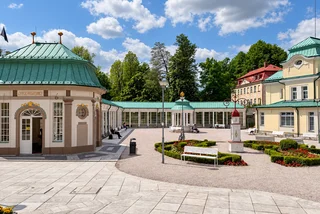
Vyšehrad fortress occupies a rocky hill south of the historic center. According to legend, Princess Libuše stood here and foretold the rise of Prague, making Vyšehrad central to the country’s founding mythology. Historically, the site was also connected to the Přemyslid dynasty, which ruled from here during the 10th century.
Remnants of those early medieval origins still survive. The Rotunda of St. Martin, near Leopold Gate, is among Prague’s oldest standing buildings. Nearby are the remains of the Basilica of St. Lawrence, accessible through guided entry, as well as sculptural works by Josef Václav Myslbek depicting figures from Czech legend, relocated here from Palacký Bridge during World War II.
What’s new in 2026
This year’s biggest addition is a new guided route called Royal Vyšehrad, which opens several normally inaccessible sections of the complex to visitors.
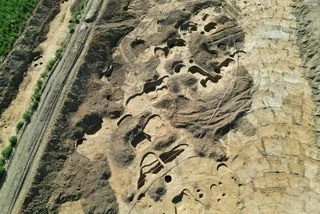
The tour includes the remains of the Basilica of St. Lawrence, a preserved Romanesque bridge, and spaces beneath the Powder Mill, drawing on decades of archaeological research into the site.

Elsewhere, the Gothic Špička Gate now hosts a working forge where visitors can watch traditional blacksmithing demonstrations and mint commemorative coins – a nod to Vyšehrad’s role not only as a royal residence, but also as an economic center during the medieval period.
Exploring the underground
For many visitors, the highlight remains the underground casemates.
The Baroque tunnel system runs through the fortress walls and leads to Gorlice Hall, a vast vaulted chamber that houses several original statues from Charles Bridge. Most of the sculptures visible on the bridge today are replicas, making this one of the few places to see the originals up close.
Additional underground spaces, including the Podolské and Martinské casemates, are also open seasonally. Evening candlelit tours, offered under the name Mysterious Vyšehrad, tend to sell out in advance during the warmer months.
Tours are offered in English, and entrance to Gorlice Hall, the largest underground hall in historic Prague, is at the Brick Gate. You can also visit the Rise and Fall of Royal Vyšehrad exhibit here.




A cemetery that doubles as a national pantheon
Vyšehrad Cemetery is one of Prague’s most historically significant burial grounds, though many tourists pass it without realizing who is buried there.
Among those interred are composers Antonín Dvořák and Bedřich Smetana, writers Karel and Josef Čapek, poet Jan Neruda, author Božena Němcová, activist Milada Horáková, and Alfons Mucha, to name just a few figures central to Czech cultural life.
A neo-Renaissance arcade is built around most of the cemetery's perimeter.
Key events this season
Several major events are scheduled at Vyšehrad this year.
On June 23, the Prague Symphony Orchestra FOK will perform Dvořák’s Symphony No. 9 “From the New World” outdoors within the complex. Prague Museum Night returns on June 13 with expanded evening access to underground areas, while historical reenactments and fencing demonstrations are planned for May 30.

Later in the summer, Vyšehrad will also mark the 940th anniversary of the coronation of Vratislav II, recognized as the first Czech king.
Where to eat
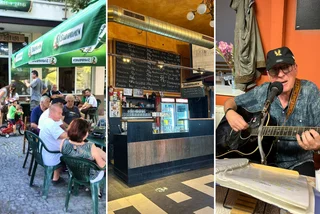
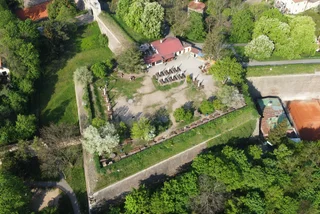
Food options inside the complex range from simple snack stands to Hospůdka Na Hradbách, a casual beer garden built into the fortification walls. Nearby Café Citadela offers a quieter setting with table service and views toward the river.
Before leaving, it’s worth walking down toward Rašínovo nábřeží, where several of Prague’s best examples of Cubist architecture can be found. Designed by architect Josef Chochol between 1912 and 1914, the angular apartment houses remain one of the city’s most distinctive – and frequently overlooked – architectural clusters.
Full program details, ticket information, and guided tour reservations are available through the official Vyšehrad website.