 Reading time: 3 minutes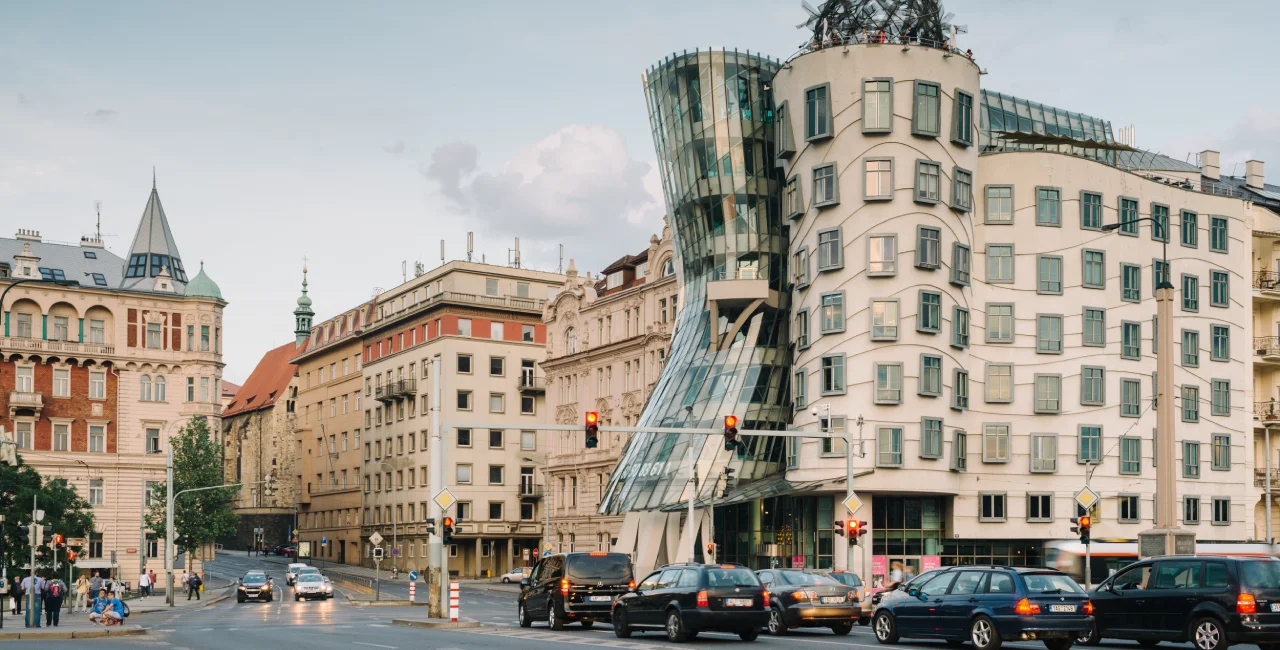

 Summary for: Frank Gehry's Prague legacy: How the Dancing House reshaped the cityscape
The global architecture community is mourning the passing of Frank Gehry, the Canadian-American architect whose innovative designs redefined modern urban landscapes. Gehry died on Dec. 5 at his home in Santa Monica, California, at the age of 96, following a brief respiratory illness.
Among his many celebrated works, Gehry’s collaboration on Prague’s Dancing House has become one of the city’s most iconic architectural landmarks, reflecting both daring design and Czech cultural context.

Located on Rašínovo nábřeží along the Vltava River, the Dancing House was built between 1992 and 1996 on a plot that had long remained vacant after being destroyed during the 1945 U.S. bombing of Prague. Gehry worked with Czech-Croatian architect Vlado Milunić to create a building that symbolized Prague’s transition from communism to democracy.
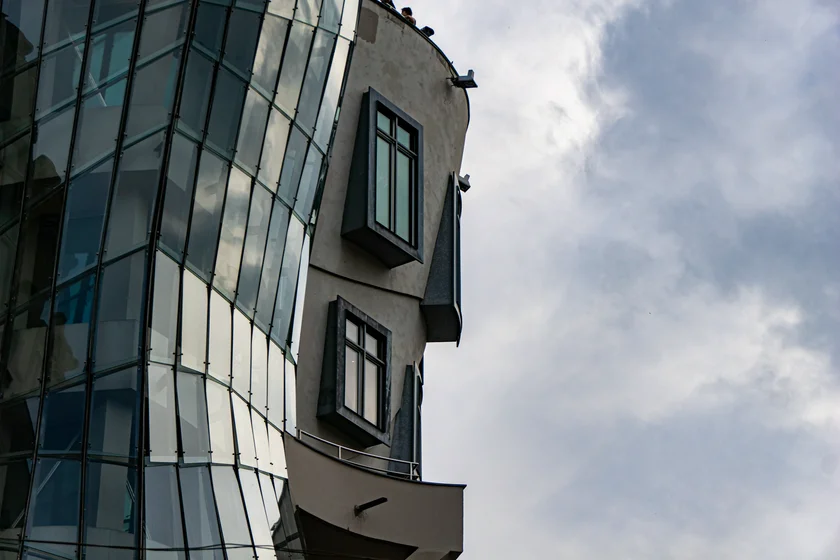
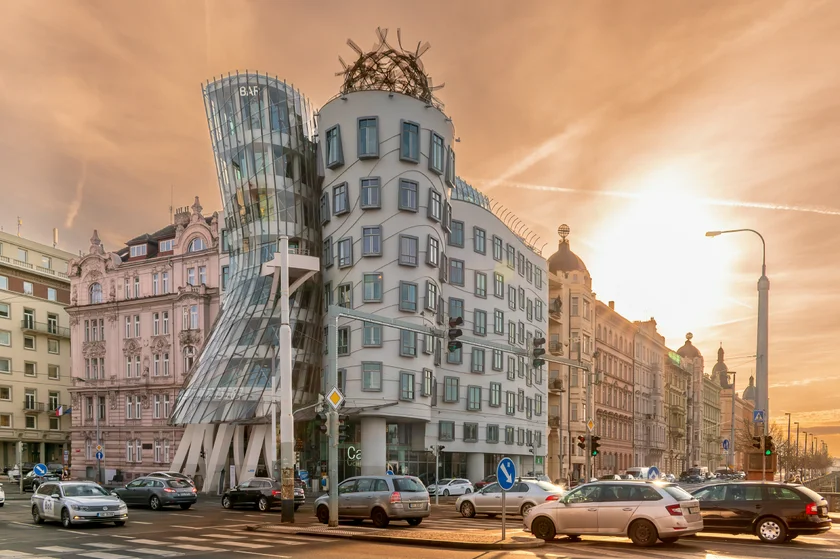
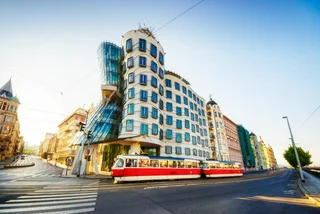
The resulting design features two towers nicknamed Ginger and Fred after the famous American dancers Ginger Rogers and Fred Astaire. The taller glass tower, with its twisting silhouette, represents Ginger, while the rock-like structure stands in for Fred, creating a dynamic, almost theatrical embrace between the two forms.
A global architect meets Czech history
Though Gehry is internationally recognized for architectural marvels such as the Guggenheim Museum in Bilbao and Walt Disney Concert Hall in Los Angeles, the Dancing House illustrates his unique ability to adapt avant-garde ideas to local historical contexts.
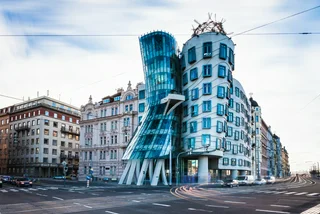
The building’s deconstructivist style—characterized by undulating façades, unaligned windows, and irregular concrete panels—both contrasts with and complements Prague’s Baroque, Gothic, and Art Nouveau cityscape.
Rather than imposing a foreign style, Gehry collaborated with Czech designers, including Czech-British architect Eva Jiřičná, who developed much of the interior layout. Her work emphasized asymmetry, small hallways, and spatial creativity that mirrored the building’s exterior dynamism.
Beyond its architectural innovations, the Dancing House embodies Prague’s cultural and political history. The project’s site was adjacent to the family of Václav Havel, a celebrated poet and playwright who would later become president. Havel himself was instrumental in
During the Communist era, the plot and surrounding buildings were largely neglected. After becoming president, Havel himself recruited Milunić to survey the site. The resulting building designed by Gehry would both revitalize the riverfront and create a symbolic landmark reflecting a new era of openness and creativity in the Czech capital.
What do you think of Prague's Dancing House?
Cultural resonance and public acclaim
From its opening in 1996, the Dancing House attracted international attention and became a defining feature of Prague’s skyline. Its nickname, Ginger and Fred, has entered popular parlance, reflecting both the playful spirit of Gehry’s design and its engagement with global cultural references.

Visitors from across the world flock to the building to photograph its curves and dynamic forms, while locals often cite it as a symbol of Prague’s modern identity. In 1997, Time magazine included the Dancing House among the most important buildings of the decade.
The building has undergone careful renovation and adaptation over the years, including conversion of upper floors into a boutique hotel and the addition of the Ginger & Fred restaurant, which occupies the seventh floor and preserves the building’s distinctive character.
For Gehry, architecture was never merely about functional space—it was about creating experiences. His designs often juxtaposed chaos with harmony, solidity with movement, and history with innovation. This philosophy is evident in Prague, where the Dancing House stands not only as a visually arresting landmark but also as a statement about the city’s openness to creative risk.
Frank Gehry"Architecture should speak of its time and place, but yearn for timelessness."
Gehry’s passing at 96 closes a chapter in modern architecture, but his imprint in Prague ensures that his influence will endure. In a city known for its architectural heritage, Gehry’s creation remains a testament to the power of imagination, collaboration, and cultural exchange.