



 Reading time: 3 minutes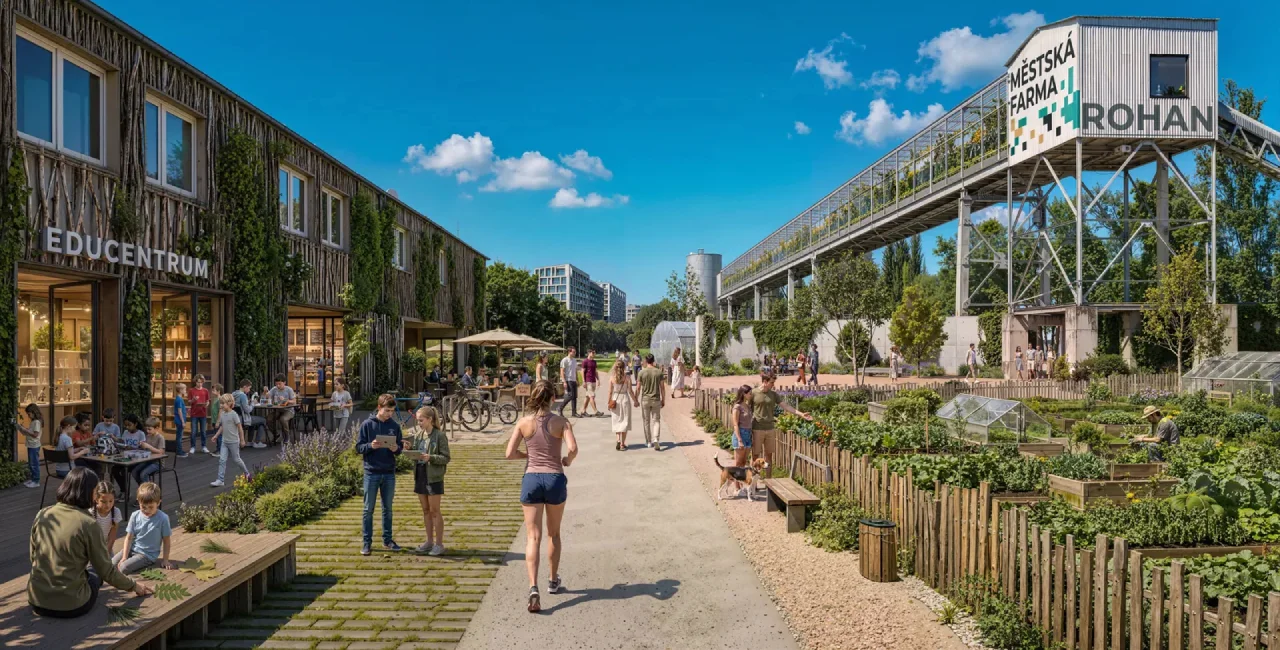

 Summary for: Prague’s riverside concrete plant is slated to become a community farm
A former concrete plant on Prague’s Rohan Island is set to close in 2028, opening the way for a proposed urban farm combining community gardens, food production and public space.
Prague 8 has unveiled a concept for transforming the industrial site next to the Vltava into the Rohan Urban Farm, which would form part of the planned Maniny Park. The district hopes the proposal can turn a long-standing industrial site into a green community destination for local residents, schools and visitors.
From concrete plant to urban farm
The TBG Metrostav concrete plant has operated on Rohan Island since the late 1960s, when the area served as a base for construction of the first sections of Prague’s metro. Since 2007, the site has been used exclusively for concrete production.
The plant is now surrounded by rapidly developing residential construction. Prague 8 and TBG Metrostav agreed in 2023 that operations at the site will end in 2028.
The future of the large industrial compound is therefore becoming an increasingly important part of planning for the wider area. Rather than demolishing the site and starting from scratch, Prague 8 wants to retain some of its most distinctive industrial structures.
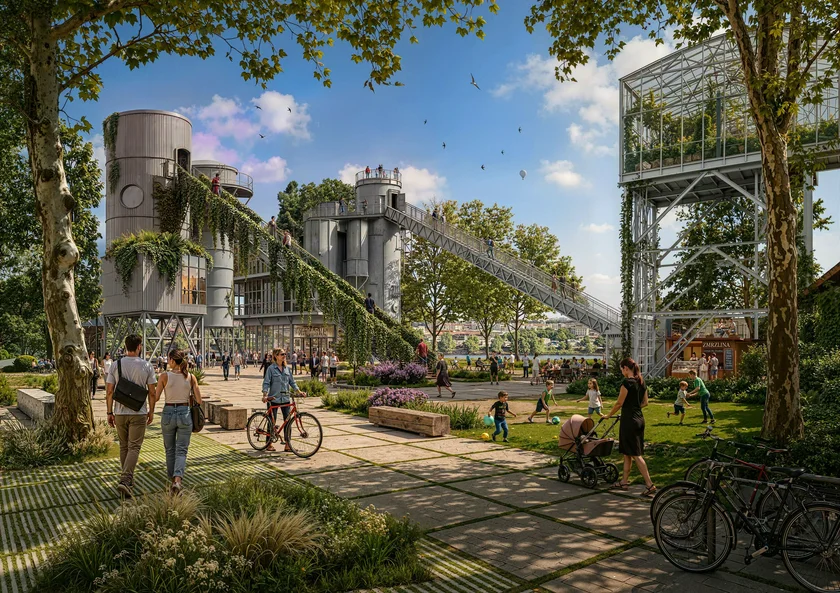
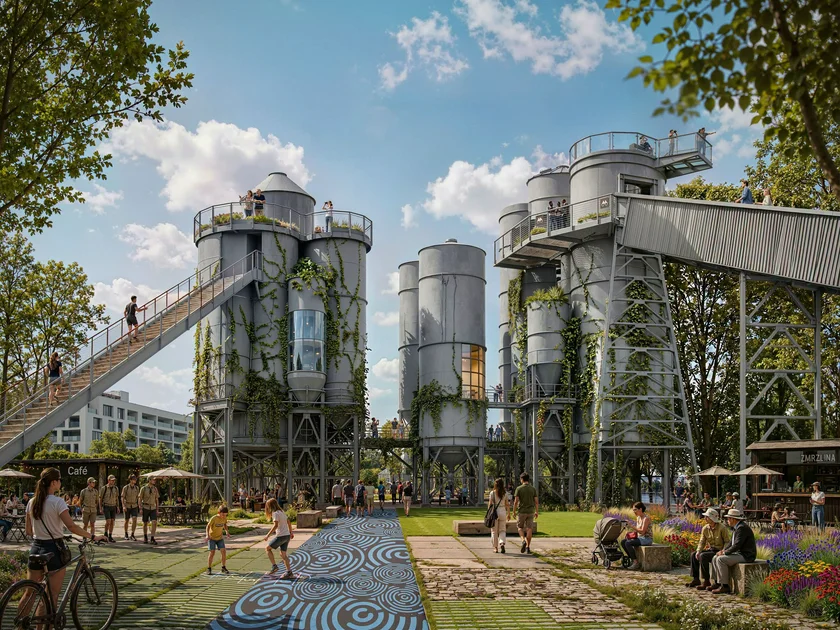
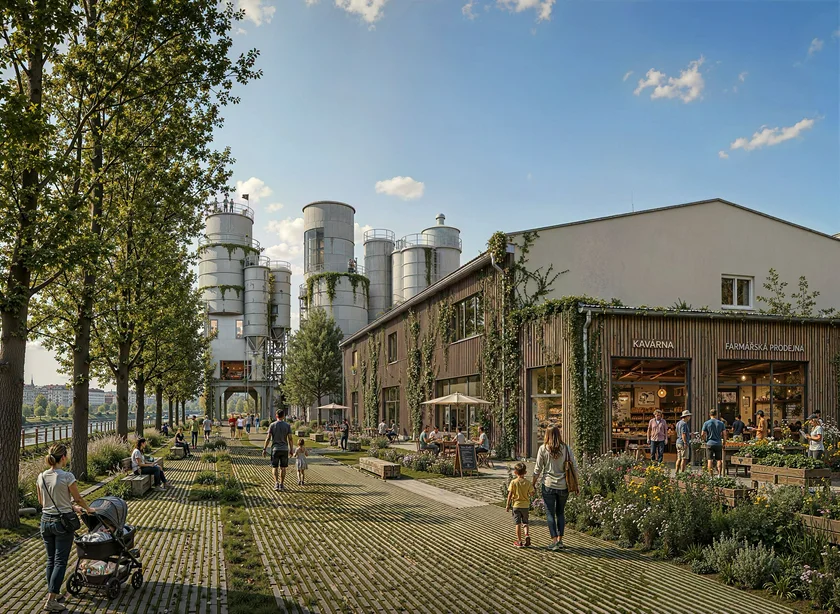
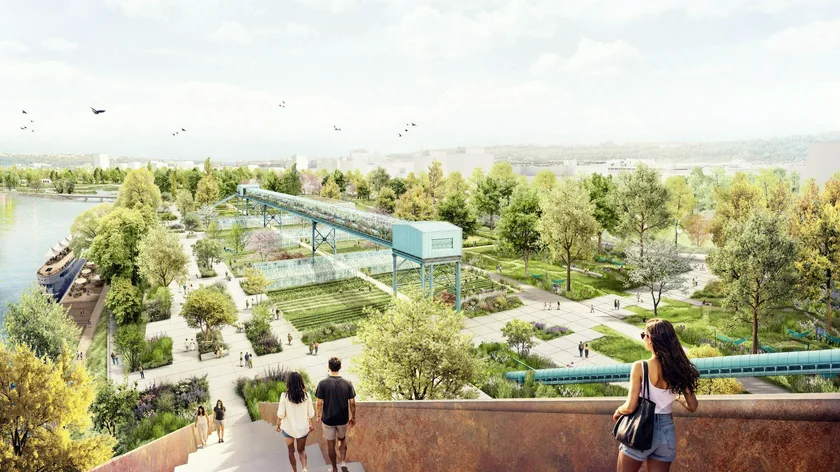
The district commissioned an architectural study led by architect Michal Fišer, whose team is also working on the surrounding Maniny Park. The proposal envisions the former concrete plant becoming a combination of urban agriculture, education, recreation and community space.
The plans are currently a vision rather than an approved redevelopment. The land is owned by the City of Prague, which leases it to TBG Metrostav, meaning any transformation will require further discussions with City Hall.

A greenhouse in the sky
One of the most distinctive elements of the proposal would reuse the existing infrastructure of the concrete plant.
The roughly 160-meter-long conveyor structure currently used to transport gravel could be transformed into a suspended greenhouse above new growing areas. Existing cement silos could also be preserved as a landmark, with the possibility of creating a viewing platform offering views across Rohan, the Vltava and the Prague skyline.
Other parts of the proposed farm would include open growing areas, greenhouses, composting facilities and a demonstration area for small farm animals. Former workshops and laboratories could be converted into a food-production pavilion with space for local products, while the existing admin building could house an education center.
The proposal also includes a cafe, farm shop, farmers markets, educational programs, creative workshops and community and school gardens.
The existing river landing could remain as well, with a new roughly 200-meter-long riverside pier potentially connecting visitors more closely with the Vltava.

The project is also intended to become part of the wider green transformation of Rohan Island. The proposed farm would connect to the planned 56-hectare Maniny Park, the Rohan riverside promenade, cycling route A2, the HolKa footbridge and the Libeň bridge complex.
Preserving Prague’s industrial past
The proposal reflects a broader approach to redevelopment: rather than removing all traces of the site's industrial history, the designers want to incorporate them into its future.
“The idea is not to simply erase the concrete plant and start with an empty site,” the project website says, describing the aim as transforming the site's strongest industrial elements while giving them a new public function.
Prague 8 officials have also said they want to avoid leaving the site abandoned after the concrete plant closes. Local residents had raised concerns about the possibility of the area becoming a venue for concerts and noisy events, helping shape the alternative proposal for a community-oriented space.
The transformation would also substantially increase greenery on what is currently a largely paved industrial site. The concept calls for removing much of the impermeable concrete and asphalt, planting trees, using permeable surfaces and capturing rainwater for irrigation.

The project could cost hundreds of millions of Czech crowns, according to Prague 8, although European funding could potentially help finance the redevelopment. The district says the completed farm should ultimately be economically self-sustaining.
For now, however, the urban farm remains a proposal that Prague 8 plans to present to the city. With the concrete plant scheduled to close at the end of 2028, the district hopes planning can begin well before the industrial operation disappears.
More information and visualizations can be found at the dedicated Městská farma Rohan website.