



 Reading time: 4 minutes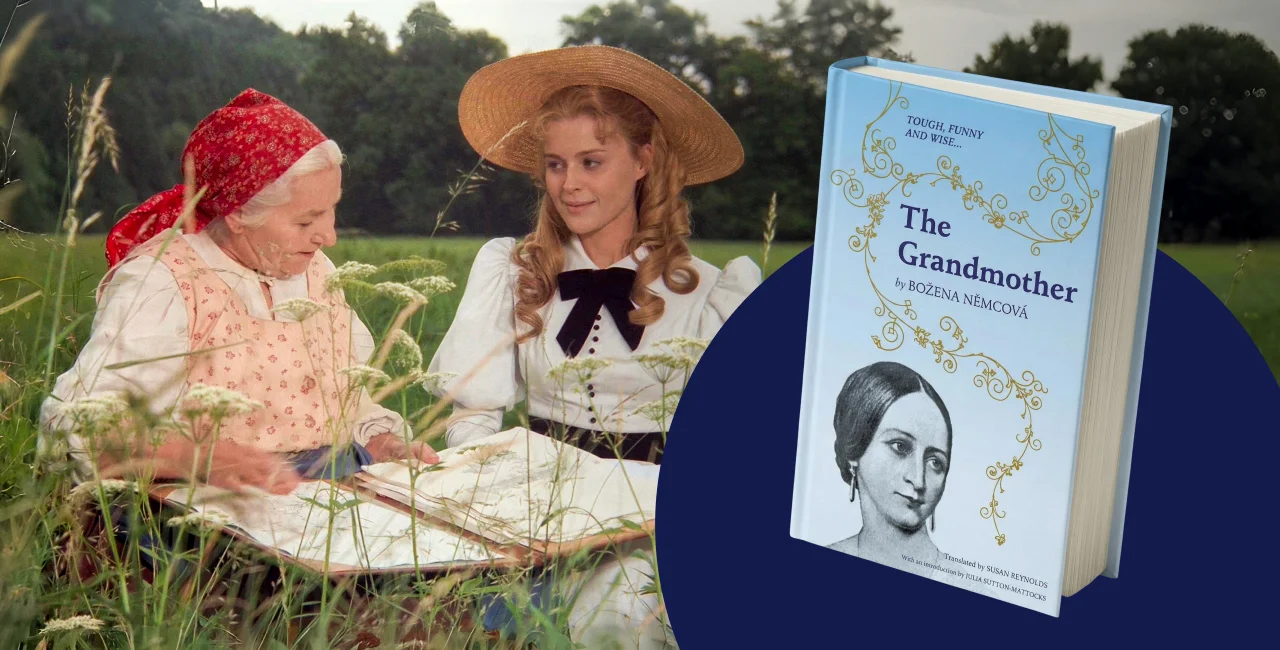

 Summary for: 'The Grandmother': A new translation of the book that captures the Czech soul
When British translator, author, and curator Susan Reynolds first picked up Božena Němcová’s Babička (The Grandmother) years ago, she realized she wasn’t just reading a children's fable. In the timeless tale, filled with rural life, changing seasons, and goose feathers, the very soul of a nation rose off the pages.
For 170 years, Czechs have cherished Němcová’s novel as a national treasure. English speakers have been waiting almost as long for a proper translation. Now, after nearly a decade of dedicated work, Reynolds has finally unlocked what makes this deceptively simple tale as essential to Czech identity as a Smetana's music or Mucha's painting.
Published by UK-based Jantar Publishing in 2025, Reynolds' translation captures what previous versions missed: the folk idioms, the rhythms of rural speech, the cultural weight of everyday rituals in a book that has shaped generations of Czech readers and defined the grandmother as family cornerstone.
With the oldest translation dating from the 1890s and the second from the 1970s, this new edition is considered the definitive modern translation.
A philosophy of living
The plot is deceptively simple: a grandmother moves from her rural cottage to the Old Bleachery in the Babiččino údolí (Grandma's Valley) to help care for her grandchildren Barunka, Jan, Vilímek, and Adelka, while their parents travel in service to local aristocrats.
But as Julia Sutton-Mattocks, a linguist and lecturer in the Department of Russian and Czech at the University of Bristol, writes in this edition's introduction, the story is "far richer than its baskets of newborn kittens, garlands of flowers and wafts of freshly baked bread might suggest on first reading."
What Babička offers is something rarer: an immersion into "a very small world; a very idealized world where essentially people look after their own," as Rajendra Chitnis, Associate Professor of Czech at University College Oxford, described it to Radio Prague.

Each chapter unfolds as a "picture of rural life," following the rhythms of changing seasons and the traditions that accompany them.
Translation of Božena Němcová’s Babička (The Grandmother) by Susan ReynoldsAbout an hour after she had got up, there came the crisp tapping of slippered feet; one door slammed, then another, and a moment later Grandmother appeared on the doorstep. At the same instant, the geese cackled, the pigs grunted, the cow lowed, the chickens fluttered their wings.
Through the eyes of her grandchildren, we see a woman who brings more than just "two marzipan hobby-horses and two dolls" along with kittens and tame chickens—she brings an entire philosophy of living. "Grandmother was the best grandmother!" the children exclaim in Reynolds' translation.
This return to simplicity carries profound weight upon reading the novel in the age of attention deficit and over-consumption.
The grandmother insists that breadcrumbs should never be stepped on because "they say that that makes the souls in Purgatory cry." She teaches that picking up even a single goose feather matters because "many a mickle makes a muckle." These aren't quaint rural superstitions but a worldview where every small thing deserves reverence and attention.
Translation of Božena Němcová’s Babička (The Grandmother) by Susan ReynoldsGod would be sure to punish an old woman like me if I were to turn worldly. These new-fangled things aren't for me; my old mind couldn't be doing with them.
A translator's dream
Reynolds is uniquely positioned to translate this ethos. She previously gained cult status among literary fans for her work on Karel Jaromír Erben's Kytice, a collection of folk poems so iconic they are practically part of the Czech DNA. Her translations of Erben's poems are on display at the Dvořák Birth House, and an English-language play based on her work ran late last year in Brno.

Her deep connection to Czech culture began in the 1970s after hearing Janáček's The Cunning Little Vixen—"I was absolutely bowled over by it," she told Radio Prague—and eventually led her to work as Curator of the Czech, Slovak and Lusatian Collections at the British Library.
Revival of the nation
For Czechs, the book occupies a space similar to Louisa May Alcott's Little Women in the English-speaking world. Like Alcott writing just over a decade later in 1868, Němcová captured a nation in transition through the lens of domestic life. But while Alcott's March sisters looked forward to new possibilities for women, Němcová's grandmother preserved a rural Czech world threatened by modernity and political erasure under Habsburg rule.
During this time of the Czech National Revival, when Czech itself was a radical act in a German-dominated empire, Babička became a lifeline for a language on the brink.
By the 1850s, Czech was largely spoken only by rural lower classes, while the educated elite conversed in German. Němcová's novel didn't just preserve folk tales and traditions; it proved Czech could carry complex literary narratives.

As Reynolds notes, the book's themes of "national identity and linguistic identity" remain timeless precisely because they emerged at a moment when speaking Czech was itself an assertion of existence.
Supported by a grant from the Czech Ministry of Culture, Reynolds' translation bridges what has long been untranslatable, not just Czech words, but Czech feeling.
The new editions gives English-speaking audiences the chance to understand why a humble loaf of bread carries so much weight in the Czech heart, why goose feathers matter, and why, for Czechs, grandmothers hold such reverence.
The Grandmother: Scenes from Village Life is currently available in both paperback and hardback and distributed by Euromedia in the Czech Republic at most foreign-language bookshops. You can order it online here.