



 Reading time: 2 minutes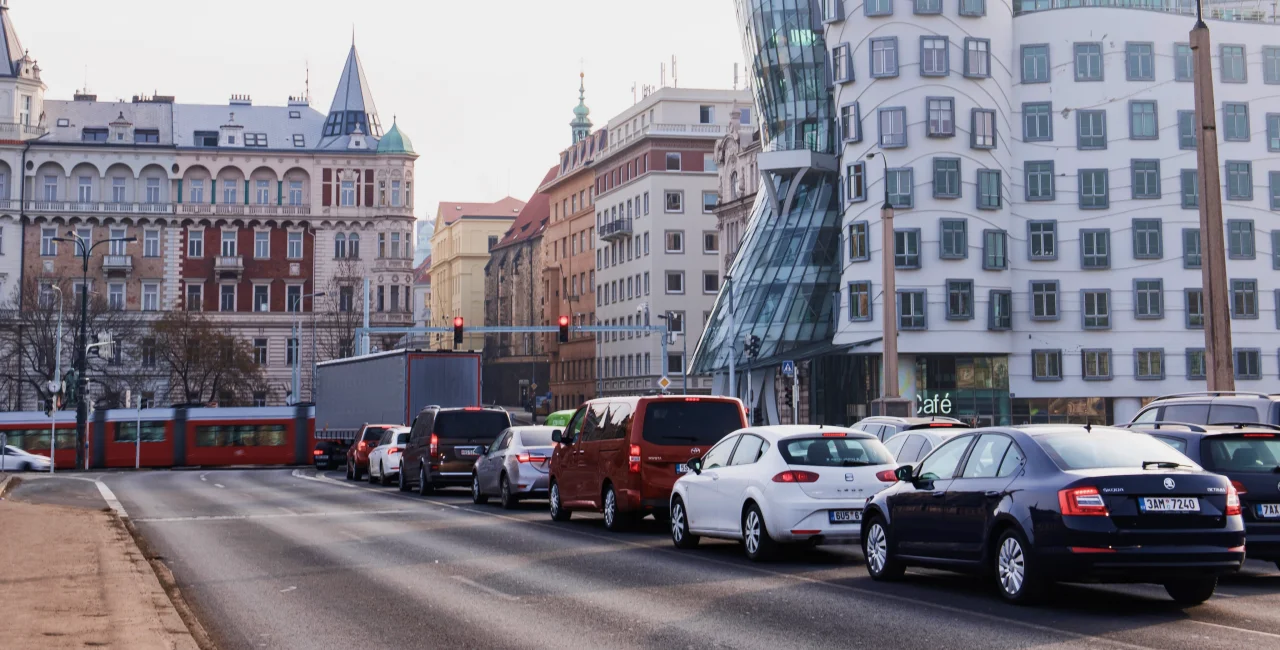

 Summary for: It's traffic jam 'season' in Prague: How to get around the gridlock
A traffic collapse on Prague’s Nusle Bridge on Wednesday evening brought part of the city to a halt, with trams and buses delayed by up to 30 minutes, the latest sign of a deepening congestion crisis in the Czech capital.
Officials say November is always the worst month for traffic, but this year may set a record for delays.

The alarming numbers
Independent telematics systems confirm what drivers already feel. Navigation company TomTom now ranks Prague as the 103rd most congested city in the world, with drivers spending almost 40 percent of their time stuck in traffic.
Data from the Rodos supercomputer at an Ostrava university show that during Monday morning’s rush hour in Prague, total delays across all main roads reached a cumulative 385 minutes. That’s nearly double last year’s figure.
Why the gridlock?
Experts and city officials blame a mix of factors. “In some places, traffic intensity may feel higher than usual, but these conditions can be attributed to reconstruction or other construction activities,” Technical Road Administration spokesperson Barbora Lišková told Czech news site Hospodářské noviny (HN).
Deputy Mayor for Transport Zdeněk Hřib says the deeper issue is car dependency. "A car doesn't necessarily have to be the fastest way of transportation in a historic city," he said in an X post this week.
“If you look at the average occupancy of cars, it’s only around 1.3 people. If this trend doesn’t change, the situation could get even worse in the future,” he also told HN.

Prague 6 transport councilor Ondřej Matěj Hrubeš told Hospodářské noviny this week that misplanned and delayed road repairs around the city only worsen the traffic crisis.
How trams could be Prague’s savior
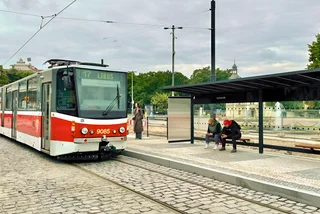
Relief could arrive in the next few years as Prague rolls out six new tram lines, including extensions to Jarov (which borders Prague 3, 9, and 10), Strahov (Prague 6), and Nové Dvory (Prague 4).
In 2027, travel through central Prague will become noticeably faster. The new tram line running through Wenceslas Square and the Museum area will cut journey times by 5 to 10 minutes, for example, between Vršovice and Revoluční, or between Újezd and Vinohradská.
Solutions: How to avoid the gridlock
There’s no quick fix coming, but (aside from using public transport) commuters can plan smarter. Telematics data suggest avoiding Prague between 3 p.m. and 6 p.m. on Tuesday through Thursday, when congestion is at its worst. The best driving windows are Monday late morning (10 a.m.–1 p.m.) and Friday around noon.

Walking is also an option. Speaking with Czech media outlet Novinky.cz in October, Deputy Mayor for Prague 3 Ondřej Rut advised residents and commuters to walk in the area around the Želivského metro and tram stops due to repair works hitting both roads and transport.
Further west in the city, the upcoming Dvorecký Bridge, a major project that connects Prague 4 with Prague 5, will make walking even more worthwhile while easing congestion at Barrandov Bridge.