



 Reading time: 4 minutes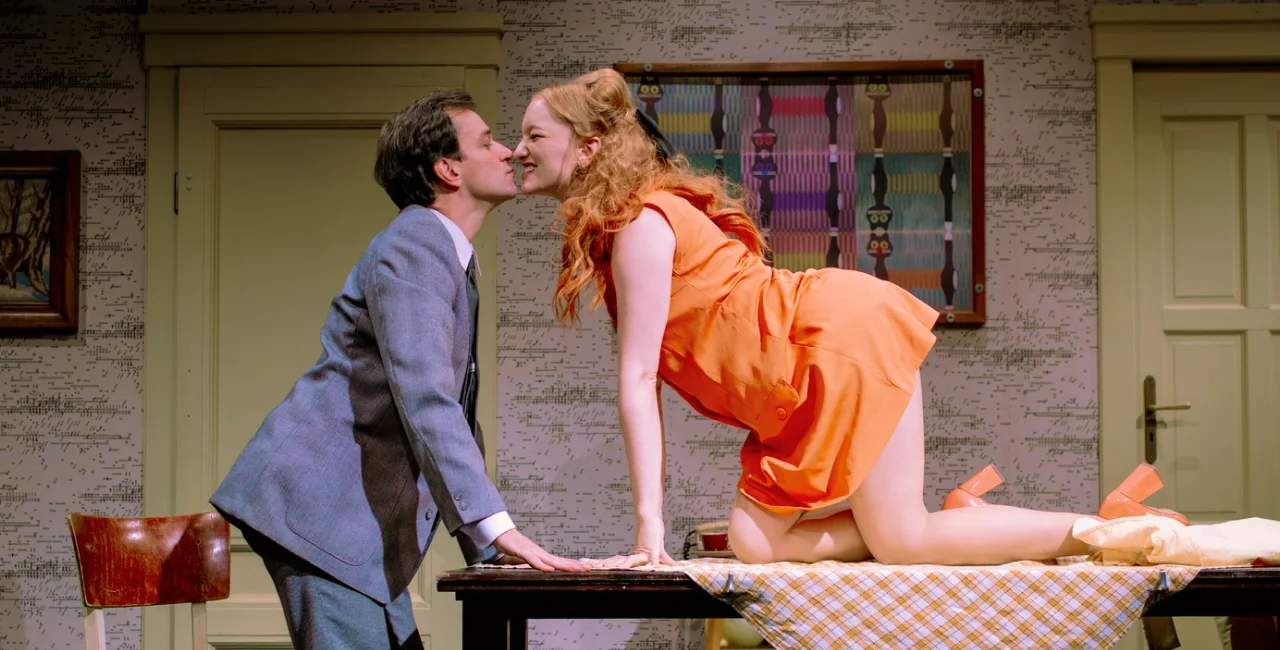

 Summary for: An English-language Havel? This hidden Prague theater is making it happen
Thousands of people walk past it every day, yet few will venture into this narrow passageway off Celetná street, in Prague’s Old Town, to discover the small theater tucked into an 18th-century palace.
Divadlo v Celetné (Celetná Theater), long associated with the acclaimed local ensemble Kašpar as well as a funky café hidden in plain sight of the tourist circuit, is well aware of its prime location.

Now, in an effort to attract a more international audience to Czech theater, it is staging an English-language production of The Increased Difficulty of Concentration, a 1968 satirical play and metaphysical farce by a literary giant whose work is still rarely performed in English: by Václav Havel.
The two-hour play offers a compelling introduction to a complex figure: a playwright, poet, and national hero highly esteemed abroad, but with a more complicated relationship at home.
Autobiographical elements aside, the production feels less like a relic of the past and more like an eerie preview of today’s world, touching on where relationships blur, meaning collapses, and systems try to make sense of it all.
Black Mirror written half a century ago
Written right before the Soviet occupation of 1968, The Increased Difficulty of Concentration imagines a world where individual happiness becomes collective data and where human emotions are controlled by systems seen as either symptoms or antidotes of a world gone absolutely mad – or maybe both at the same time.
It follows academic Eduard Hummel, who spends the better part of his days promising his wife he’ll break up with his lover and assuring his lover he’ll divorce his wife.

While evidently better known for his later role as political dissident-turned president and statesman, the play hints at Havel from another angle, that of the playwright and intellectual who was also notorious for his extramarital affairs.
When he’s not filling the void of his existence with vain sexual conquests, Hummel fills it instead with pseudo-philosophical tautological speeches – dutifully transcribed by his beautiful secretary – or with odd sessions of scientific experiments involving a team of bureaucratic researchers and a sort-of-self-aware machine called Puzuk.
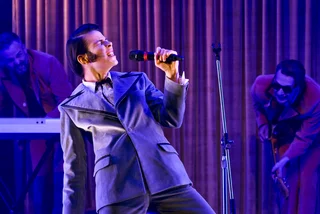
Eerily contemporary despite being written more than half a century ago, the play looks at the absurdity and disintegration of modern life – unravelling in no apparent order of time or space – with surreal and darkly playful Czech humor. But the audience might not realize it. At first.
“At first, audiences are a bit unsure. Havel is complex: it’s half philosophy, and the chronology of the scenes is completely disrupted, so there’s a lot to process,” says Ondřej Novák, who plays Hummel.
“But in the first half people are still taking notes, trying to follow it. Then in the second half something shifts, they start to get it. And then they begin to laugh. At that point they realize: oh, it’s a comedy.”
The challenges of Havel in English
Kateřina Zapletalová (who plays Renata, Hummel’s mistress) adds that language plays with perception.
“In Czech… he seems like this really weird guy that sits alone with his small papers, notebooks, and notes,” she says. In English he becomes more slick and unlikeable, almost pathetic, she adds.
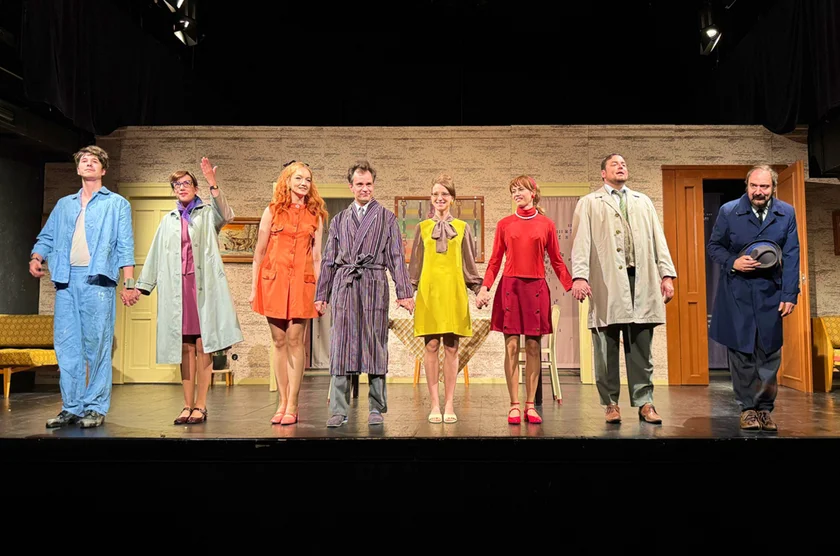
Johana Koubová (Lilly, Hummel's secretary) describes how translation can not only shift characterization but meaning: "We did the English version first, then went back into rehearsal and found better ways of doing it. Working in different language versions really opened up new meanings in the play."
Novák, adds that performing in English was simply nervewracking. “Just one mistake could break the whole situation.”
The Increased Difficulty of Concentration will hold performances in Divadlo v Celetné in both Czech and English in the coming months. The next English-language shows will be on April 30, May 1-2, May 14, June 6-7, June 12-13, June 19-20, August 4 to 7, August 24-25, August 27, and September 21 to 23. Expats.cz readers can reserve tickets via the box office email rezervace@divadlovceletne.cz with the discount code Expats30.
Theaters are fighting to exist
For the three actors there is more at stake then just a chance to polish their English. Small theaters in Prague are currently struggling with lower attendance and funding cuts introduced by a government intent on seeing live culture as a business like any other.

“Their narrative is that theaters should not be political. I don’t really understand it. Art has always been political,” Kateřina insists.
That tension extends to economics and survival. “If you cannot get money from your audience, you don’t have the right to exist,” she says, pushing back against a purely market-driven view of culture: “Culture cannot be a business… not all of it.”
Czech theater is still one of the best ways into Czech culture, and Prague’s smaller, lesser-known stages are where you really get that experience up close.
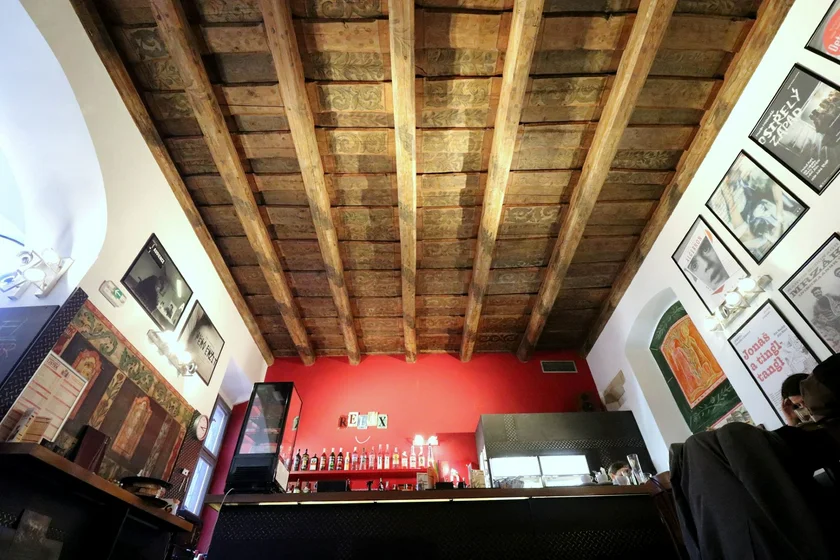
Divadlo v Celetné fits that perfectly. The intimacy of the space, plus the long intermissions spent in the theater bar, feels almost as important as the performance itself, in that slightly unhurried, social way of doing things that is distinctly Czech.
Over a beer after the show, Novák tried to pin the feeling down: “It’s Havel. It’s half philosophy, and the chronology of all the scenes is completely messed up. But the feeling tonight… to hear you, to know that you understand what we are trying to do. That was so, so beautiful.”