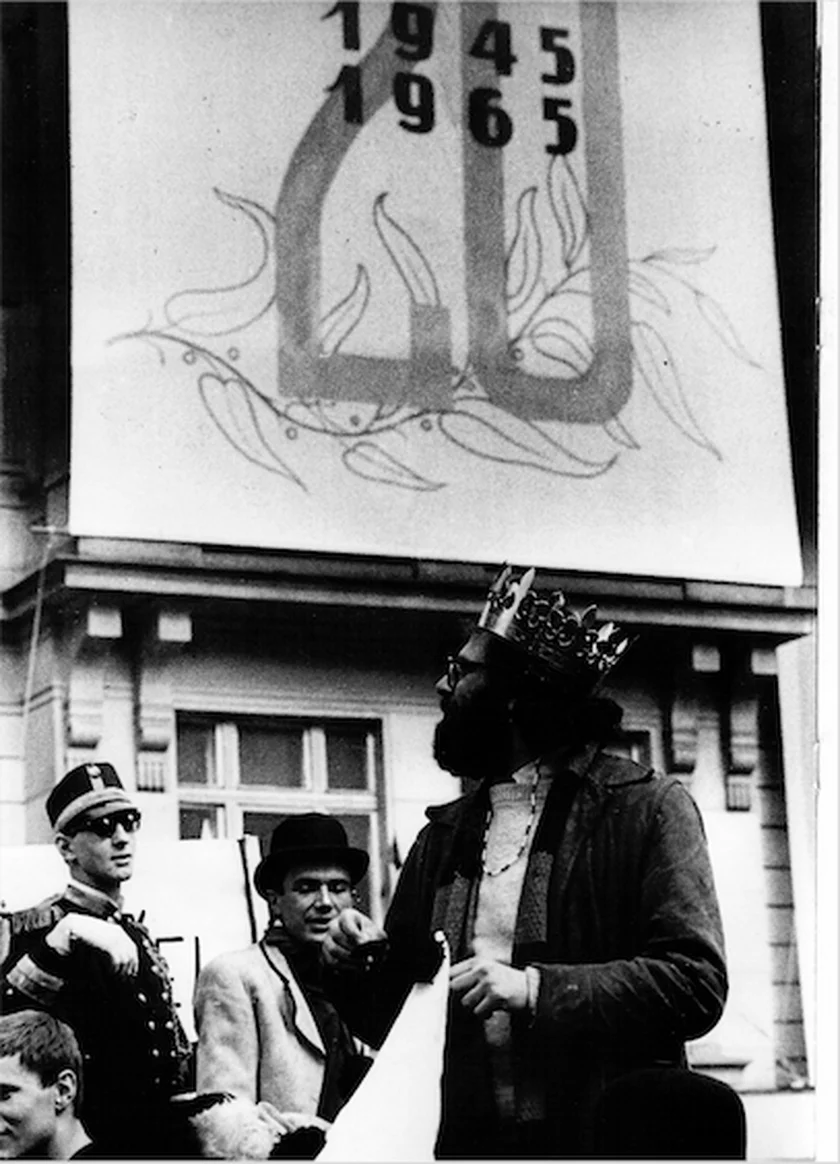
On the first of May, 1965, a bearded American poet was paraded through the streets of Prague by thousands of cheering students. Allen Ginsberg – author of Howl, enfant terrible of the Beat Generation, and recent expellee from Cuba – had just been elected King of May.
Within a week, the secret police had "returned" Ginsberg's stolen notebook – by inviting him to the police station to collect it – and put him on a plane to London. On the flight, he wrote a poem: Král Majáles. He landed in time to have dinner with the Beatles.
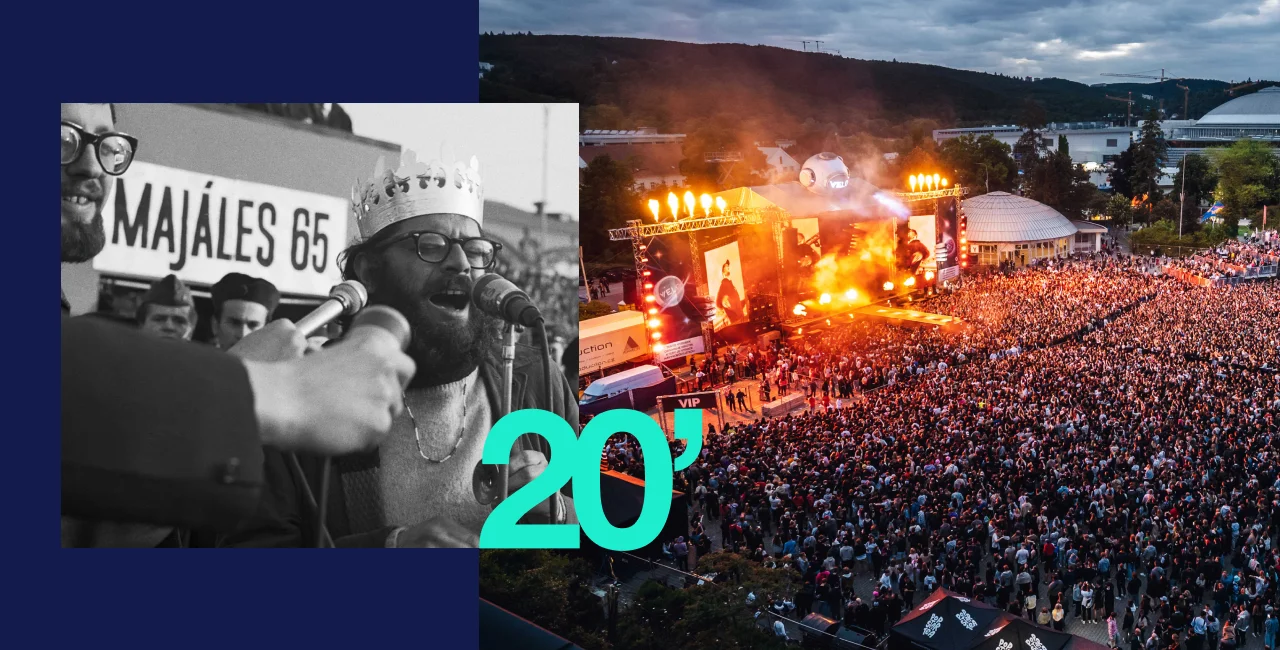
It is, by any measure, one of the more extraordinary episodes in the history of student festivals. This Friday, when the 20th edition of Prague Majáles since its post-revolution revival opens at Letňany Airport, it will unfold under the shadow of that legend.
A tradition older than the Republic
The word majáles comes from the Latin "Maius," for May, and the tradition of students celebrating the arrival of spring dates back to the earliest universities of the 15th century. By the 19th century, it was seen as a free-spirited occasion, on which young people claimed the streets.
The Nazis banned it. The Communists, after World War II, tried to co-opt it, folding student celebrations into the official May Day apparatus of the Party. But the tradition proved stubborn. In 1956, following Stalin's death and Khrushchev's first loosening of the ideological grip, students in both Prague and Bratislava organized the first majáles since 1948 and promptly used the occasion to air grievances against the regime.
By 1965, the cultural atmosphere was marginally more permissive. The students nominated a bearded Beat poet from New Jersey as their king. Allen Ginsberg had been in and out of Prague for ten weeks by then; he had lectured, given readings, wandered the city, and been placed under surveillance by the StB, the Czechoslovak secret police, who bugged his hotel room and assigned informers to track him.
His election as King of May was not quite the spontaneous act of whimsy it appeared. The students initially wanted to crown the writer Josef Škvorecký, who declined. Ginsberg, consulted, asked: "Is it political?" He was assured it was just a student celebration, the first since the Nazis had come in. He agreed.
What he had not anticipated was that the crowd that turned out numbered not five or ten thousand students but something closer to a hundred thousand, turning the celebration into what he later described as a "serious demonstration/manifestation towards the government."
One more year of majáles followed, in 1966, when the festival turned into a riot against president Antonín Novotný regime. Then it was suppressed again. The next one wouldn't take place for a quarter century.
After the Revolution: A king crowns a king
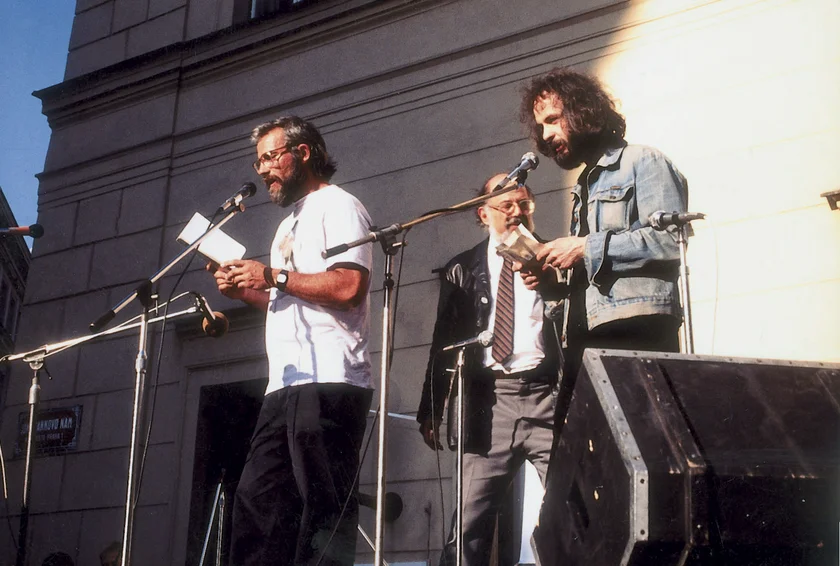
When majáles returned to Prague after the Velvet Revolution, it was Ginsberg himself, back in the city for the first time in 25 years, who crowned the new King of May in 1990.
In 2004 Brno, Olomouc, and Zlín joined forces for what became the "Moravian Majáles." A year later, the event consolidated under the Czech Majáles banner, spreading to multiple cities. Prague's own incarnation, now in its 20th year, has settled into the vast open grounds of Letňany Airport as its home.
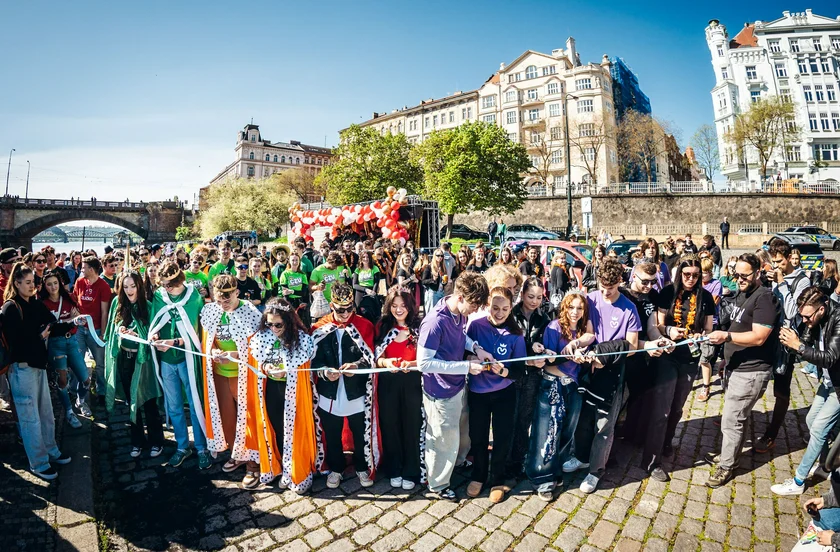
The tradition of electing a King – and now also a Queen – of Majáles survives, carried forward each year at the evening ceremony on the main stage with the participation of city officials and prominent local figures.
This Friday: What’s on
The 2026 Prague Majáles begins not at Letňany but in the city itself. On Friday morning, a free parade will set off from Smíchovská náplavka towards Strossmayerovo náměstí, starting at 9:30 a.m. with four allegorical floats in the colours of Charles University, ČZU, the Police Academy, and VŠ Ambis carrying live bands through the streets.
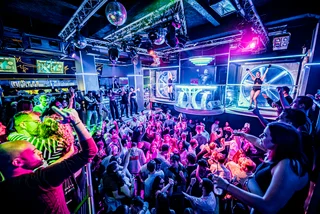
By 10:30 a.m. the festival grounds at Letňany will open, and a lineup across three stages will carry the day into the night. There is the pop-rock nostalgia of the Hitrádio City stage – Chinaski, David Koller, Jiří Korn, Martina Pártlová, Vypsaná fixa, and Horkýže Slíže, names that have accompanied Czech student life for decades. There is the rap and urban music contingent: Calin, Ben Cristovao, Sara Rikas, PTK, STEIN27, Mikolas, Grey256, Kontrafakt, and many others. And there is BUKA – the new artistic alter ego of Viktor Sheen, one of the most prominent Czech rappers working today.
The new dance stage, a feature introduced this year, will be presided over by world-class drum'n'bass acts: Rudimental, returning to Prague after 14 years, and Sigma, alongside Dimension, who travels to Letňany directly from Coachella in California.
What connects the bearded poet on a float in 1965 to the drum'n'bass headliners of 2026 is not a continuous line of political protest – the festival today is, by any honest account, primarily a very large party. What connects them is the instinct of young people to claim space, to celebrate spring and freedom, and to anoint their own royalty.
Kraj Majales (King Of May) by Allen GinsbergAnd I am the King of May, which is the power of sexual youth / and I am the King of May, which is long hair of Adam and Beard of my own body / and I am the King of May, which is Kral Majales in the Czechoslovakian tongue
Tickets for the Prague edition are available online. Majáles will also take place in Brno on May 8, and in Ostrava on May 16 – each with its own parade, lineup, and crowning of a local King and Queen.