



 Reading time: 4 minutes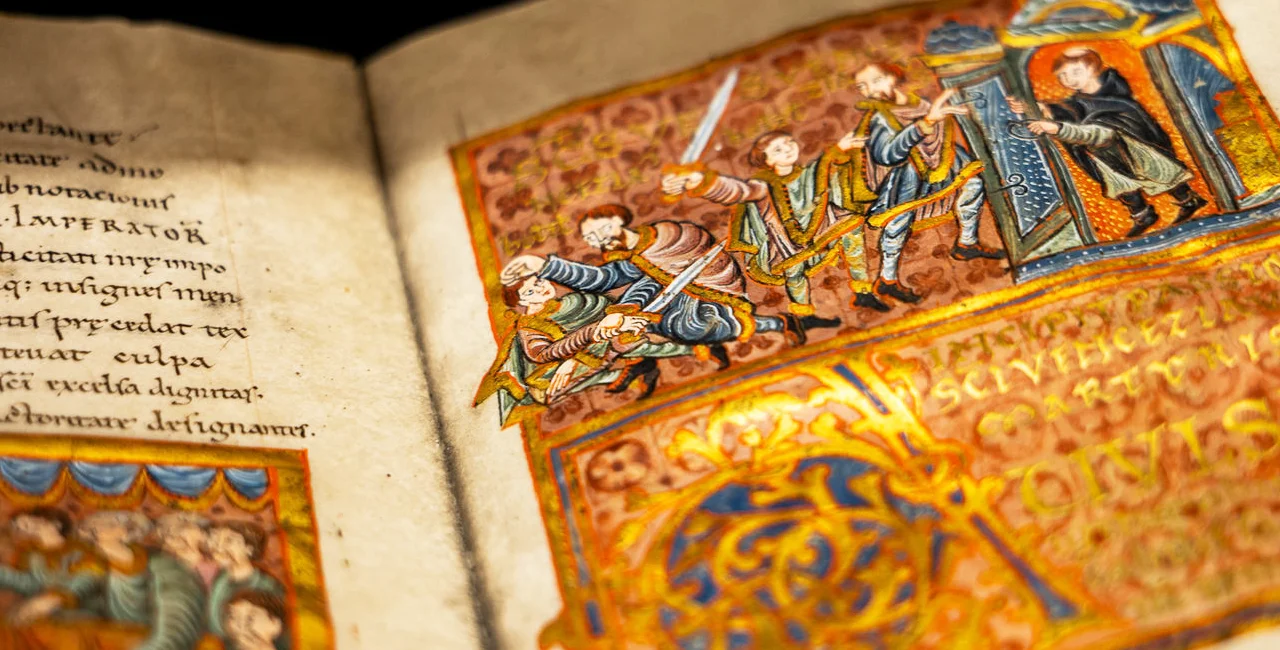

 Summary for: Who were the Přemyslids? National Museum opens Bohemian dynasty exhibit
The National Museum in Prague has opened a major new exhibition exploring the Přemyslid dynasty, the ruling family that transformed early Bohemia from a small principality into a powerful Central European kingdom.
Titled The Přemyslids: A Ruling Dynasty and Its Age, the exhibition opened on April 24 in the museum’s Historical Building atop Wenceslas Square and brings together more than 900 artifacts spanning roughly five centuries of medieval history.
Museum officials say it is the largest historical exhibition in the Czech Republic in recent decades, with items loaned from nearly 70 domestic and international institutions.
The timing is significant for Prague’s cultural season, with the exhibition expected to attract both local visitors and international tourists interested in early Czech history.
Who were the Přemyslids?
The Přemyslid dynasty is considered the first ruling house of the Czech lands and one of the key formative forces in early Central European statehood. Emerging in the 9th century, the family initially ruled a small territory around Prague inhabited by the Bohemian tribes, expanding its influence through a combination of military power, strategic alliances, and control over important European trade routes.
The dynasty’s origins are tied to the legendary figure of Přemysl the Ploughman and Princess Libuše, a foundational myth that reflects both the symbolic and political aspirations of early Bohemian rulers.
The first historically documented Přemyslid ruler is Bořivoj I in the late 9th century, who is credited with consolidating early Christian influence in the region and strengthening ties with the Moravian Empire. Under rulers such as Boleslaus I and Boleslaus II, Prague developed into an important political and commercial center.

Vratislaus II became the first Přemyslid to be crowned King of Bohemia in 1085, marking the gradual elevation of the duchy into a recognized kingdom within the Holy Roman Empire. By the 13th century, Přemysl Ottokar II extended Bohemian control over Austria, Styria, Carinthia, and parts of northern Italy, briefly making the kingdom one of the most powerful states in Central Europe.
The final Přemyslid ruler, Wenceslas III, was assassinated in 1306 under still-unclear circumstances, ending the male line of the dynasty and closing one of the most important chapters in early Czech history.
Rare artifacts and royal treasures
The National Museum exhibition presents this Přemyslid history not as a textbook timeline, but as a narrative of political ambition, family conflict, and shifting power. Visitors move through the dynasty’s rise, royal peak, and eventual collapse.
The exhibition also highlights the role of women in the dynasty, including Saint Ludmila and Saint Agnes of Bohemia, whose influence extended beyond formal political power through religion and social institutions.
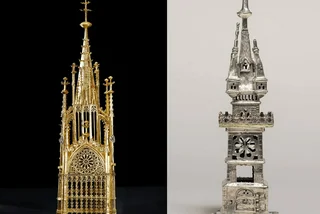
More than 900 objects are on display, many of them shown publicly for the first time. Highlights include medieval jewelery, liturgical textiles, weapons, coins, and rare written documents that illustrate the development of early Bohemian society.

One of the key exhibits is a Romanesque sarcophagus from Vyšehrad, which historians believe may have once held a Bohemian ruler. The tomb is being shown outside its original site for the first time.
Other notable items include funerary jewels linked to Přemysl Ottokar II, textiles from the grave of Saint Ludmila, and early coinage from the beginnings of minting in Bohemia. A number of foreign loans are also included, such as artefacts from Austria, Germany, and Poland.
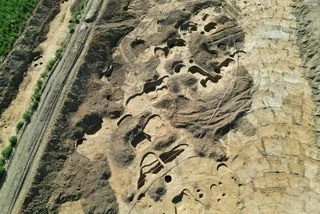
The exhibition places particular emphasis on the blurred line between myth and history in the dynasty’s origins. The story of Libuše and Přemysl is presented alongside archaeological finds from early hillforts around Prague, showing how legend evolved into national identity over centuries.
“This exhibition is extraordinary in scope and significance,” says National Museum Director General Michal Lukeš, adding that it offers visitors a chance to see “history through objects that bring key moments to life.”
Fundamental to Czech statehood
The exhibition is a joint project with Prague Castle Administration, which contributed more than 90 artefacts from its collections.
Prague Castle Director Pavel Vyhnánek said the Přemyslids were central to the site’s history, noting that Bořivoj of the dynasty founded the castle more than a thousand years ago.

Czech President Petr Pavel also visited the exhibition shortly after its opening, writing that the Přemyslids’ political and diplomatic abilities “fundamentally shaped Czech statehood” and urging the public to form their own view of this period.
Museum organizers say the exhibition also places the Přemyslids in a wider European context, highlighting their connections to neighboring kingdoms and their role in shaping medieval Central Europe.
At its peak, under rulers such as Přemysl Ottokar II and Wenceslas II, the dynasty controlled territories stretching from the Baltic to the Danube, and played a major role in regional politics and trade.
The Přemyslids. A Ruling Dynasty and Its Age runs until Oct. 15, 2026, and is open daily at the National Museum’s Historical Building in Prague.