



 Reading time: 3 minutes

 Summary for: From cost center to innovation hub: Commerzbank reflects on Czech tech’s evolution
Twenty years ago, Commerzbank planted the seeds of its Prague service hub. Today, that hub has grown into the Digital Technology Center (DTC), a powerhouse of 600 tech specialists from over 60 countries, driving IT solutions for Commerzbank AG and its global clients.
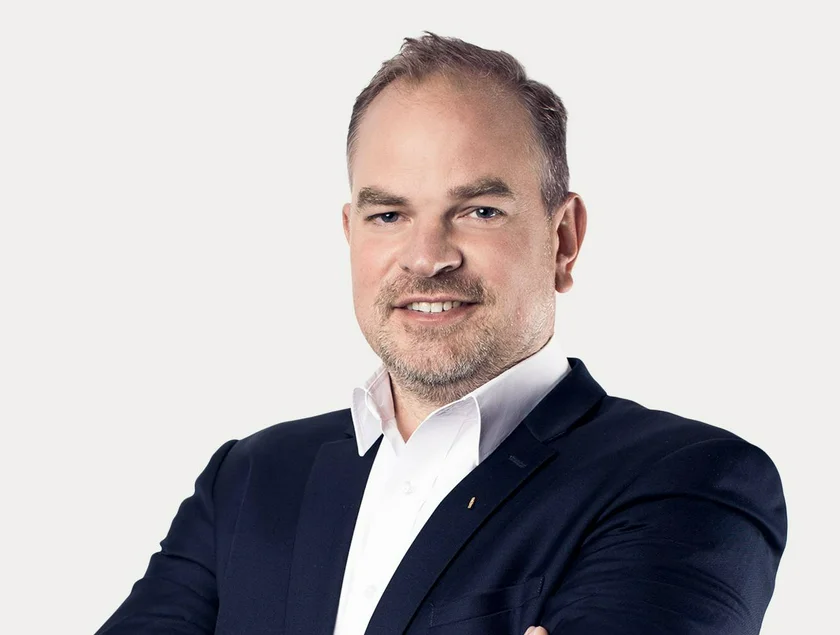
As Germany’s second-largest bank, with nearly 48,000 employees across 40 countries and a majority stake in mBank, Commerzbank has built a strong international presence. Expats.cz sat down with Igor Savic, head of the DTC in Prague and Brno, to discuss the shifting Czech tech labor market and what the future holds for his team.
You are servicing a bank headquartered in Germany. Back when you started, there was a big difference in German and Czech working culture. Is that still the case?
I see this differently. We are very similar, Germans and Czechs. There are fewer differences than, say, those between American work culture and work culture in India. If I compare the Czech Republic and Germany, I often feel like we’re part of one ecosystem. There’s a natural flow of ideas and best practices between both sides, which helps maintain consistency and quality.
Sometimes people here follow German approaches closely, which brings more regulation and structure, but also the benefits of a strong judicial and compliance framework. Even back when we started, the Czechs were already very advanced.
Germany, for instance, mainly used the waterfall method for project management development and then moved to agile. However, the center in Prague was established as an agile organization from the start.
You were originally set up to save the company money, as costs were far lower here. Is that still the main advantage of having the tech center in Czechia?
Times have changed, and so have geo-cultural advantages. Germany only has so many talented people for this type of work at any given time, and the country is facing a very serious issue: the aging of its workforce.
When senior leaders came to Prague, they were impressed by the youthful energy in the office. In Germany, the workforce tends to be more experienced, while in Prague we have a strong mix of younger specialists and senior experts.
What has been the biggest change at the technology center since you launched 20 years ago?
The biggest change is definitely in the level of trust. We were set up as an experiment, a chance to outsource any type of work from Germany. So in the beginning, we were working on very simple tasks. But we evolved, developing our own local management and product owners responsible for complete delivery.
And how hard is it now versus 20 years ago to get good talent here?
It’s easier because the market has much more experience, as the universities are producing lots of IT people. But I think the education system still has room to grow. Students are very well prepared technically, but there could be more focus on analytical and business-oriented skills. That’s one reason we are increasing cooperation with universities across the country, to develop the skills we are going to need in the near and far future.

Similarly, if you compare the typical developer in London, they may have less technical depth, but they often understand the business very well. We’re aiming for that same balance here.
So how will the center look 10 years from now in terms of jobs?
AI will transform how developers work. Many repetitive tasks will become automated, and we’ll need to focus on roles that require banking knowledge, business insight, or a specialization in certain areas of finance.
In Prague, we are going to focus on tasks that have much higher business value. Those who started with repetitive tasks have built valuable system knowledge and can move into advanced positions, such as systems architects. There will always be room for growth for those ready to adapt and keep learning.