 Reading time: 3 minutes

 Summary for: Starting life as a foreigner: One in four Prague babies lacks Czech citizenship
Nearly one in 11 babies born in Czechia last year did not have Czech citizenship, almost triple the proportion of a decade ago. In Prague, the figure was closer to one in four.
The numbers reflect a country where international families are becoming a larger part of everyday life, even as the overall number of births falls to historic lows. They also raise a question familiar to many foreign residents: What does it mean to be counted as “foreign” when Czechia is the place where your child’s life begins?
New Czech Statistical Office figures show that 7,249 babies born in 2025 had foreign citizenship, representing 9.3 percent of all births. In 2016, the corresponding figures were 3,709 and 3.3 percent.
A growing share of a shrinking generation
The change has two causes: more children are being born to foreign-national families, while fewer babies are being born overall.
Czechia recorded approximately 77,600 births last year, the lowest total since records for the Czech lands began in 1785. Demographers warn that numbers could fall further as smaller generations move through their childbearing years.

Against that backdrop, births to foreign nationals have become an increasingly significant part of the country’s demographic picture.
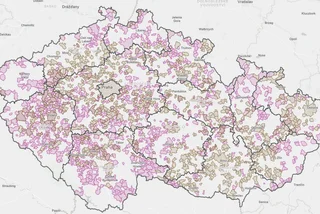
The change is particularly pronounced in Prague, where babies with foreign citizenship accounted for 23 percent of births in 2025, up from 11 percent in 2016. At the other end of the scale, their share in the Moravian-Silesian region was 3.2 percent.

Ukraine’s displacement crisis has accelerated the trend. Last year, 4,211 babies had Ukrainian citizenship, approximately 58 percent of all newborns with foreign citizenship. A further 804 had Slovak citizenship and 636 Vietnamese citizenship.
Before Russia’s full-scale invasion, Ukrainian children accounted for roughly a quarter of births to foreign nationals in the Czech Republic. Their share increased sharply from 2022 onward.
However, the longer-term picture extends beyond wartime migration. Czechia’s registered foreign population grew from approximately 496,400 at the end of 2016 to 1.13 million at the end of 2025, rising from about four percent to a tenth of the population.
Citizenship tells only part of a family’s story
For international families, the distinction between birthplace and citizenship is crucial.
Under Interior Ministry guidance, a child acquires Czech citizenship at birth if at least one parent is a Czech citizen. A baby born to a Czech parent and a foreign parent can therefore be Czech from birth, even while growing up with strong connections to another country.

The headline figure of 9.3 percent consequently does not capture every internationally connected family. Nor does foreign citizenship indicate whether parents recently arrived or have lived in Czechia for years.
Children with at least one parent holding foreign citizenship accounted for almost 13 percent of births across the Czech Republic last year, roughly double the share a decade earlier.
Around 10,000 newborns had a foreign-national mother and approximately 9,600 had a foreign-national father. Those groups can overlap and should not be added together.

That distinction matters when interpreting the figures. Citizenship records describe legal nationality; they do not establish a child’s home language, cultural identity or future connection to Czech society.
For Prague in particular, these birth patterns point toward a generation of increasingly international classrooms. As these children reach preschool and primary school, local services will be supporting families with a wider range of linguistic and administrative needs.
The demographic story is therefore about more than migration replacing missing births. It is also about children born locally whose families cross national borders, and whose place in Czech life will be shaped by far more than the nationality recorded at birth.