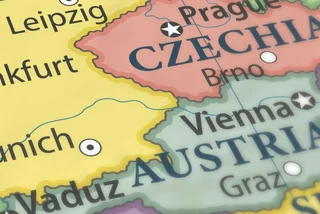
Private universities in Czechia, including those with courses given primarily in English, should not be seen as a lesser alternative to public institutions, senior academics say, arguing that practical skills, teaching quality, and lifelong learning matter more than a diploma alone.
Speaking in a debate hosted by Czech news site iDNES, Radka Wildová, vice-rector of the University of New York in Prague (UNYP), said expectations that a degree guarantees career success are outdated.
“University opens the door to lifelong learning, but it is not a guarantee in itself,” she said, adding that graduates’ own initiative and willingness to keep developing are decisive.
International environment a reality
UNYP, one of the country’s best-known English-language universities, operates in a fully international environment, with staff from around 60 countries and students from roughly 80.
According to Wildová, this global mix is not a marketing slogan but a daily reality that shapes how students think about careers.
“Graduates don’t plan to stay in one country or one profession anymore,” she said, citing students who move between continents after finishing their studies.
"An American student told me after graduation that she wanted to continue in South Korea, then maybe in Singapore."
The discussion comes as Czech universities, public and private alike, face demographic pressure and a changing labor market shaped by artificial intelligence and rapid technological change.
Daniela Červenclová, vice-rector at private Ambis University, said institutions must focus less on formal prestige and more on whether their programs make sense for future careers.
“Universities shouldn’t be fighting each other for students,” she said. “They should be competing on quality.”
Older students becoming more common
Both vice-rectors stressed that international and mature students are becoming more common, particularly those combining work, family life, or time abroad with their studies.
Flexible formats, including distance and blended learning, are increasingly important, Červenclová said.
Artificial intelligence was another major theme. Rather than banning AI tools, Wildová said students should be taught how to use them responsibly. “AI can help with structure or analysis, but the author must always be the student,” she said.
For students and universities both, the takeaway is twofold: private universities are not “second league,” while the value of a degree lies less in its label than in the skills and adaptability. “The world is connected in a completely different way today," says Wildová.
Want to see more from us? Select Expats.cz as a
preferred source on Google.





 Reading time: 2 minutes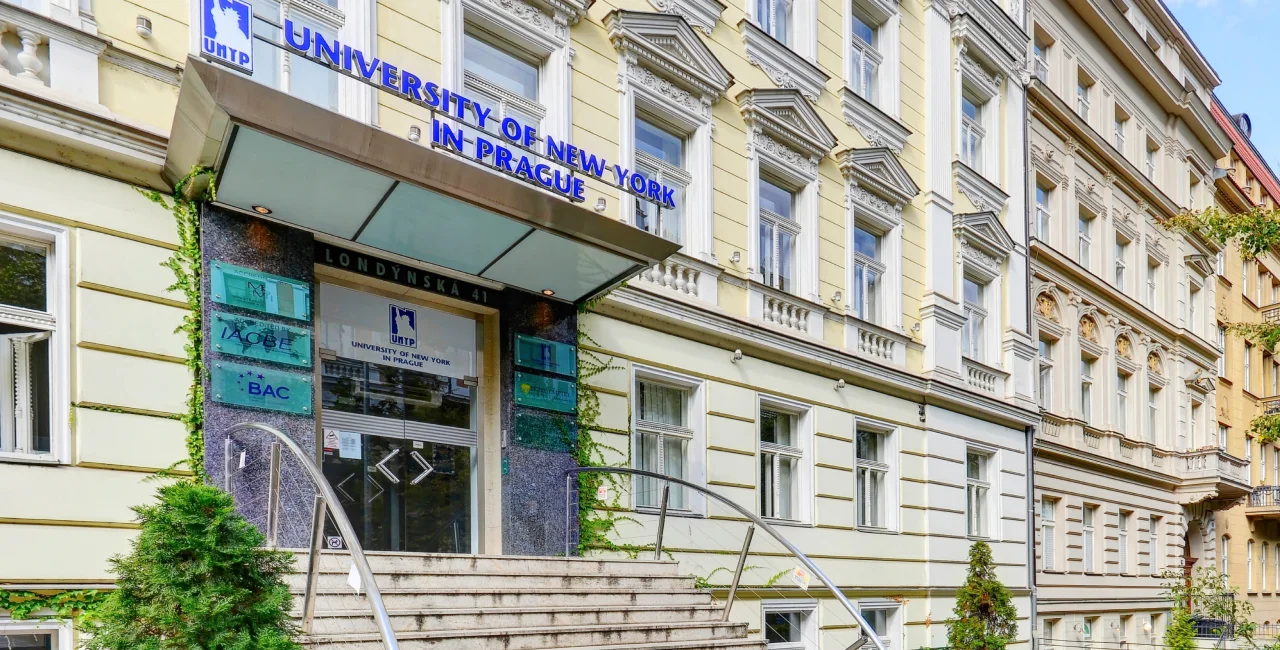

 Summary for: English-language universities in Czechia ‘not second tier,’ say education leaders
 German
 French
 English
Prague • CZK 20,000 - 100,000
English
Prague • CZK 20,000 - 100,000 Dutch
Dutch
 Italian
Remote work - Czechia • CZK 180
Italian
Remote work - Czechia • CZK 180