
 Reading time: 4 minutes

 Summary for: Czech news in brief for July 28: Tuesday's top morning headlines
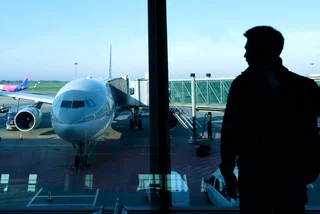
 Czechia won't tighten entry for Russian diplomats
President Petr Pavel appointed 15 new judges at Prague Castle on Monday, using the ceremony to push back on politicians who've been chipping away at public trust in the courts (he also had a busy weekend with a side hustle in Hungary!). Elsewhere, Czechia's waste numbers beat the EU average in the wrong direction, and Prague's rental market keeps getting smaller. Good morning, here's your headline mix.
This morning's top story
Czechia won't tighten entry for Russian diplomats

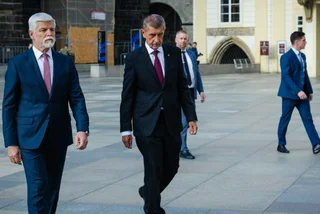
Prime Minister Andrej Babiš (ANO) has confirmed that his government has no plans to tighten entry rules for Russian diplomats, despite promising in February to do exactly that to avoid being seen as pro-Russian. Under EU-wide rules in effect since January 25, Russian diplomats must notify states before entering; individual countries can go further and require prior authorization, an option Czechia has so far declined to use even as it says it's watching for signs that relations with Russia deteriorate further.
Why it matters here: Babiš himself acknowledged the concern is real, saying other allies "have a significantly greater concentration of these people who are probably doing activities against us here" while arguing that's a reason not to single Czechia out. So far, Estonia is the only EU state that has moved to the stricter authorization regime; Czechia says it's holding that option in reserve rather than using it now.
More top headlines
Eleven of Czechia's 15 new judges are women
President Petr Pavel appointed 15 new judges at Prague Castle on Monday, including Daniela Teterová, who moves up to president of the Regional Court in Ostrava for a seven-year term starting in August. Eleven of the 15 are women, ranging in age from 30 to 52, with three arriving from private legal practice. Pavel used the ceremony to warn against efforts to undermine judicial independence, an implicit jab at coalition officials who've criticized court rulings in recent months.
Not without pushback: The cut is part of a recent controversy over judicial staffing; this batch of 15 is far smaller than the 50-plus rounds under Justice Minister Jeroným Tejc's predecessor. Tejc cites falling caseloads; the Judges' Union warns that with small courts already running lean, any gap in filling seats can slow down cases in the system.
Czechs generate more trash than EU average
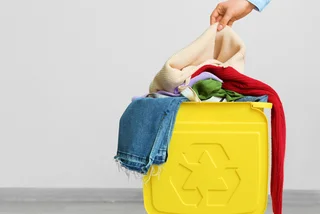
Czechia generated 538 kilos of municipal waste per person in 2023, 27 kilos above the EU average and good for ninth-worst in the bloc, according to an "Europe in Data" analysis. The figure is trending down from 570 kg in 2021, and the country's circular material use has climbed to nearly 15 percent over the past decade.
Recycling gap: A pilot project that let people drop off used furniture collected over 5,000 pieces, but only 8 percent made it back into circulation, pointing to a processing bottleneck rather than a collection problem.
Micro-apartments gain ground in Prague, Brno
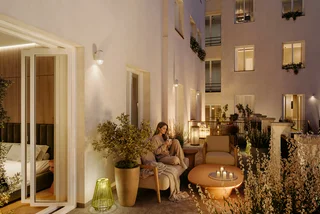
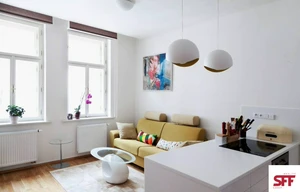
Layouts once considered oddities, like 1+0 or 1+1.5, are becoming a standard part of new developments in Prague and Brno, aimed at young singles, couples, students and buy-to-rent investors. New 1+kk apartments in Prague now run CZK 203,500 per square meter, more than CZK 20,000 above the citywide average.
For renters: These compact units rent for around CZK 12,000 a month in Prague and CZK 8,000 in Brno, often undercutting the cost of a room in a shared flat.


News you can use
License plates go digital under new rules
Vehicle owners will soon be able to handle registration entirely online, with new plates and documents delivered to pickup boxes instead of requiring an office visit, under a proposal approved by the cabinet Monday. The system will also let owners hold onto a plate for up to six months when selling or scrapping a car, and will automatically deregister vehicles that have gone five years without valid insurance or inspection.
Timeline: Most changes take effect from July 2027, though some provisions won't kick in until 2028, so plan accordingly if a registration is coming due.
Pick & Mix
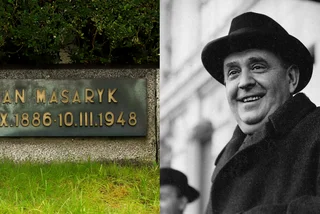
Downtown discovery. Archaeologists working ahead of Masaryk Station's reconstruction have uncovered 14th-century walls built under Charles IV, along with a later Baroque bastion near Hybernská Street. Some of the masonry will be preserved once construction resumes; most won't survive the next phase.

Great heights. Restorers working on St. Vitus Cathedral's high choir windows are getting views most Prague residents never see, and a local photographer went up to the scaffolding to capture them. The repairs are part of an ongoing structural project on the cathedral's south side.
A president's side hustle. Petr Pavel turned up at the Hungarian Grand Prix over the weekend, not as head of state but as an amateur photographer with a camera on the starting grid, delighting Hungarian PM Péter Magyar and catching the attention of French outlet L'Équipe. It's not his first motorsports cameo. He's previously shot the Dakar Rally and MotoGP in Brno.