The Czech Senate is set to debate a proposal that could change how doctors and patients approach some of the most difficult decisions in medicine: what happens when treatment can no longer help a seriously ill person.
The amendment does not legalize euthanasia or assisted suicide. Instead, it aims to create clearer rules for situations where doctors believe continuing life-sustaining treatment is no longer beneficial to the patient.
The proposal has nevertheless sparked a wider debate about dignity, patient autonomy and whether Czechia should eventually consider legalizing assisted dying.
What is the Senate considering?
The amendment, introduced by Senator Věra Procházková and a group of cross-party senators, would establish procedures for cases where treatment is considered medically inappropriate or futile.
Supporters say doctors currently face uncertainty when deciding whether to continue aggressive treatment that may only prolong suffering without improving a patient's condition.
Under the proposed rules, a doctor who concludes that further treatment is inappropriate would have to discuss the decision with the medical team, document the reasoning, inform the patient and discuss possible next steps.
If a patient disagreed with the decision, the case could be reviewed by an ethics committee, and patients would retain the possibility of seeking a court decision.
PARTNER ARTICLE
The proposal would also strengthen the role of advance directives, those instructions made by patients about their future medical care if they become unable to communicate their wishes.
Is this euthanasia?
No. Under current Czech law, doctors cannot intentionally end a patient's life by administering a lethal substance, and assisted suicide is also illegal.
The proposed amendment concerns the decision not to start or continue treatment that doctors consider medically futile. Supporters argue that this is already a reality in medical practice and that clearer rules are needed.
Procházková has rejected accusations that the bill introduces euthanasia.
"It does not introduce euthanasia," she said, arguing that the proposal addresses situations where further treatment no longer benefits the patient.
What happens if you can’t make medical decisions yourself? Czech law allows patients to state their wishes in advance through an advance directive (dříve vyslovené přání), similar to a living will in the U.S. It can specify which treatments they do or do not want if they later cannot communicate. Czechia does not have a system identical to the U.S. “Do Not Resuscitate” (DNR) order, but patients’ wishes and medical decisions around life-sustaining care are legally recognized.
Why are critics worried?
Opponents argue that changing the legal framework could gradually shift the country toward accepting euthanasia.
Senator Daniela Kovářová called the proposal "a subtle but fatal opening of the door to euthanasia," according to iDNES.cz.
KDU-ČSL Senator Lumír Kantor was also critical, describing the proposal as "a hidden form of euthanasia" and arguing that improved palliative care should be the focus instead.
Supporters reject that interpretation and say the distinction between ending life and allowing a natural death after futile treatment is fundamental.
A wider Czech debate over assisted dying
The Senate discussion comes amid a longer-running debate about whether Czechia should eventually legalize assisted dying.
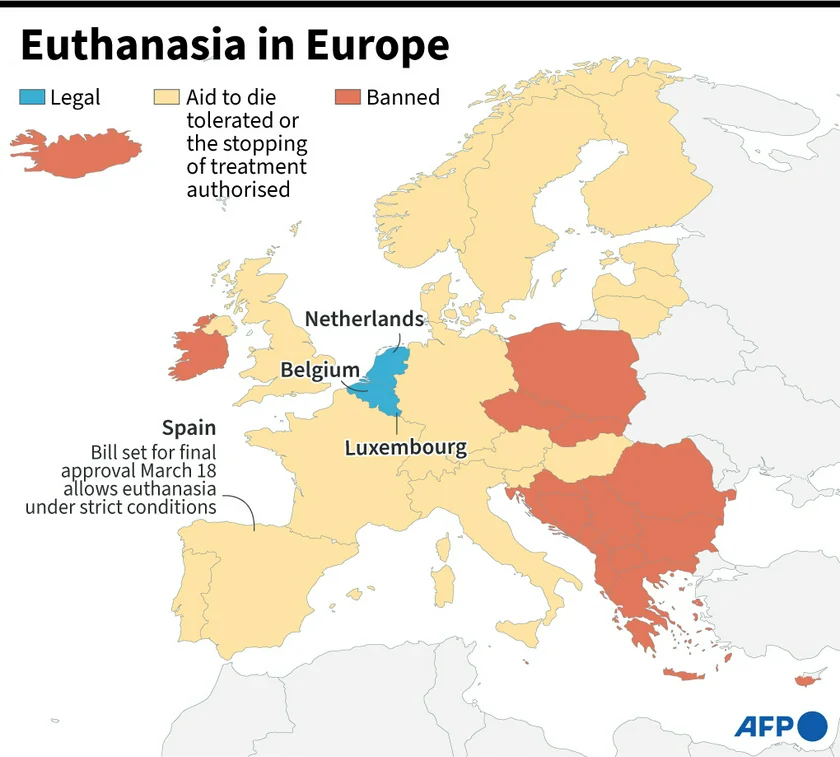
Several European countries, including the Netherlands, Belgium and Luxembourg, allow forms of assisted dying under strict conditions. Czech proposals to introduce similar rules have been debated in the past but have not become law.
Advocates argue that terminally ill adults should have greater control over decisions at the end of life. Opponents say the priority should be ensuring that everyone has access to high-quality palliative care.
For many healthcare professionals, the immediate issue is not euthanasia but improving care for people approaching the end of life.
Palliative care remains at the center of the discussion
The Ministry of Health has recently highlighted the need to expand palliative care services across the Czech Republic, where access to specialist teams varies by region.
Supporters of the current proposal say better palliative care and clearer legal rules should work together, giving patients more certainty and doctors more protection.