



 Reading time: 4 minutes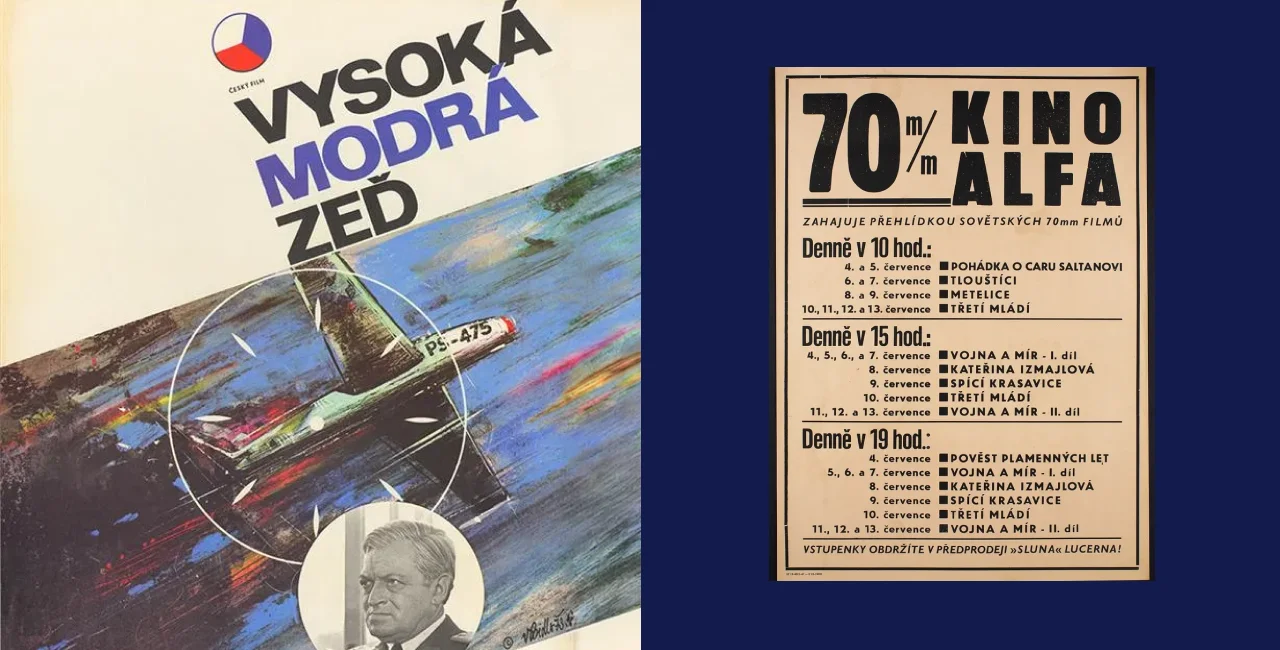

 Summary for: Before Nolan’s The Odyssey, Czechia had its own 'IMAX' experience
When Christopher Nolan’s The Odyssey is released worldwide on July 17, Prague will be home to one of only three cinemas in the European Union capable of screening the film in 70mm IMAX, the large-format format used by Nolan to shoot the movie.
The screening is notable because The Odyssey was filmed entirely using IMAX cameras, making it the first narrative feature captured this way.
While the film will also be shown in regular theaters and digital IMAX screens, only a small number of cinemas worldwide can show it exactly as director Christopher Nolan intended. Cinema City Flora is one of them.
For film enthusiasts, 70mm remains the ultimate large-format experience. As film historian Martin Šrajer writes for the National Film Archive, original 70mm screenings are “something of a holy grail for cinema connoisseurs demanding nothing but the highest-quality audio and video.”
But today’s rare screenings are a revival of a technology that once represented the future of cinema in Czechoslovakia. From the 1960s through the 1980s, dozens of cinemas across the country were equipped for 70mm, bringing audiences huge screens, sharper images, and spectacular historical epics.
Czechoslovakia’s large-format era
Šrajer notes that 70mm arrived during a period when filmmakers around the world were competing to create ever more spectacular cinema experiences.
Hollywood developed new widescreen formats to compete for audiences with television, while the Soviet bloc used large-format epics such as Sergei Bondarchuk’s War and Peace to showcase its own technological prowess.

Czechoslovakia embraced the format as part of a state-supported cinema system that invested heavily in new projection technology.
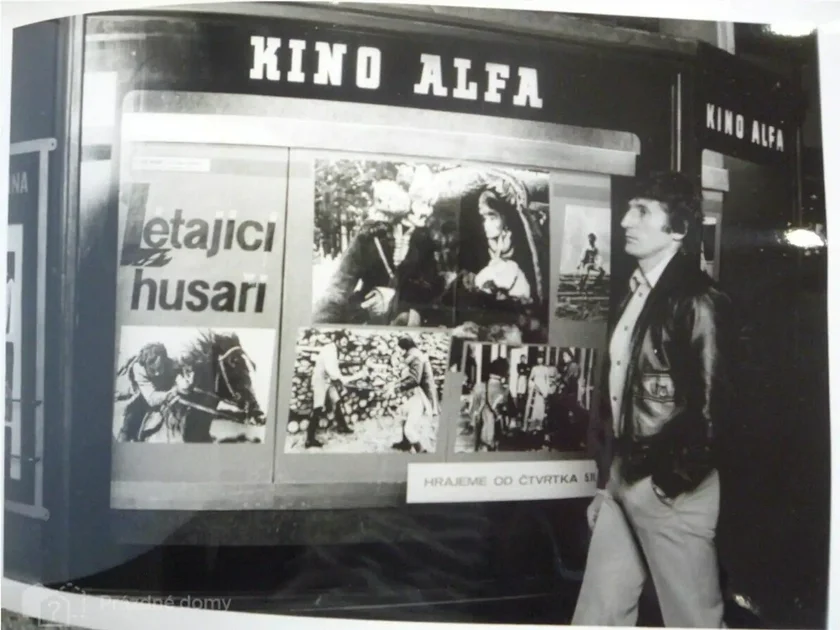
The Sokol cinema in Kladno screened its first 70mm film in 1965, followed by venues in Prague, including the Alfa cinema on Wenceslas Square and the Moskva cinema, now part of the Ládví multiplex.
By the 1970s, dozens of cinemas across the country were equipped for 70mm screenings.
Czechoslovakia’s 70mm golden age
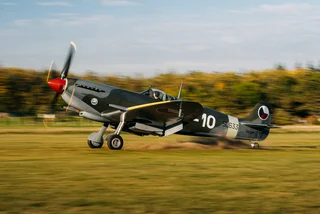
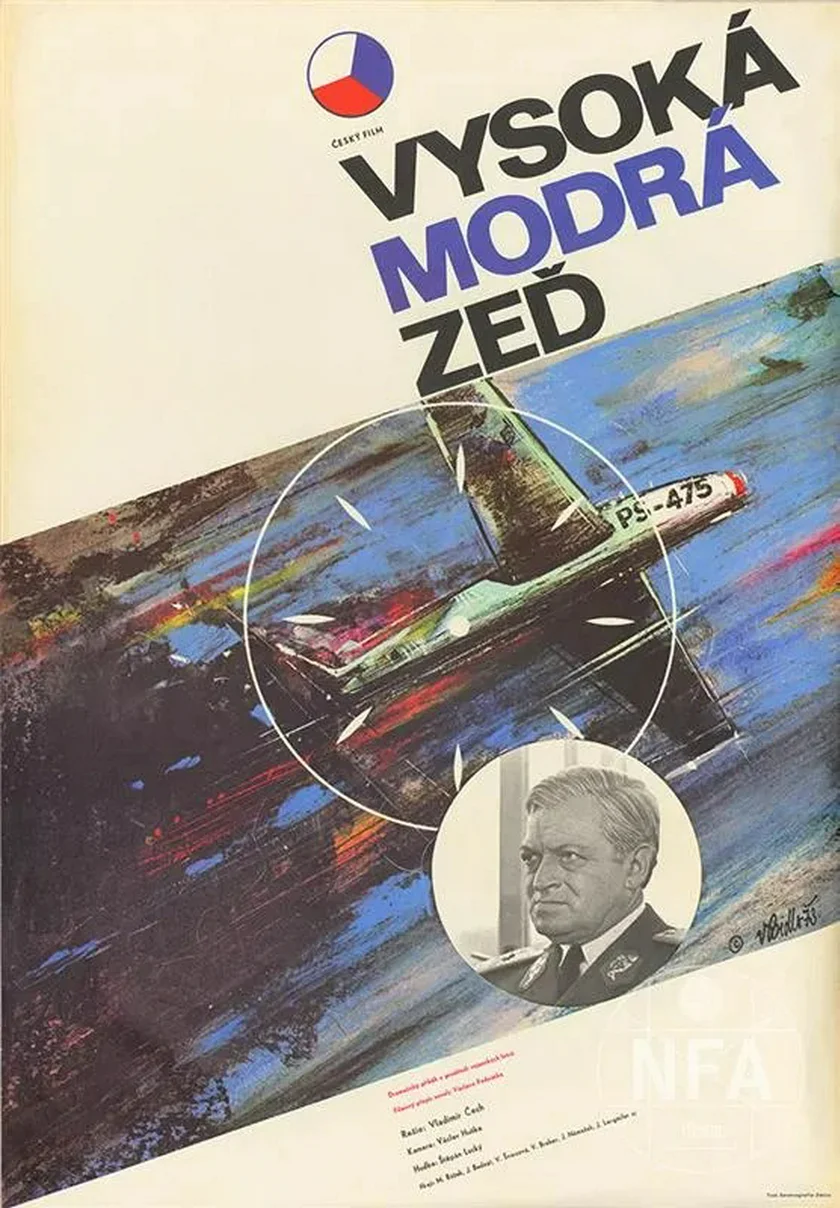
According to the National Film Archive, the first Czech feature made using 70mm technology was Vladimír Čech’s Vysoká modrá zeď (The High Blue Wall), released in 1974. Created to mark the 30th anniversary of the independent Czechoslovak air force, the film was based on Václav Podzimek’s novel Osm a půl sestřelu (Eight-and-a-half Shootdowns).
Czechoslovak cinemas occupied a rare position between East and West, showing both Soviet large-format epics and Western productions adapted for the format.
Set in 1951, the film follows an air force commander looking back at the early years of Czech military aviation and featured large-scale aircraft sequences supported by the Czechoslovak People’s Army and Svazarm.

Other Czech productions received the large-format treatment, including Otakar Vávra’s Sokolovo (1974).
During the 1960s and 1970s, Czechoslovakia had dozens of cinemas equipped for 70mm screenings, with around 100 venues eventually using Czech-based manufacturer Meopta’s locally produced Meopton projectors.
For cinema operators, the format was more than just a technical upgrade. Speaking to Šrajer, one recalls that “70 mm always meant a diversion from the everyday screenings” and brought “the enthusiasm of learning to operate a new invention and fascinating technology and equipment.”
A format that almost disappeared
Despite the growing cinema network, Czechoslovak filmmakers rarely shot directly on 70mm because of the cost. Many films were enlarged from standard 35mm negatives into 70mm prints.
This meant the decline of 70mm was largely practical.

“Making copies was very expensive, and transporting and manipulating them was difficult,” says Michal Jaso, manager of Kino Mír 70.
By the 1990s, improving 35mm technology and the arrival of digital projection pushed most cinemas away from large-format film.
Keeping 70mm alive
But the format never fully disappeared, with Czech and Slovak film fans still gather for rare screenings of original 70mm prints today.
Kino Mír 70 in Krnov has become the center of the Czech revival, hosting the annual KRRR! festival dedicated to large-format cinema. The festival’s name comes from the distinctive sound of a 70mm projector and the first letters of Krnov’s name.

“The name of the festival refers to the typical sound of a projector of this format and also to the initial letters of the name of our city,” Jaso said.
The tradition continues in Slovakia as well, including Banská Bystrica’s 70mm film festival.
For Prague audiences, Nolan’s The Odyssey offers a rare chance to experience a technology that may seem like a relic of the past, but one that Czech audiences once knew as the future of cinema.
“What attracted viewers most to the format was the vast area that the film was able to capture with unparalleled sharpness of detail,” he said. “Today’s digital formats can come close to that, but the viewing experience is still a bit different.”