



 Reading time: 8 minutes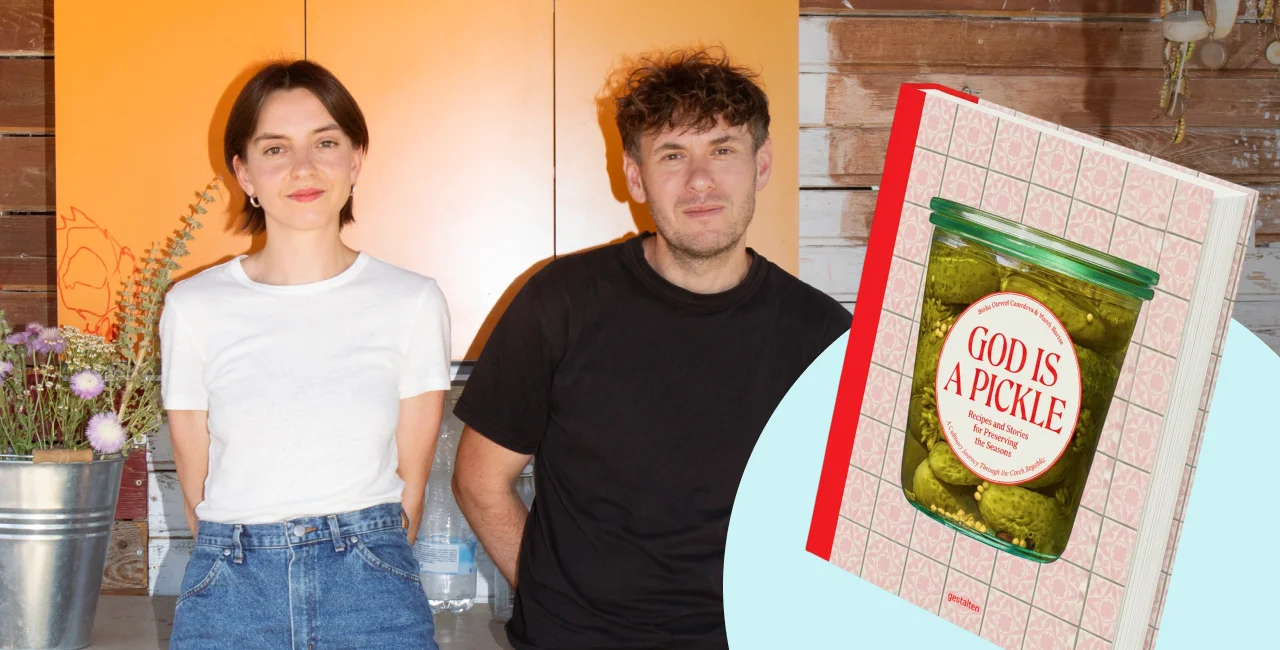

 Summary for: This new cookbook is rewriting what the world thinks about Czech food
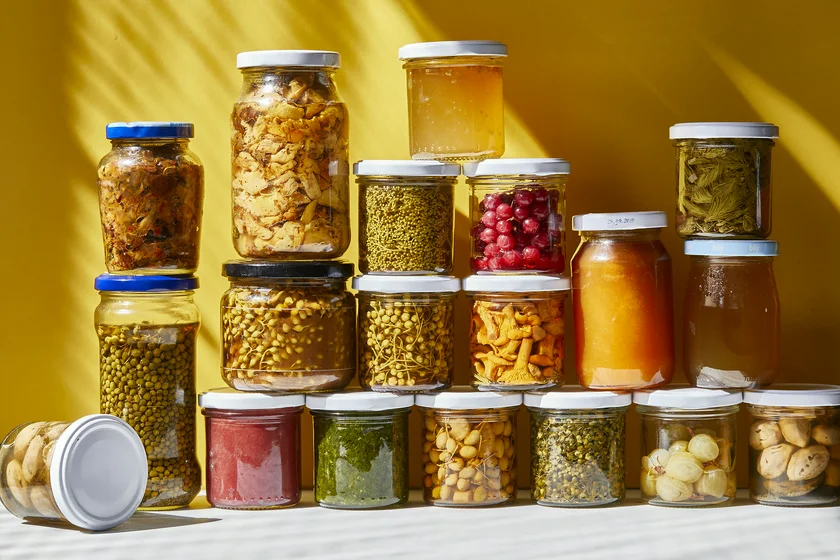
In wider discussions of Czech cuisine, meat, dumplings, and beer tend to get top billing. But that's burying the lede. There's another side of Czech food that carries just as much cultural and historical weight: the field-and-forest traditions found tucked into canning jars, stored on cellar shelves, and spooned onto the sides of plates.
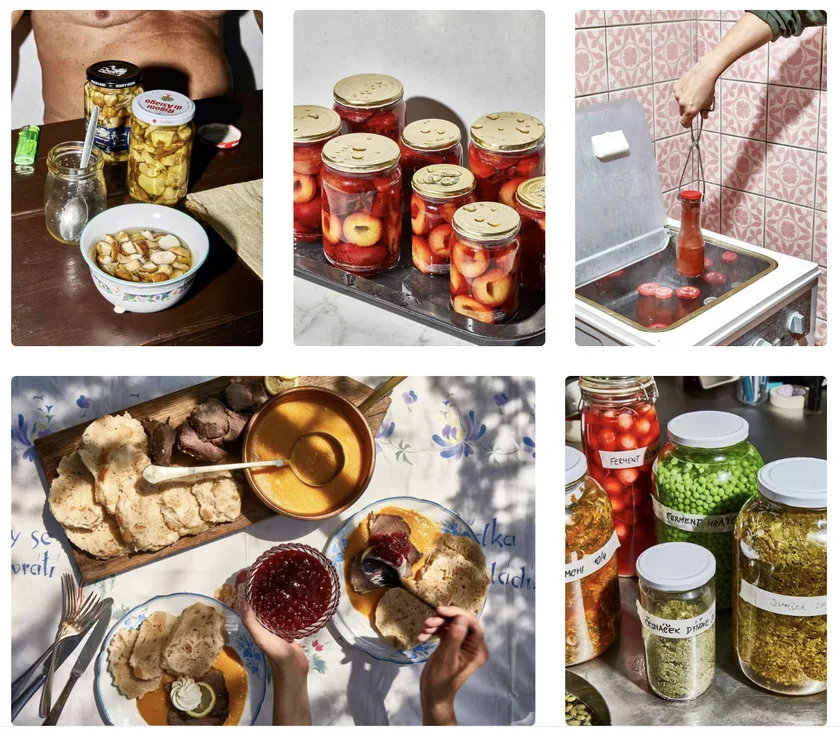
Briny and pickled, sweet and sour – if you consider yourself schooled in the Czech palate, you haven’t really lived until you’ve baked with cherry compote, made pickles in the oven on the hottest day of the year, or eaten čalamáda – unripe tomatoes fermented with onions and vinegar straight from the jar.

These aren’t the kinds of recipes most people learn from cookbooks, but through years of passed-down family tradition – not to mention jars passed over cottage fences between neighbors.
Luckily for those who didn’t grow up in Czechia, or don’t have in-laws planning their weekends around the garden’s yield, a beautiful new book has arrived.
Gods Is a Pickle (Gestalten 2026) is equal parts love letter to Czech preserving culture and culinary archive, giving syrups, vinegars, compotes, and ferments their due; not as condiments, but as an essential part of understanding Czech cuisine itself.
I recently spoke with author Šárka Otevřelá Camrdová about developing recipes far from home in Brooklyn, recreating flavors tied to memory and seasonality, and why the Czech pantry deserves a place alongside the country’s better-known comfort foods.
The cookbook also features recipes for hearty Czech classics that rely on these preserved ingredients for depth, brightness, and balance.
Your title declares that 'God Is a Pickle'. Czechs are famously one of the least religious nations in the world; so what exactly is holy about the act of preserving in Czech culture?




The title God Is a Pickle is a slightly provocative exaggeration, rooted in Czech humor but also in a very typical Czech way of seeing the world. The Czech Republic is often described as one of the most secular countries, but I don’t think that means people here are entirely without faith – they just don’t look for it in institutional religion. Instead, it tends to live in everyday rituals, in small acts that create a sense of order and stability.
In the introduction to the book, I explore why Czechs are often distant from traditional religion, but also suggest that belief doesn’t have to take a religious form. We can believe in the rhythm of the seasons, in our own skills, or in the legacy of previous generations.
Preserving, in that sense, becomes a kind of parallel to prayer. It’s a repeated, almost revered activity that has a calming, grounding effect – it forces you to slow down and be present. It may seem like a simple, even mundane act, but at the same time, it connects us to something larger than ourselves.
You're a Czech expat living in New York, writing about Czech food for an international audience – which puts you in an interesting position not unlike many of our readers. How has living abroad changed the way you see, taste, and explain Czech ingredients and flavors to people who have no frame of reference for them?
Living abroad has made me much more aware of how specific and sometimes untranslatable Czech food culture can be.
When you’re surrounded by it, you don’t question it. But the moment you try to explain something like kynuté buchty or omáčka – along with the feelings, history, and social dimension tied to them – to someone who didn’t grow up with it, you realize how much context is missing.

It has taught me to look for bridges rather than differences. Instead of presenting Czech food as something exotic, I try to connect it to ingredients, processes, and dishes people already know. That way, it becomes much more relatable.
Living abroad has made me much more aware of how specific and sometimes untranslatable Czech food culture can be.
Living in New York has also sharpened my senses. I think I taste things more attentively now, maybe even more nostalgically. Distance makes you notice details you once took for granted. And when you explain them to others, you have to slow down. Sometimes it’s a challenge, because you’re not just translating a language, but an entire cultural experience.
It’s something I often talk about with a close friend of mine here in Brooklyn, who’s from Austria – so also from Central Europe. With her, I don’t have to explain food in any complicated way: despite the local differences, it’s often enough to share a memory or even just mention a flavor or a texture, and it just clicks.
Pickling and fermenting have become quite the hipster pursuit in cities like New York. Having lived there, have you encountered new approaches to preservation that surprised you – and do any of them make sense outside the historical necessity that drove Czechs to perfect it in the first place?
One thing I’ve really noticed is a difference in mindset. In the Czech Republic, preserving is very practical: people primarily want to make use of seasonal abundance. And preserves are treated as an ingredient – you pickle cucumbers, but then often use them in a dish like znojemská omáčka. In New York, where I live, it’s more often a condiment or a garnish – something that adds a sharp, bright note rather than forming the backbone of a meal.
At the same time, New York is a place where countless cultures intersect, and there’s a real openness to experimentation and to combining diverse influences in the kitchen. In restaurants and even in shops, you can see that people often stick to very traditional preservation methods, but apply them to different ingredients – often inspired by other cuisines. For example, fermenting tropical fruits like pineapple or mango, pickling tomatillos, or preparing kimchi that includes jalapeños, jicama, and cilantro.
Even when the method itself is familiar, the flavor combinations feel new to me. It creates a kind of dialogue between cultures, driven by creativity and openness to ideas coming from elsewhere. That’s what I find most exciting – and it makes me wish we saw Czech cuisine more as a living foundation, something that can continue to evolve rather than remain fixed.
I recently read that "cabbage is the new avocado" – Pinterest Predicts has named it one of the hottest food trends of 2026. Is God Is a Pickle a response to that moment, or a very well-timed accident?
It’s a nice coincidence! We actually started working on God Is a Pickle about three years ago, with the intention of showing that Czechs excel at more than just beer, which they’re so widely known for. It’s only this year that the book is being released internationally, so the timing worked out quite perfectly.
Czech food culture remains surprisingly invisible abroad, despite the country's reputation for hospitality and a strong culinary tradition. What do you think has kept it under the radar internationally – and do you think that's finally changing?
I think there are several reasons. For a long time, Czech cuisine has been reduced to a few persistent stereotypes – mainly beer and heavy, meat-based dishes. That image is quite limiting and doesn’t reflect the full depth and diversity of the cuisine.
At the same time, I would say that, unlike countries such as Italy, Japan, or France, Czech gastronomy hasn’t had a clearly defined narrative or a few iconic dishes that would make it easily recognizable internationally. There’s also definitely been a lack of confident storytelling – we haven’t always been very good at presenting our own food culture in a way that feels both authentic and compelling.
Another important factor is, of course, history. The long communist period had a significant impact on the quality, perception, and development of Czech food culture, and many of the stereotypes that still exist today – such as the idea that Czech food is bland, overly focused on dumplings, or that traditional recipes are meant to taste the same everywhere – stem from that era.
That said, I do think it’s changing. Actually, I believe we’re at a very interesting moment, where Czech cuisine is starting to find its voice internationally. In recent years, there’s been a growing interest in Czech gastronomy, both from abroad and within the country.
People are rediscovering regional traditions, focusing more on seasonality and local ingredients, and reinterpreting them in a contemporary way. International guides like Michelin are also helping to make the scene more visible and legible to a global audience.
The book is published for an international market. Did you have to adapt any recipes or ingredients to account for what's actually available outside Czechia – and where did that create the most headaches?
In today’s globalized world, it’s no longer that difficult to source more specific local ingredients. In larger cities especially, there’s almost always an expat-run store that carries products from their home country.
At the same time, Czech cuisine has a very strong baking tradition – and that was probably the biggest challenge! You can substitute fresh yeast with dry yeast, and find alternatives to Czech flours (which in the Czech Republic are somewhat unusually classified by how finely they’re milled) or farmer’s cheese, but they don’t behave in exactly the same way in recipes…
Šárka's best bites in Prague and Czechia
- South Bohemia / Tábor
- Homemade španělský ptáček with pickled cranberries at her parents’ house
- Summer grilled špekáčky in the garden
- Bistro Triko — especially the meatloaf sandwich
- Prague classics
- Lokál — výpečky with potato dumplings and cabbage or spinach
- Výčep — elevated Czech cooking “at a truly world-class level”
- Kuchyň — svíčková and non-alcoholic draft beer overlooking Prague Castle
- Breakfasts and bakeries
- U Kalendů — sourdough bread
- Solo Bakery — fresh rohlíky
- Kus koláče — blueberry koláč that tastes like childhood summers
- For something sweet
- Café Savoy — větrník
- Myšák — another favorite stop for větrník
- One thing she can’t skip
- Libeřské lahůdky — oversized chlebíčky with potato salad
For someone who has never pickled or fermented anything in their life – what's the one recipe or technique in God Is a Pickle where you'd say: start here?
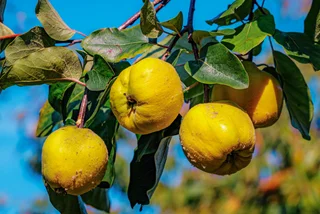
That’s an easy one: without a doubt, you have to try Czech pickled cucumbers! There’s a simple recipe in the book, along with a tip from my grandmother – adding a vine leaf, which gives them a very distinctive, slightly tannic flavor – that I really recommend trying.
And if you have a sweet tooth, what could taste more like a Czech summer than apricot or strawberry jam?