



 Reading time: 4 minutes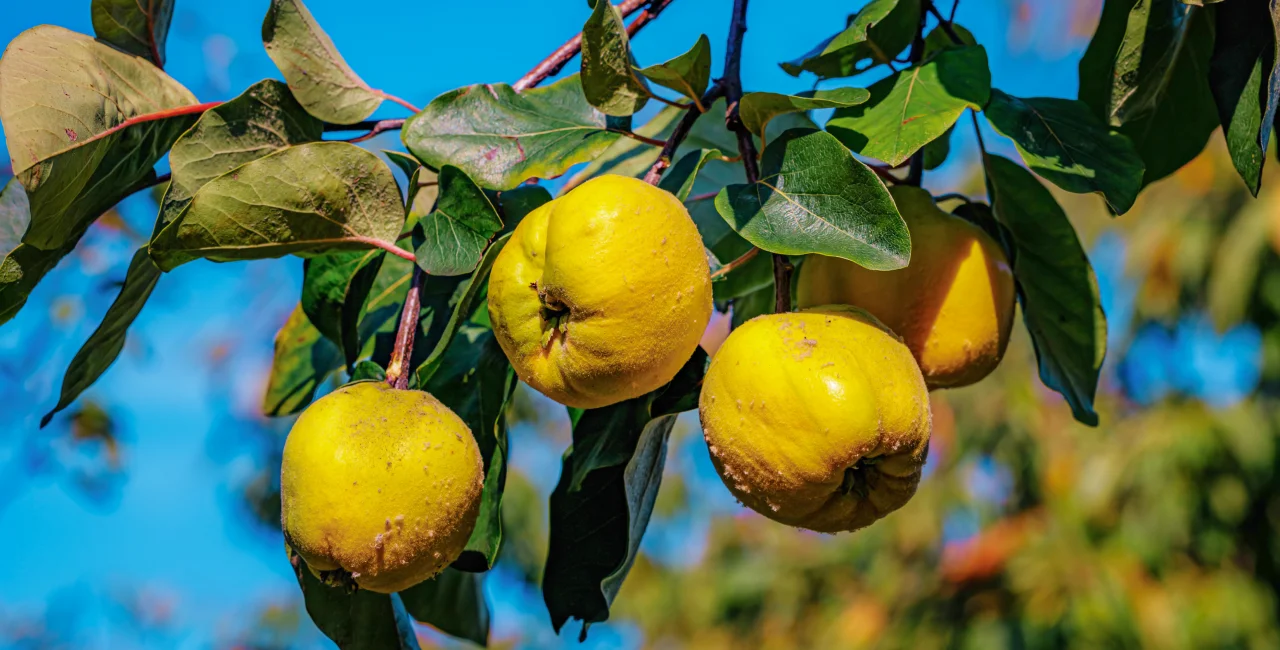

 Summary for: From medlar to quince: The ‘exotic’ fruits hidden across the Czech countryside
Rapeseed fields are now in full bloom, 311,000 hectares of them, roughly the area of the entire Karlovy Vary Region; it's the signature color of Czech May, impossible to miss.
The countryside changes its colors almost every month from March through August. Some of what's growing in those orchards and fields may have a Czech name that doesn't translate into anything you'll find in the supermarket back home.
What's blooming, and what's coming
The season actually started back in late March, when the almond orchards of Hustopeče in South Moravia briefly turned pink. The window is only a couple of weeks; the nuts themselves are harvested in September and pressed into mandlovice schnapps you'll find at the local festival.
Same with the cherry and apricot blossoms that blanket South Moravia and Central Bohemia in mid-April, though those linger a little longer. Both end up in the jars of compote and slivovitz that line Czech cellar shelves.
Rapeseed is what's in bloom now, and it will last another few weeks. Locally it's a controversial crop, the scale of it, the intensive farming, but the fields end up as cooking oil, biofuel, and animal feed, making řepka one of the most economically significant crops in the country.
The word comes from the Latin rapa, meaning "turnip," a term that has aged poorly in English, leading Canadians to rebrand their cultivated variety as "canola" in the 1970s. Czechs just call it řepka, from řepa (beet/turnip).
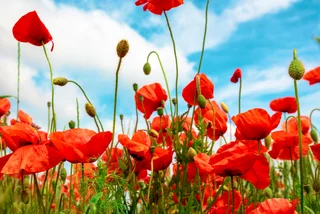
After rapeseed, watch for wild red poppies (vlčí máky) scattered in crimson blankets from late May into June. These aren't harvested.

Then come the cultivated blue poppies, mák, which is a different thing entirely. Czechia is one of the world's top producers of culinary poppy seeds, the ones that go into makový koláč and on top of noodles. When those fields bloom in June and July they turn a pale, almost ethereal white and soft purple. The window is two to three weeks before the petals drop and the seed pods form.
June also brings flax (len), which most people have never seen in bloom. It opens sky-blue in the morning sun and drops its petals by afternoon. Flax has been grown in Czechia for centuries, primarily for linen textiles, and the fabric tradition runs deep in Moravian craft culture.
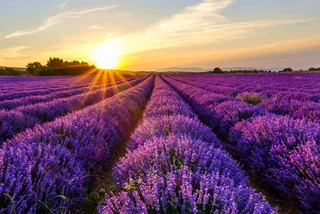
After that, lavender in late June and July, which has expanded dramatically across Czechia in recent years, from the farms around Starovičky in Moravia to fields near Prague, mostly supplying essential oils, cosmetics, and the kind of sachets you find in every Czech gift shop.
And then sunflowers through July and August, grown primarily for sunflower oil, their seeds a staple snack across Central Europe long before they became a health food trend anywhere else.
The fruits you can't quite translate
Anyone who has spent time in the Czech countryside will recognize the obvious ones: třešně (cherries), švestky (plums), hrušky (pears). But the Na ovoce community map, which catalogs thousands of publicly accessible wild fruit trees across Czechia, lists dozens of species that don't have straight English equivalents, because most of them disappeared from English-speaking food culture centuries ago.

Oskeruše is a service tree fruit, and it's almost extinct elsewhere in Europe. In Czechia it's considered a countryside treasure. It tastes somewhere between a pear and a date when it's fully ripe, which takes longer than you'd expect. There are 42 mapped on Na ovoce.
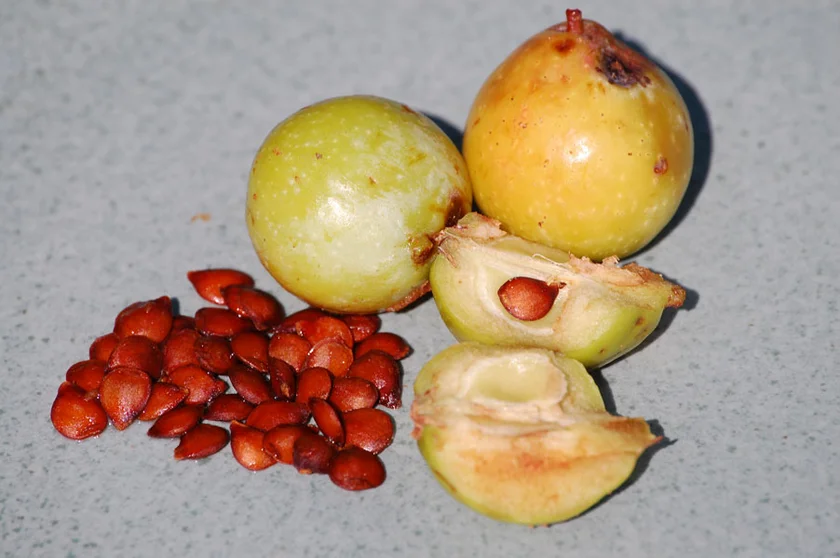
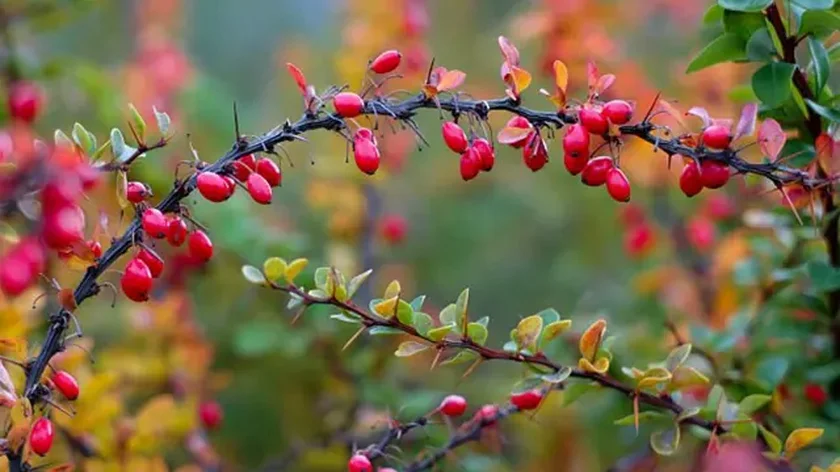
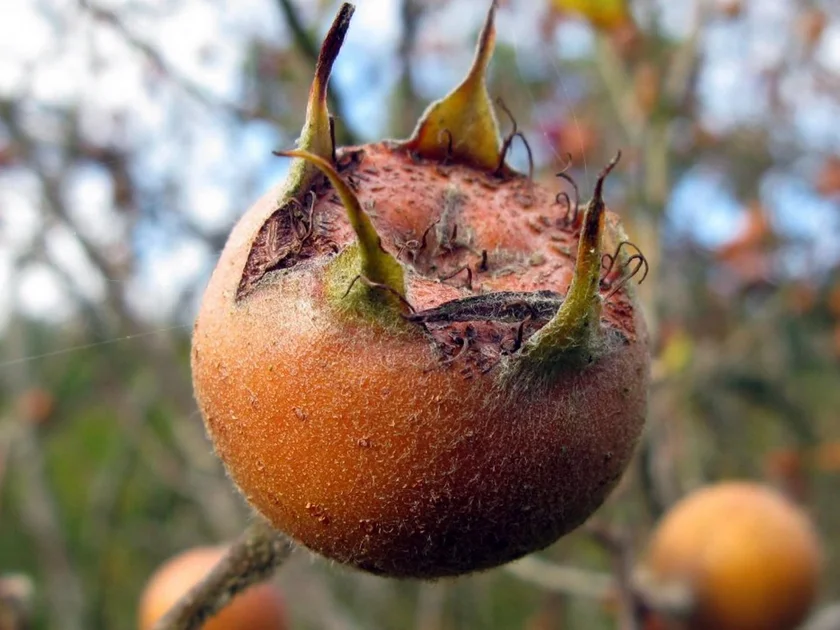
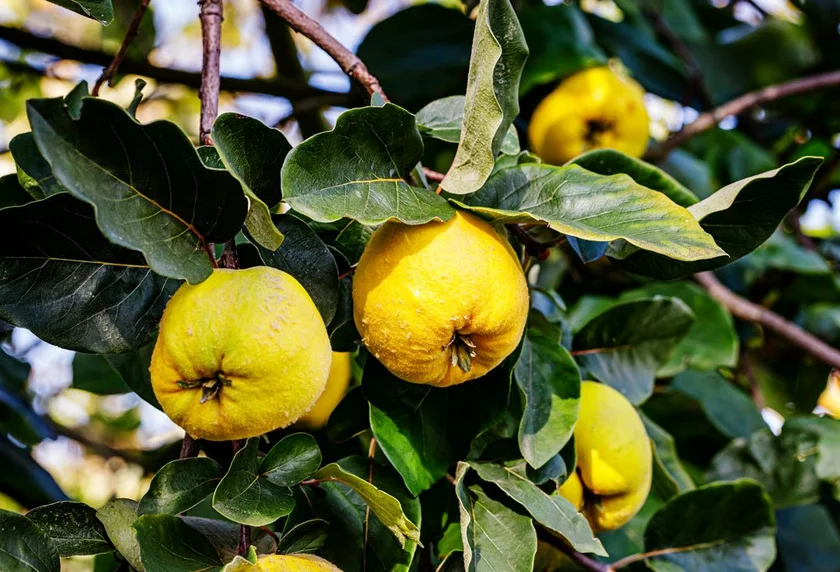
Mišpule (medlar) is a medieval fruit that has to soften to the point of near-rotting before it becomes edible. The process even has a name: bletting. It was common across Europe until the 19th century and then largely vanished. In Czech hedgerows, it persists. Fifty-seven mapped.
Myrobalán is a cherry plum, semi-wild, enormous in Czech foraging and jam-making culture, and almost completely unknown in English-speaking countries. Nearly 2,000 mapped on Na ovoce.
Dřín is a cornelian cherry, which looks like a cherry and is related to nothing you'd expect. Tart, small, used in Czech preserves and spirits.
How to find them
Na ovoce, which translates roughly as "to the fruit," is a community-driven platform that maps thousands of publicly accessible wild fruit trees, bushes, and herbs across Czechia. Anyone can use it to find what's near them and what's in season. The ethos is responsible foraging: take what you need, leave the rest, respect the tree.

While the map is in Czech, here's a list of fruits you can forage for this season with English equivalents:
Familiar fruits and when to find them
- Apple – jablko (September–October)
- Cherry – třešeň (June–July)
- Pear – hruška (August–September)
- Apricot – meruňka (July–August)
- Plum – švestka (August–September)
- Blueberry – borůvka (July–August)
- Raspberry – malina (June–August)
- Blackberry – ostružina (August–September)
- Strawberry – jahoda (May–June)
- Peach – broskev (August–September)
- Almond – mandle (September)
- Mint – máta (June–September)
- Lemon balm – meduňka (June–September)
- Walnut – vlašský ořech (September–October)
- Hazelnut – lískový ořech (August–September)
- Sweet chestnut – jedlý kaštan (September–October)
Familiar but surprising to find wild
- Elderberry – bez černý (August–September)
- Rosehip – šípek (October–November)
- Mulberry – moruše (July–August)
- Blackthorn/Sloe – trnka (October, after first frost)
- Getting weird
- Sea buckthorn – rakytník (September–October)
- Hawthorn berry – hloh (September–October)
- Cornelian cherry – dřín (August–September)
- Aronia/Chokeberry – arónie (August–September)
- Rowan berry – jeřabina (September–October)


Virtually untranslateable
- Cherry plum – myrobalán (July–August)
- Service tree fruit – oskeruše (October, after first frost)
- Medlar – mišpule (November, after bletting)
- Quince – kdoule (October)
- Flowering quince – kdoulovec (October)
- Silverberry/Oleaster – hlošina (September–October)
- Serviceberry/Juneberry – muchovník (June–July)