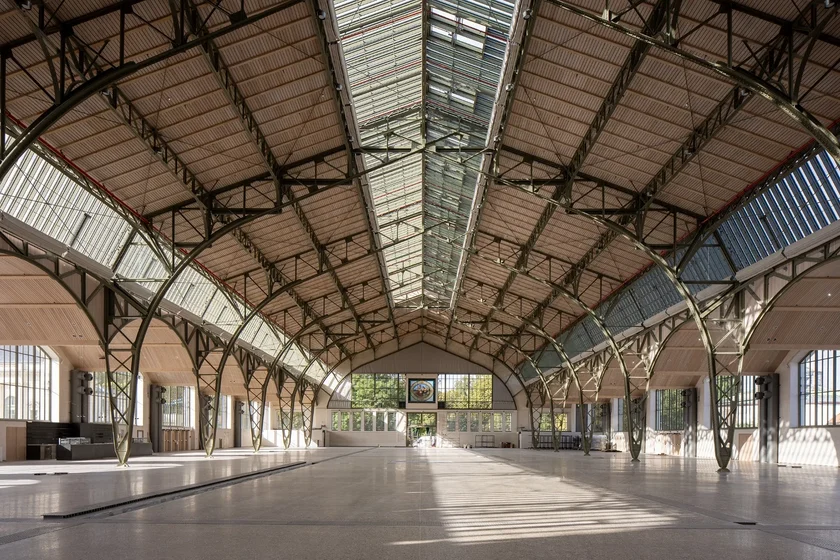
For almost 18 years, Prague’s Industrial Palace was missing a wing. Now, visitors can step inside the restored landmark at Výstaviště and see how a building created to showcase 19th-century progress has been prepared for another era.
Following its limited September reopening and the return of Designblok earlier this month, the palace will hold free Open Days on Oct. 17–18. The weekend offers a chance to explore its restored central hall and parts of both wings, nearly 18 years to the day after the fire that destroyed its left wing on Oct. 16, 2008.
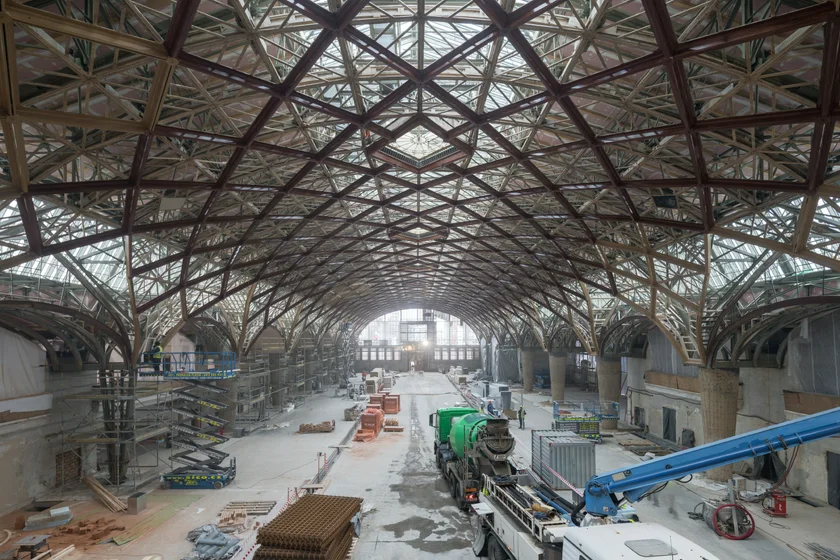
The approximately CZK 3 billion project has reunited the building, restored thousands of architectural details, and installed the infrastructure needed for contemporary events.
But its future will differ from its industrial past: the operators are looking increasingly toward congresses, festivals, concerts, and corporate gatherings to sustain one of Prague’s most recognizable public buildings.
From a showcase of progress to a palace of congresses
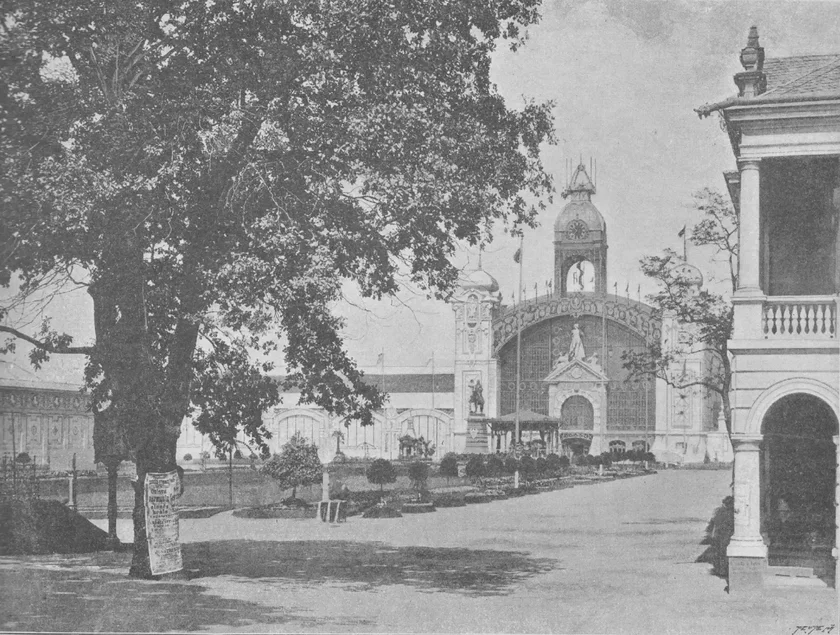
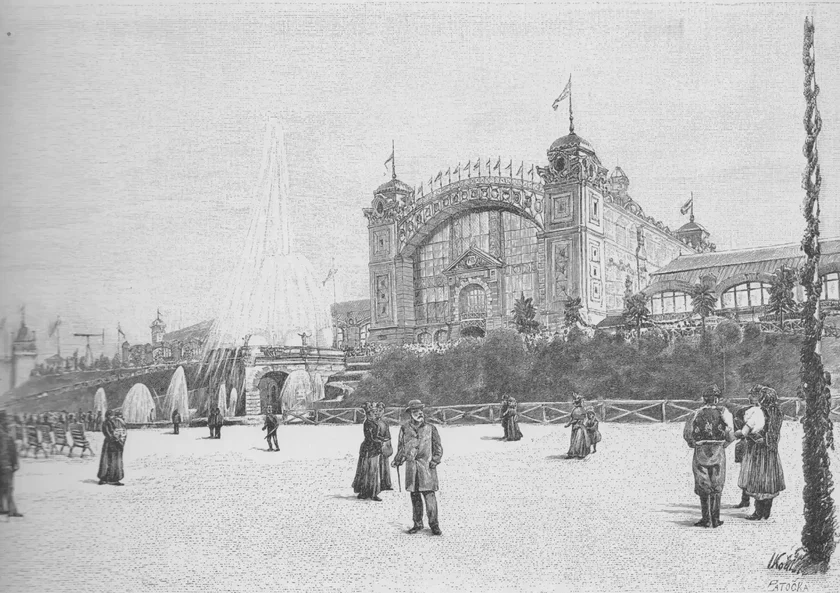
The Industrial Palace opened on May 15, 1891, as the centerpiece of the Jubilee Land Exhibition. The exhibition marked a century since an earlier Prague industrial exhibition in 1791 and became a showcase for manufacturing, technology, and culture in the Czech lands.
Around 2.5 million visitors attended the 1891 exhibition, according to historical materials supplied by Výstaviště. Its attractions extended beyond the palace: František Křižík’s illuminated fountain demonstrated the possibilities of electric light, while exhibition pavilions helped establish the grounds as a place for entertainment as well as industry.
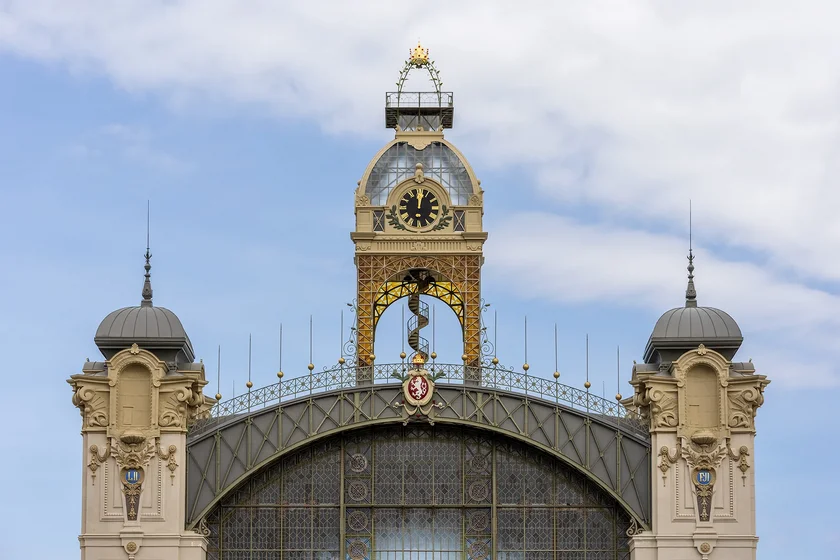
With its iron framework, extensive glazing, and 51-meter clock tower, the palace embodied the technological ambition of the event. More than a century later, that combination of engineering and decoration remains its defining feature.
The grounds continued to evolve. The 1895 ethnographic exhibition presented folk culture and regional traditions; the 1898 architecture and engineering exhibition brought Luděk Marold’s panorama of the Battle of Lipany and early film screenings by Jan Kříženecký. In the interwar period, Prague’s sample fairs made Výstaviště an important commercial meeting place.
Communist rule brought a different purpose. In 1953, the grounds became the Julius Fučík Park of Culture and Leisure. The following year, the Industrial Palace became the Congress Palace, accommodating Communist Party congresses alongside exhibitions and cultural events.
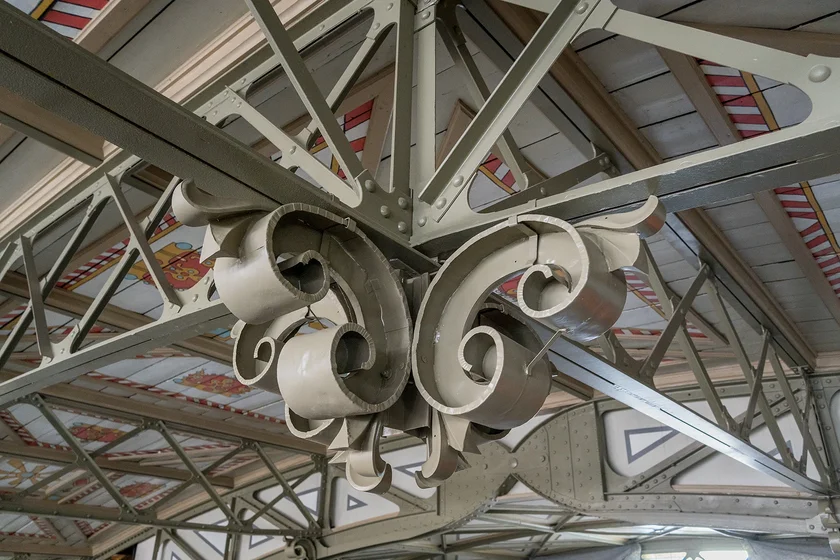
Alterations associated with architect Pavel Smetana changed its interiors, including suspended ceilings that concealed parts of the original structure. The building visitors see today reflects decisions about which historical layers to preserve: the rebuilt left wing returns to the appearance of 1891, while the right wing retains its later ceiling, repaired during the reconstruction.
After the Velvet Revolution, the grounds regained the Výstaviště Praha name in 1990. The 1991 General Czechoslovak Exhibition, marking the original exhibition’s centenary, brought new pavilions, a rebuilt fountain, and further cultural facilities.
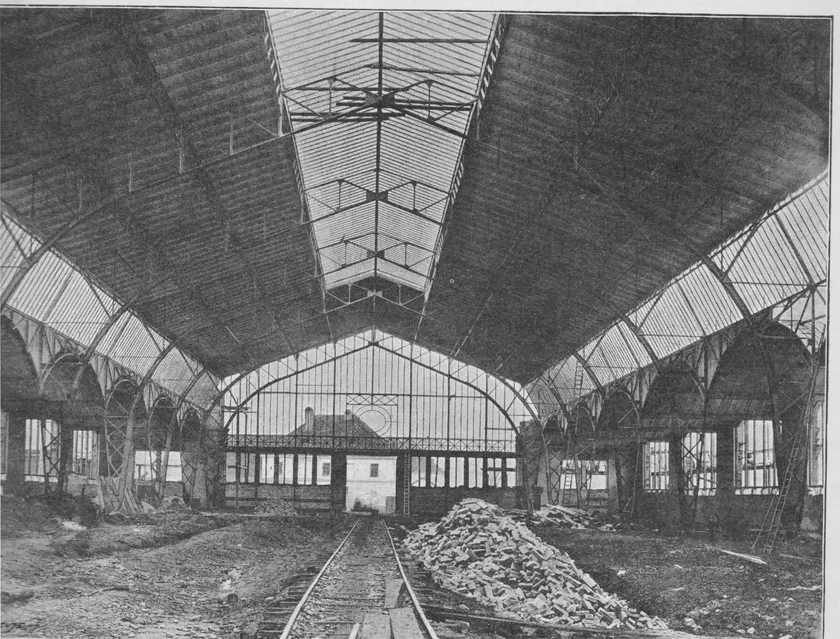
Then came the 2008 fire. Firefighters saved the central hall and right wing, but the left wing was lost. A temporary tent subsequently allowed events to continue on its footprint. As Výstaviště board chairman Tomáš Hübl explains, the palace was incomplete for almost 18 years, but its full closure for reconstruction lasted less than five.
Work finally began in January 2022. Initially expected to finish in 2025, the project grew more complicated as workers uncovered deteriorated foundations, corroded steel, and poorly documented alterations.
For Metrostav CZ project manager David Čech, the challenge was often making extensive repairs disappear from view. In the right wing, workers temporarily transferred the suspended wooden ceiling onto specially designed scaffolding so they could strengthen the structure above it, then rehung it in its original position.
Restored craftsmanship, and a different business model
The restoration’s scale is evident in the central hall’s painted wooden ceiling: 1,232 boards arranged in 77 fields, covering approximately 2,737 square meters. Each board was labeled during dismantling so it could return to its original position after treatment.
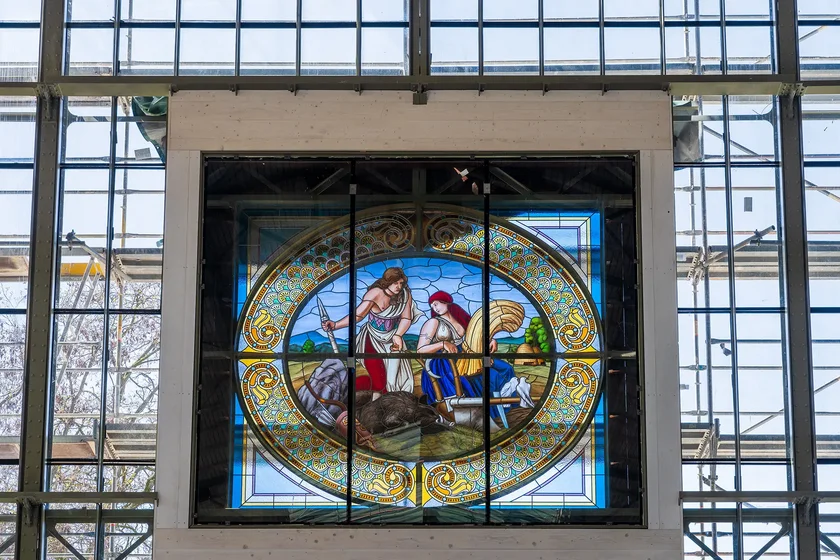
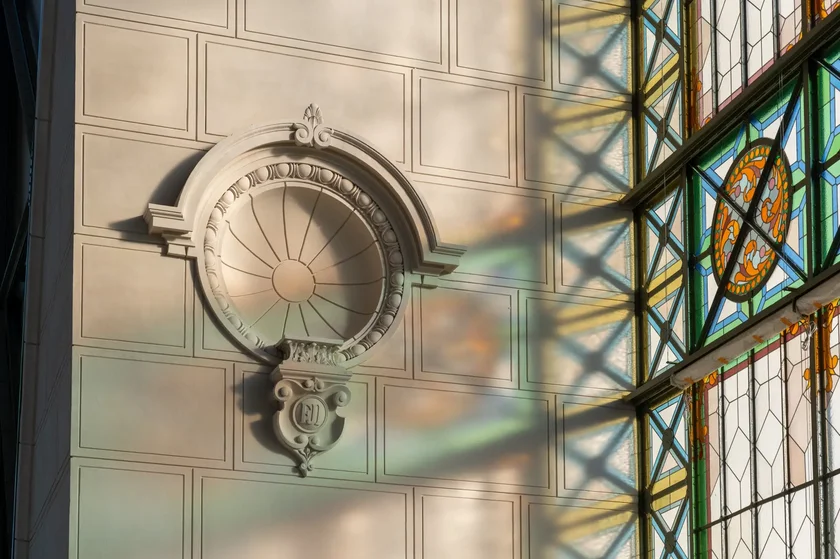
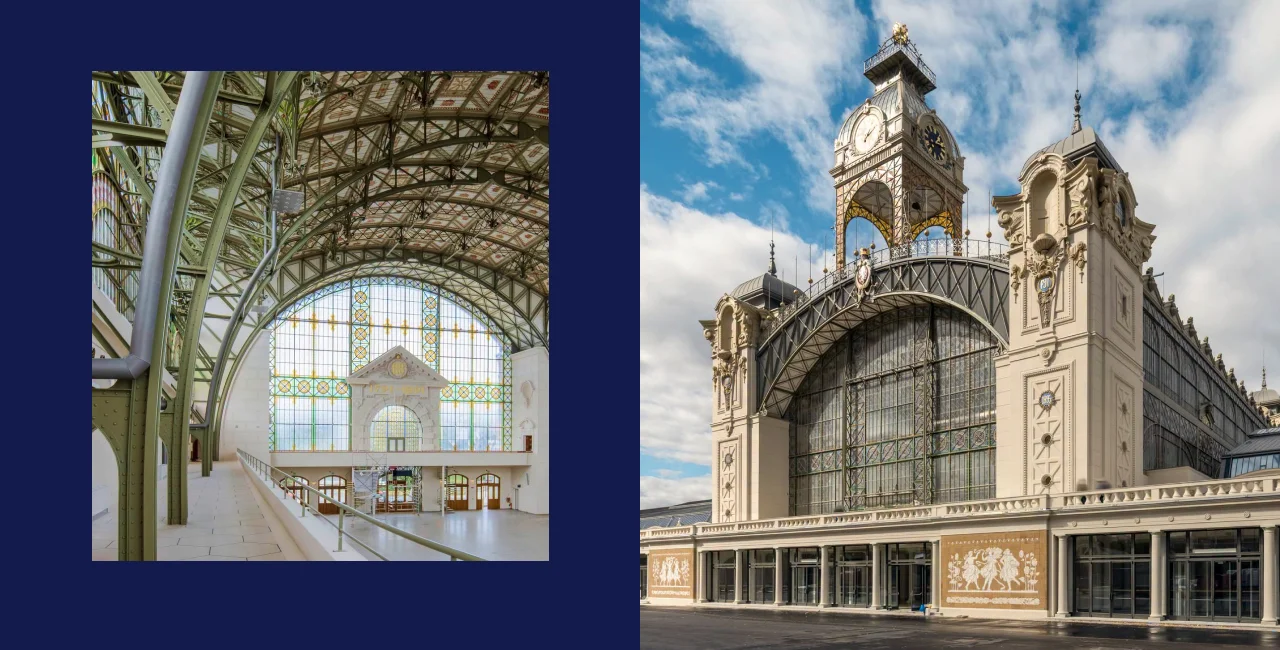
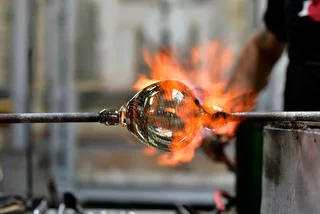
The stained-glass work involved more than 107,700 individual pieces of glass across 5,023 panels. Specialists at Kolektiv Ateliers in Nový Bor restored surviving windows and recreated those that could not be saved.
Among them was the oval window depicting an allegory of plowing and hunting, based on a design by Mikoláš Aleš and destroyed in the fire. Restorer Zdeněk Kudláček says surviving designs, pre-fire photographs, and the corresponding window in the other wing helped his team reproduce its materials and painting style.
Some fire-damaged glass returned in another form. Fragments were incorporated into terrazzo floors on the galleries, leaving pieces of the lost windows beneath visitors’ feet. Elsewhere, restorers retained differences in glass color from major 1950s repairs as part of the building’s history.
Less visible changes will determine how the palace functions. A new basement beneath the rebuilt wing provides storage, catering and technical facilities, and a delivery route. Heating and cooling systems draw on equipment including heat pumps served by 70 boreholes, while new fire protection includes sprinklers and water-mist systems.
City Councilor Adam Zábranský, responsible for municipal property, describes the investment as settling a debt to future generations. The city’s ambition is to preserve the landmark while making it suitable for major cultural events, exhibitions, and congresses.
Hübl’s assessment of the business ahead is more cautious. In his interview, he describes a shift away from conventional industrial trade fairs toward experiences, conferences, and festivals. The palace’s appeal, he argues, lies partly in combining historic interiors with Výstaviště’s outdoor spaces and neighboring venues.
Modernization also brings higher operating costs and greater maintenance demands. Hübl says the operator hopes commercial bookings will cover those costs, while acknowledging practical compromises, including smaller delivery doors and the absence of a hoped-for underground connection to the Křižík pavilions.
Designblok, which ran Oct. 7–11, was the first major event in the restored palace. For residents curious about the building itself, this weekend provides another opportunity: the Open Days run from 10 a.m. to 6 p.m. both days, with last admission at 5:30 p.m.
Entry is free, and visits are self-guided along a marked route through the ground-floor central hall and parts of both wings. An outdoor exhibition also explores the palace’s history and the crafts involved in its reconstruction. Beyond the weekend, access will depend on scheduled tours and events as the building resumes its working life.
Want to see more from us? Select Expats.cz as a
preferred source on Google.


 Reading time: 5 minutes
  Summary for: PHOTOS: Prague’s Industrial Palace reborn 135 years after Jubilee opening