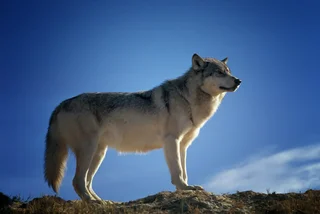
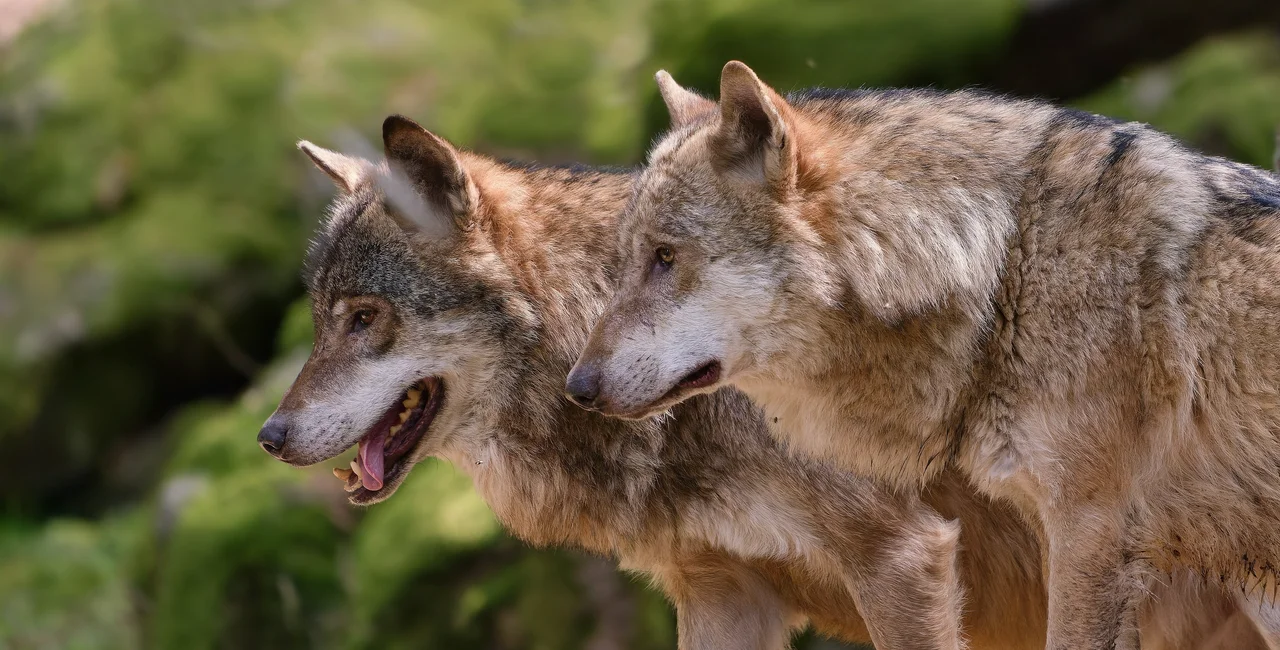
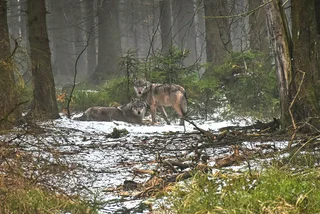
At least 43 wolves lived in Šumava and Germany’s neighboring Bavarian Forest during the 2024–2025 monitoring season, researchers found, offering new evidence of the predators’ return and their growing influence on the region’s forests.
The survey covered approximately 2,000 square kilometers, recording 38 wolves across 11 territories and another five animals traveling independently. The population continues to grow, Šumava National Park spokesman Jan Dvořák told ČTK on Oct. 9.
Researchers from the Czech University of Life Sciences Prague and both national parks are studying more than population numbers. GPS tracking and analysis of droppings are helping reveal where wolves travel, what they eat and how their presence affects deer and forest regeneration.
A comeback decades in the making
Wolves were once native to the Czech landscape but were persecuted until resident populations disappeared. A historical account in the conservation journal Ochrana přírody records the killing of the last original Beskydy wolf near Hrčava in 1914. Modern sightings in the Moravian mountains were confirmed again in 1994.
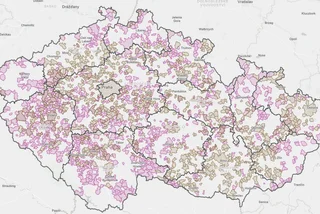
A milestone followed in northern Bohemia in 2014, when breeding was confirmed in the Kokořínsko–Máchův kraj protected landscape area. The Czech Nature Conservation Agency identifies this as the first confirmed reproduction in the country’s modern recolonization period.
The Czech-German border forests experienced their own breakthrough soon afterward. A camera trap documented a wolf in Bavarian Forest National Park in 2015; in 2017, footage captured four pups, the first wild-born wolf offspring in Bavaria in more than 150 years.
Their parents illustrated the cross-border nature of the comeback: a female from Poland and a male from the Italian population met in the region in 2016, according to the Bavarian park’s wolf information page.
Today’s research combines camera traps, DNA analysis, tracking collars and field observations, the Czech University of Life Sciences explains. By the end of 2025, 11 wolves on the Czech side had been fitted with GPS transmitters.
More wolves, fewer deer—and more beavers on the menu
Analysis of wolf droppings shows that hoofed wildlife, including red deer and roe deer, makes up the largest share of their diet.
Beavers are becoming more prominent. Dvořák said their share had increased from approximately 1 percent to 3–4 percent, reflecting their greater abundance in the landscape. Livestock accounts for approximately 1 percent of the recorded diet.
The return is also changing deer management. Dvořák said hunters previously culled around 1,000 red deer annually, compared with 400 last year, while wolves killed an estimated 500 more.
He described this as evidence that the ecosystem can increasingly regulate itself. Those figures are estimates reported by the park, rather than a precise count of every animal killed.
Reducing excessive deer numbers can help limit damage to young trees. Marco Heurich, who leads the project at Bavarian Forest National Park, said browsing damage had generally declined in recent years within core wolf-pack areas and places with heavy recreational use.
Coexistence nevertheless requires protection for farm animals. Czechia’s wolf management program aims to support viable wolf populations while minimizing damage and conflicts with people.
For hikers, the Bavarian park’s visitor guidance recommends withdrawing slowly if a wolf is encountered, keeping dogs on a leash and never following or feeding the animal. If a wolf approaches too closely, visitors should speak loudly and make themselves conspicuous.