Reading time: 2 minutes

 Summary for: Wolf pups confirmed across Czech mountain regions this year
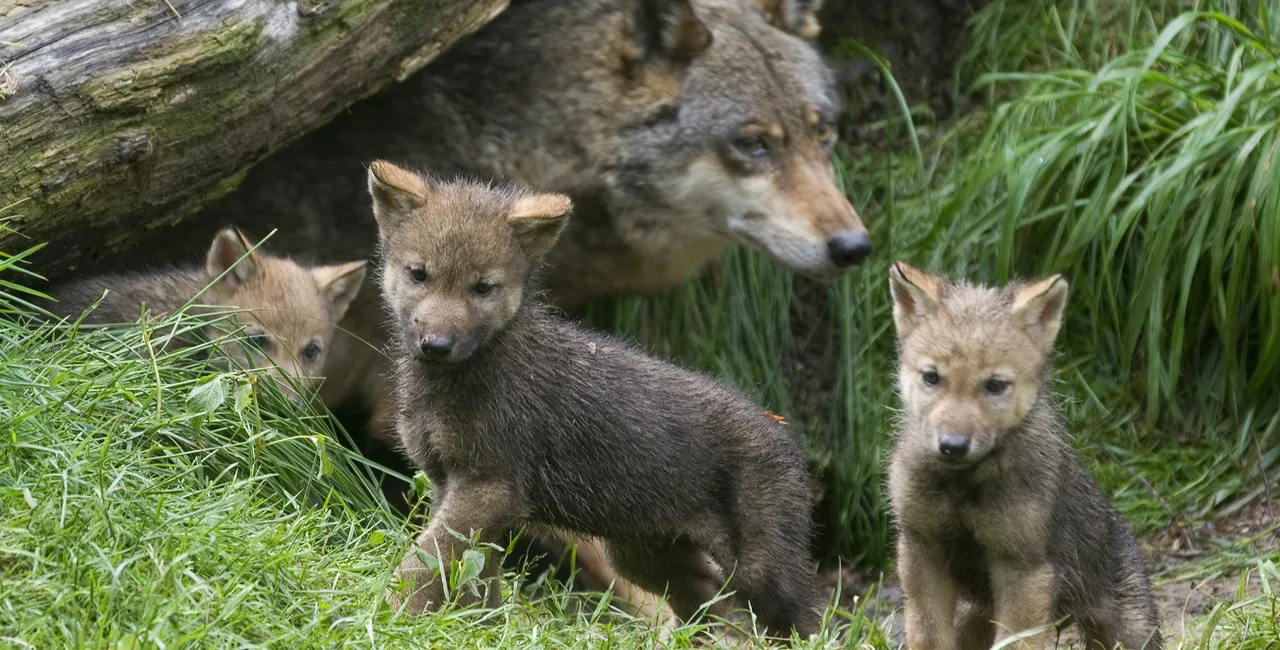
Wolf pups have been confirmed in several Czech regions this year, including the Ore Mountains, Jeseníky and Beskydy, according to monitoring results released last week by environmental organization Hnutí Duha.
The findings also document breeding in the Lusatian Mountains, the western Šumava foothills and the Broumov area. Evidence suggests reproduction may have occurred elsewhere, but those results still require confirmation.

The monitoring tracks wolf territories, breeding and long-term population trends in selected areas. It does not establish the total number of wolves living in Czechia.
Pups documented in multiple territories
This year’s fieldwork confirmed wolf pups in three areas of the Ore Mountains, two locations in the Lusatian Mountains and three territories in the Jeseníky.
In the Broumov region, breeding was confirmed in the Javoří Mountains. Researchers also recorded pups in the western Šumava foothills.
In eastern Czechia, the same pack that reproduced last year in the Vsetínské Beskydy had pups again. Breeding was also confirmed in the Moravian-Silesian Beskydy and across the Slovak border in the eastern Javorníky.
However, a stable pair does not necessarily produce pups every year.
“As in previous years, we were able to confirm both territories where wolves successfully reproduced and those where reproduction probably did not occur this year, despite the presence of a stable pair,” said Michal Feller, coordinator of Hnutí Duha’s large-carnivore program.
Kokořínsko provided one example of a different outcome. Unlike last year, monitoring there did not establish that pups had been born.
Conservationists said one possible explanation was the death of a male wolf struck by a vehicle near Bezděz late last year. Genetic analysis of collected droppings suggests that animal belonged to the breeding pair and fathered the previous year’s pups.

What breeding reveals about wolf populations
Repeated breeding does not necessarily mean a sharp increase in the number of wolves occupying a pack’s territory, Feller said.
According to the organization, most pups do not survive their first year. Those reaching adulthood generally leave their parents’ territory, rather than remaining permanently with the pack.
The results therefore provide evidence of successful reproduction, rather than a national population count or proof that every monitored pack is growing.
Gathering that evidence requires sustained fieldwork. Hnutí Duha’s Wolf and Lynx Patrols have operated for almost 25 years, bringing volunteers together with specialists to document large carnivores in mountain regions.

Their work extends beyond wolves and lynx to wildcats and, in some areas, bears. Camera traps and reports from members of the public also contribute to the monitoring.
People who encounter a wolf or find signs of its presence can send observations to the team at stopy@selmy.cz. Such reports help researchers build a clearer picture of where the animals are living and whether they are breeding.