Prague’s budget explained: Where the city spends your taxes

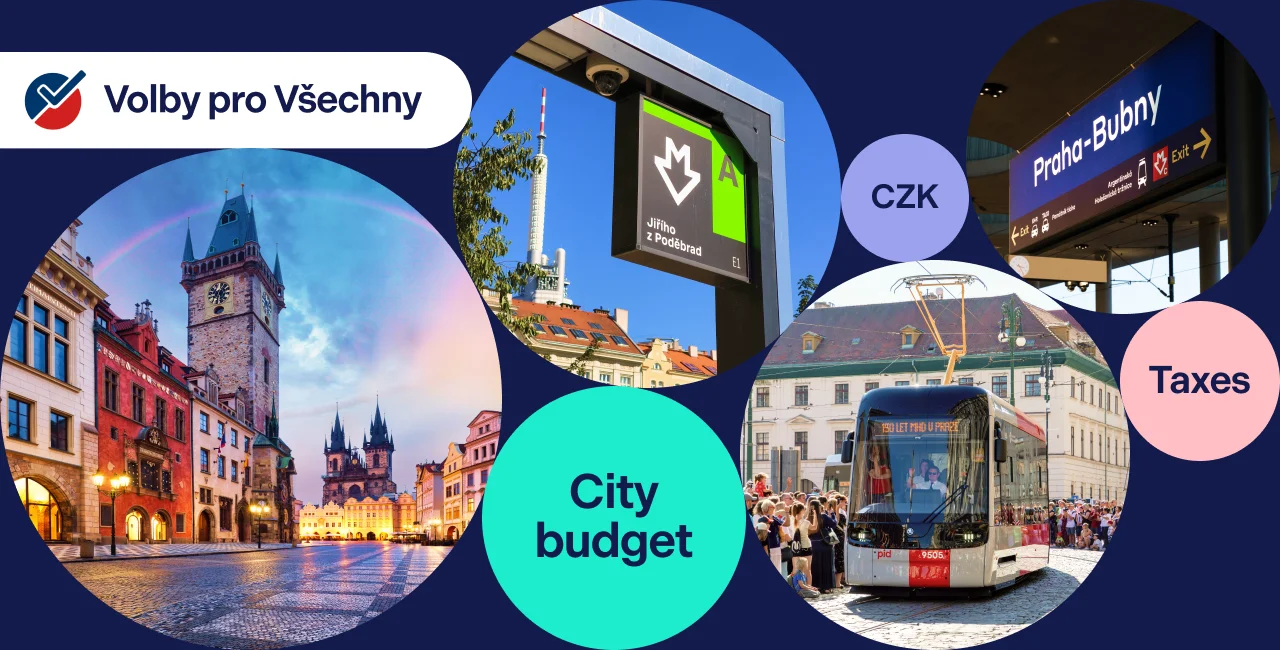
From public transport to neighborhood schools, Prague’s budgets reveal how tax money is spent and how widely spending varies by district.

Volby pro všechny

Written by Volby pro všechny Published on 15.09.2026 14:30:00 (updated on 15.09.2026) Reading time: 4 minutes

Nothing gets people more riled up about government than taxes. If you live in Prague, your taxes help pay for the city services you use. But where does that money go, and what does Prague’s budget actually look like?

Digging into the numbers reveals some surprises—not only in how the money is spent, but also in how significantly budgets vary among Prague’s 57 municipal districts.

How Prague’s citywide budget works

The first thing to know is that Prague has multiple budgets: one for the capital as a whole, administered by Prague City Hall, and separate budgets for each of its 57 self-governing districts.

Broadly speaking, the City Hall budget pays for major citywide systems, including public transport, infrastructure and institutions. District budgets cover more localized services, such as neighborhood schools, community centers, local roads and district administration.

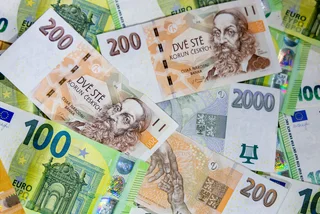
The City Hall budget dwarfs the combined spending of the districts. In 2025, Prague budgeted expenditures of CZK 113.5 billion. By comparison, the 57 districts together budgeted an annual average of about CZK 18 billion over the past several years. City Hall therefore spends roughly six times as much as all the districts combined.

More than 60 percent of the City Hall budget goes toward two areas: transport and education. Public transport—including the metro, trams and buses—accounts for the largest share of transport spending. The category also includes major projects such as construction of Metro D, the reconstruction of Libeň Bridge and the Smíchov transport terminal.

The citywide education budget primarily supports secondary schools and other educational institutions. Kindergartens and primary schools are generally financed through district budgets.

Prague City Hall expenditures in 2025

  • Transport: CZK 39.59 billion
  • Education, youth and sports: CZK 29.36 billion
  • Treasury and financial management: CZK 13.02 billion
  • Health and social affairs: CZK 6.48 billion
  • Municipal infrastructure: CZK 6.32 billion
  • Internal administration: CZK 6.11 billion
  • Culture and tourism: CZK 4.25 billion
  • Security: CZK 3.93 billion
  • Economy: CZK 3.31 billion
  • Urban development: CZK 1.13 billion

The remaining categories are considerably smaller. Municipal infrastructure includes services such as waste management and water and wastewater infrastructure. The culture budget covers concerts and museums, as well as grants and subsidies for the city’s many cultural organizations.

How district spending differs

Prague’s 57 self-governing districts vary enormously in size, and their budgets reflect those differences. In 2025, the largest budgets belonged to Prague 6, Prague 8, Prague 10, Prague 4 and Prague 5, with expenditures ranging from CZK 1.1 billion to CZK 1.6 billion.

At the other end of the spectrum is Nedvězí, a village on Prague’s southeastern edge that remains a separate municipal district despite having only a few hundred residents. Its planned expenditures for 2025 totaled about CZK 13.5 million.

Prague 2, where 35.6 percent of residents were born outside Czechia, provides one example of how district money is distributed. Its largest spending category, accounting for about 28 percent of the budget, was administration, including the salaries of district employees. Kindergartens and primary schools received about 20 percent, while 17 percent went toward managing housing controlled by the district.

AGENCY PROPERTIES

Family house for sale, 465m<sup>2</sup>, 400m<sup>2</sup> of land

Family house for sale, 465m2, 400m2 of land

Petra Chelčického, Vodňany - Vodňany II

Office for rent, 64m<sup>2</sup>

Office for rent, 64m2

Michalská, Praha 1 - Staré Město

Apartment for rent, 1+1 - Studio, 38m<sup>2</sup>

Apartment for rent, 1+1 - Studio, 38m2

Holečkova, Praha 5 - Košíře

Office for rent, 31m<sup>2</sup>

Office for rent, 31m2

Michalská, Praha 1 - Staré Město

Across Prague, education is commonly one of the largest areas of district spending, alongside administration, transport, public spaces and greenery. Residents can explore their district’s budget through Prague’s CityVizor portal. Many districts also provide detailed budget information through their own websites.

How much Prague spends per resident—and voter

The budget figures become particularly revealing when compared with the number of people living in each district. Some areas of Prague receive much higher spending per resident than others.

The difference becomes even more striking when spending is calculated per voter, showing the relationship between public budgets and the number of people who participate in choosing the representatives responsible for them.

Across Prague City Hall and all 57 districts, annual budgeted spending averages about CZK 82,000 per resident. Turnout in Prague during the 2022 municipal elections was 44 percent of registered voters. When the overall budget is divided by the number of people who voted, spending comes to approximately CZK 180,000 per voter.

District population size can make a substantial difference. Prague 1 records the highest spending per resident, at CZK 164,323. Relatively few people live in the district, while it contains numerous major monuments, public institutions and pieces of infrastructure requiring public funding.

The second-highest spending per resident—CZK 104,009—was recorded in Březiněves, a district on Prague’s northern edge with about 2,100 inhabitants. At the other end of the scale, Prague 13 spent CZK 30,611 per resident.

Comparing spending per voter highlights further differences. Prague 1 had the highest spending per voter, while Prague 4 recorded one of the lowest levels among the more populous districts.

Turnout adds another dimension. In the 2022 elections, 49.6 percent of registered voters in Prague 6 participated. Prague 9 had the second-lowest turnout among the city’s districts, at 39.9 percent. According to Volby pro Všechny’s calculations, Prague 6’s budget per resident is 5 percent above the city average, while Prague 9’s is 19 percent below it.

Higher turnout does not necessarily result in greater spending. However, voters in Prague 6 are proportionally more involved in choosing the representatives who influence their district’s budget than voters in many other parts of the capital.

Readers can compare spending, turnout and political representation through Volby pro Všechny’s Prague Power and Budgets tool.

Municipal elections: Who can vote?

These figures are more than statistical curiosities. Czechia will hold municipal elections Oct. 9-10, 2026, giving eligible Prague residents an opportunity to influence local priorities and how public money is spent.

Czech citizens and citizens of other EU countries with registered residence in Czechia may be eligible to vote in the municipal elections.

More information about the elections, eligibility and voting options is available from Volby pro Všechny, including on Facebook, Instagram and LinkedIn.

Did you like this article?

Want to see more from us? Select Expats.cz as a preferred source on Google.