




 Reading time: 2 minutes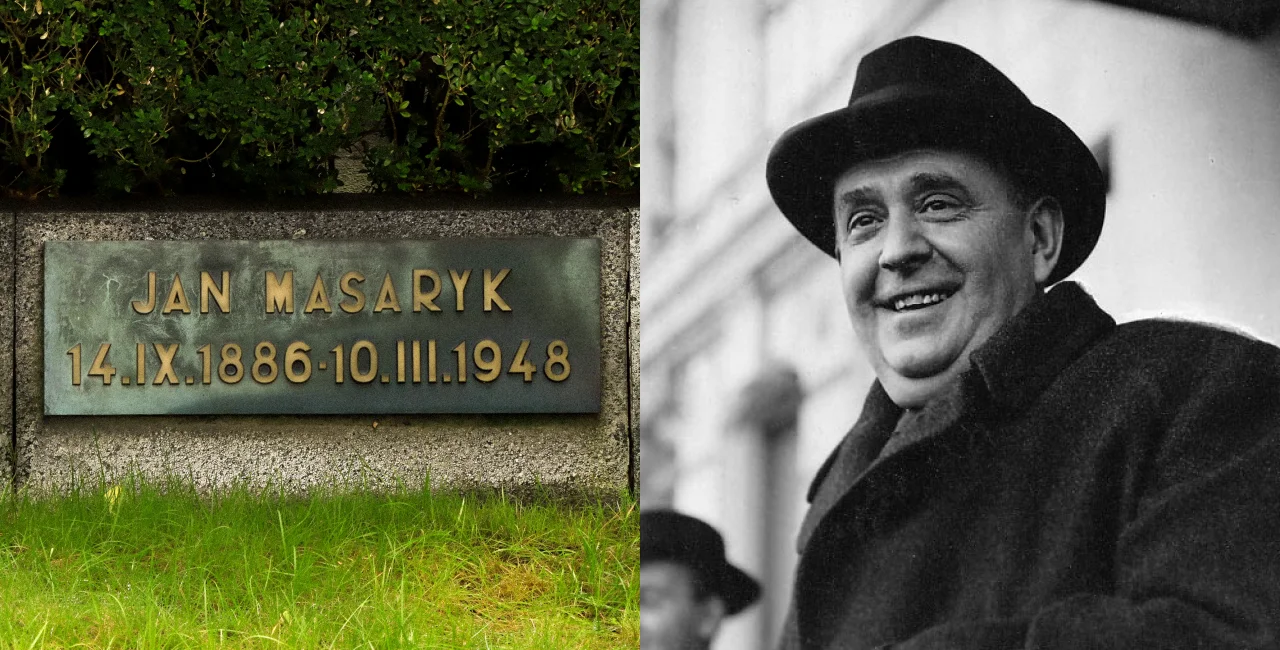

 Summary for: Suicide or murder? Czech police exhume Masaryk as case reopens
Police experts on Wednesday began exhuming the remains of former Czechoslovak Foreign Minister Jan Masaryk as part of a renewed investigation into his still-unresolved death in 1948.
The exhumation is taking place at the family tomb in the cemetery in Lány, Kladno District.

Police spokesman Jakub Vincálek said investigators will examine Masaryk’s remains using modern forensic methods in an effort to clarify the circumstances surrounding his death.
The investigation is examining the possibility that Masaryk was murdered.
“Today at the Lány Cemetery, we are conducting criminal proceedings in connection with the investigation into the death of Jan Masaryk in 1948, which involve the exhumation of his remains and their examination using the most advanced forensic methods,” Vincálek told the Czech Press Agency.
The goal is also to confirm or rule out theories that have persisted around the case, he said.
Czechia’s most famous cold case
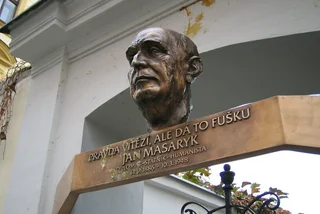
Masaryk, the son of Czechoslovakia’s first president, Tomáš Garrigue Masaryk, died on March 10, 1948, less than three weeks after the Communist Party seized power in the February coup.
His body was found after he fell from a window of Prague’s Černín Palace, the seat of the Foreign Ministry. His death was officially declared a suicide, but questions over whether he was pushed from the window have persisted for decades.

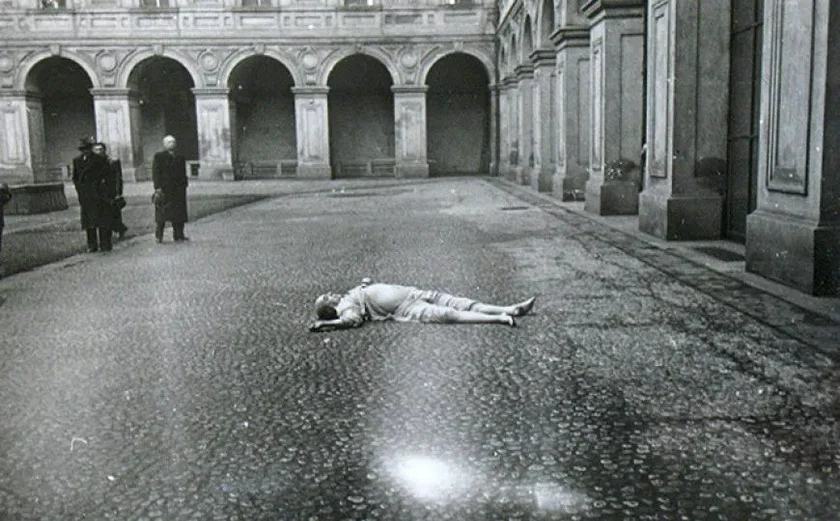
The case has been reopened several times. Aleš Cimbala, spokesman for the Prague Municipal Public Prosecutor’s Office, said Monday that investigators are continuing to examine new findings and evidence that could help establish what happened.
The investigation has drawn on researchers’ findings, newly discovered documentary evidence and expert analysis, Cimbala said.
Dalimil Štypák, director of the Police Office for the Documentation and Investigation of the Crimes of Communism (ÚDV), said last year that the case remains significant both because of Masaryk himself and the potential circle of perpetrators.
Why the mystery endures
Masaryk’s death has become one of Czechia’s most enduring historical mysteries, in part because it came just weeks after the Communist takeover of February 1948.
His fall from a window of the Černín Palace has sometimes been described as a kind of “third Prague defenestration,” evoking the city’s long history of political figures being thrown from windows.

Successive investigations have produced conflicting conclusions.
An investigation completed in 2003–04 concluded that Masaryk had been murdered, but a later police investigation, closed in 2021, could not establish whether he was murdered, committed suicide or died in an accident.
Forensic researchers have also challenged assumptions about the mechanics of the fall, showing that an outside force was not necessarily required, while police said a small force could not be ruled out.
What is undisputed is that his death became a powerful symbol of the end of democratic Czechoslovakia.
The latest investigation has already uncovered previously unexamined material from diplomatic archives in France, the United States and Britain.
Police said Wednesday that the exhumation and forensic examination are intended to test new findings and theories and, ultimately, bring investigators closer to establishing what happened on the night of March 9–10, 1948.