



 Reading time: 2 minutes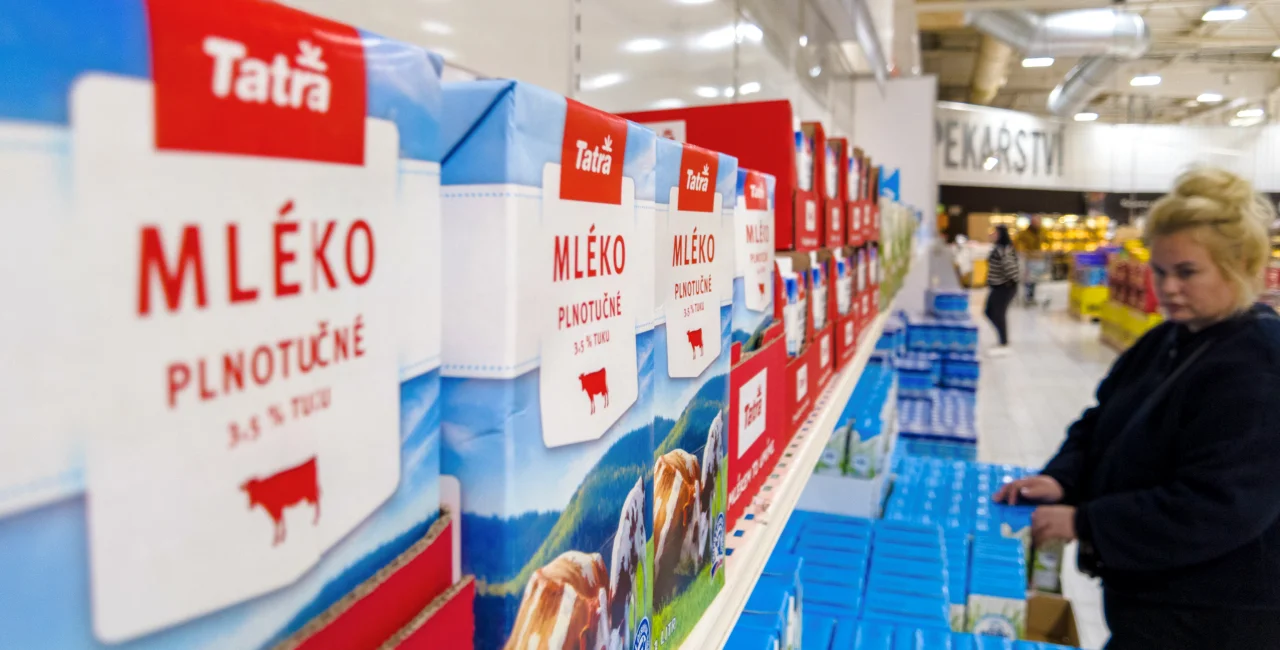

 Summary for: Milk for CZK 6.90? The reason behind Czechia’s unusual dairy discounts
Czech shoppers heading to supermarkets this summer are finding an unusual deal in the dairy aisle: in some promotions, a liter of milk now costs less than a bottle of mineral water.
Several major supermarket chains have cut prices on basic dairy products, with long-life semi-skimmed milk selling for as little as CZK 6.90 per liter.
By comparison, a standard 1.5-liter bottle of unflavored Rajec mineral water is selling for around CZK 14.90. Butter prices have also fallen sharply, with some 250-gram blocks available from CZK 25, while fresh milk is being offered for around CZK 16.90.
For households trying to keep grocery bills under control, the discounts are welcome.
But the unusually low prices are not a sign that milk has suddenly become cheaper to produce. Instead, they reflect a wider problem affecting dairy producers across Europe: too much supply and weaker demand.
Retailers say they are responding to changing market conditions but cannot predict how long the current discounts will continue.
“We are continuously evaluating and adjusting prices according to the current market situation,” said Zdeněk Vesecký, a spokesperson for the Globus supermarket chain. “Given the dynamic development, it is not possible to reliably predict their future direction.”
Cheap at the checkout, difficult for farmers
While shoppers benefit from lower prices, dairy farmers and processors say they are facing increasing pressure.

The purchase price for raw milk fell to CZK 9.80 per liter in May, below the average production cost of around CZK 11 per liter.
Producers say that high expenses for electricity, rent and wages are making it increasingly difficult to operate profitably.
“No company in the world can operate in a way that produces and sells at a loss for a long time. That simply does not work out mathematically,” said Dana Večeřová, president of the Food Chamber of the Czech Republic.
According to producers, dairies are caught between lower prices paid by retailers and rising operating costs, leaving them absorbing losses on everyday products such as milk and butter.
Why are dairy prices falling?
The current discounts are linked to a broader European milk surplus. Production has exceeded demand, while exports outside the European Union have weakened.

European dairy representatives recently met with European Agriculture Commissioner Christoph Hansen to call for support, warning that high production costs and falling prices are putting pressure on processing plants across the bloc.
Finding new customers abroad is also becoming more difficult. “The time when Asia bought up production in EU countries is obviously over,” said Petr Dufek, chief economist at Creditas Bank.
With excess supply continuing across European markets, Czech shoppers may continue to see cheap dairy products on supermarket shelves in the short term.
But industry representatives warn that prices cannot remain below production costs indefinitely. If producers reduce output or some companies leave the market, today’s bargain prices may not last.