Prague already has no shortage of places to grab a quick bite. But international fast-food brands continue to see room for growth in the Czech capital, with Berlin-based burger chain Burgermeister the latest to make Prague its next target.
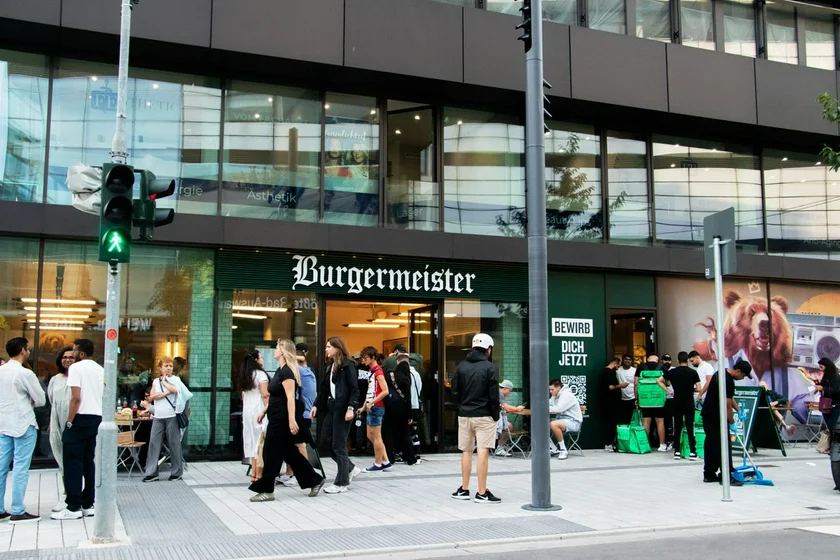
Burgermeister plans to open its first Czech restaurant on Wenceslas Square in early 2027. More importantly, the company says the Prague location is intended to be the starting point for a longer-term expansion across Czechia.
“Our goal is clear: we want to build Burgermeister into one of the leading fast food brands in Europe,” CEO Robert Fügert says. “Prague is not just another branch opening; it is the starting point for our long-term growth in the Czech Republic.”
The company has not yet said how many Czech locations it ultimately plans to open or where they will be, but says it sees “great potential” for further branches.
Burgermeister not alone
American burger chain Five Guys spent more than a year preparing to open its first Czech location at the Máj department store, following several postponed opening dates.
The chain eventually arrived in Prague in December 2025 and doesn't plan to stop there. Its Czech operator expects to have two to three restaurants in the country by the end of 2026 or early 2027, with Brno next in line, and ultimately aims to operate eight to 12 locations.
Popeyes entered the Czech market in 2023 with its first restaurant on Wenceslas Square. In April 2025, it had five Czech locations. Less than a year later, that number had reached 17, including seven in Prague and restaurants in Brno, Ostrava, and Olomouc.
The chain has continued to push into regional cities, making it one of the clearest examples of an international restaurant brand using Prague as a starting point for a wider Czech rollout.
Why Prague?
Burgermeister says Prague is one of the most dynamic restaurant markets in Central Europe and offers conditions that suit its expansion strategy.
The location it has chosen is also significant.
The first restaurant will be on Wenceslas Square in Prague 1, one of the city's busiest retail and gastronomic areas. According to Cushman & Wakefield, which brokered the lease, the area is visited by more than 36 million people every year.
That gives international brands something that can be harder to find elsewhere: a large potential customer base made up of both residents and visitors.
“Czech customers and foreign visitors are increasingly looking for new gastronomic concepts and are inspired by global trends,” says Darja Divine, Head of Retail Tenant Representation at Cushman & Wakefield.
She says this is creating space for brands offering something different, particularly in highly visible central locations.
From Berlin to Prague
Burgermeister is a useful example of how an international food brand can use a city such as Prague as part of a broader expansion strategy.
Founded in Berlin in 2006, the company started out in a former public toilet before growing a chain of 30 locations by April 2026. It has now begun expanding internationally, with Poland as its first major foreign market.
The company opened its first two Polish locations in Szczecin and Łódź in 2026 and plans to roll out 20 to 40 restaurants there over the coming years.
The company opened its first two Polish locations in Szczecin and Łódź in 2026 and plans to roll out 20 to 40 restaurants in Poland over the coming years
Prague is now the next step.
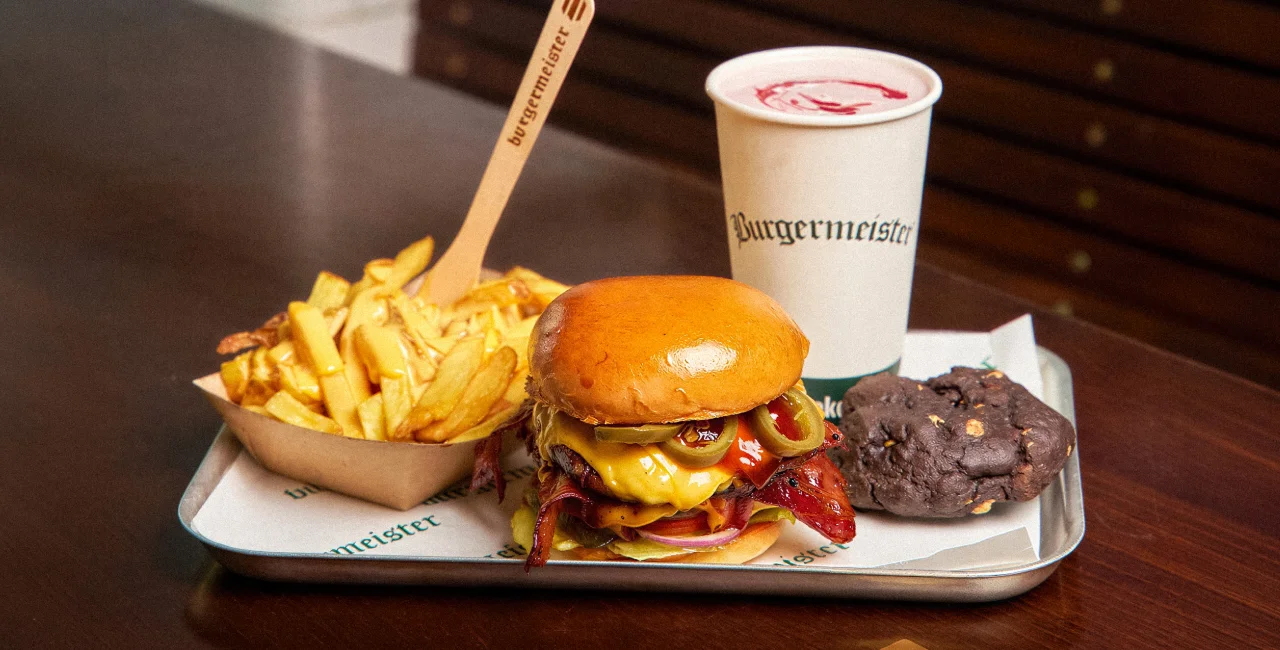
Burgermeister says its model combines its own production and bakery with an operating system that can be applied relatively easily in other markets. That allows the company to expand while maintaining its established concept of freshly prepared burgers and fries.
The brand says it will bring that same model to Prague.
Will Prague pay premium price?
Price will be another point to watch when Burgermeister arrives. In Berlin, its burgers currently range from around EUR 6 to EUR 11.60. That compares with Five Guys, where a cheeseburger in Prague costs CZK 275 and a full meal can approach CZK 500.
But Five Guys' experience suggests there is an appetite for premium fast food: an iDNES poll of more than 3,400 readers found that 28 percent said they were willing to pay more for a burger, while another 46 percent said they would pay more but not at a fast-food restaurant.
The question now is whether Burgermeister can take a bite out of the Czech burger market – and whether Prague’s appetite for premium fast food is strong enough to support a national rollout.