


 Reading time: 5 minutes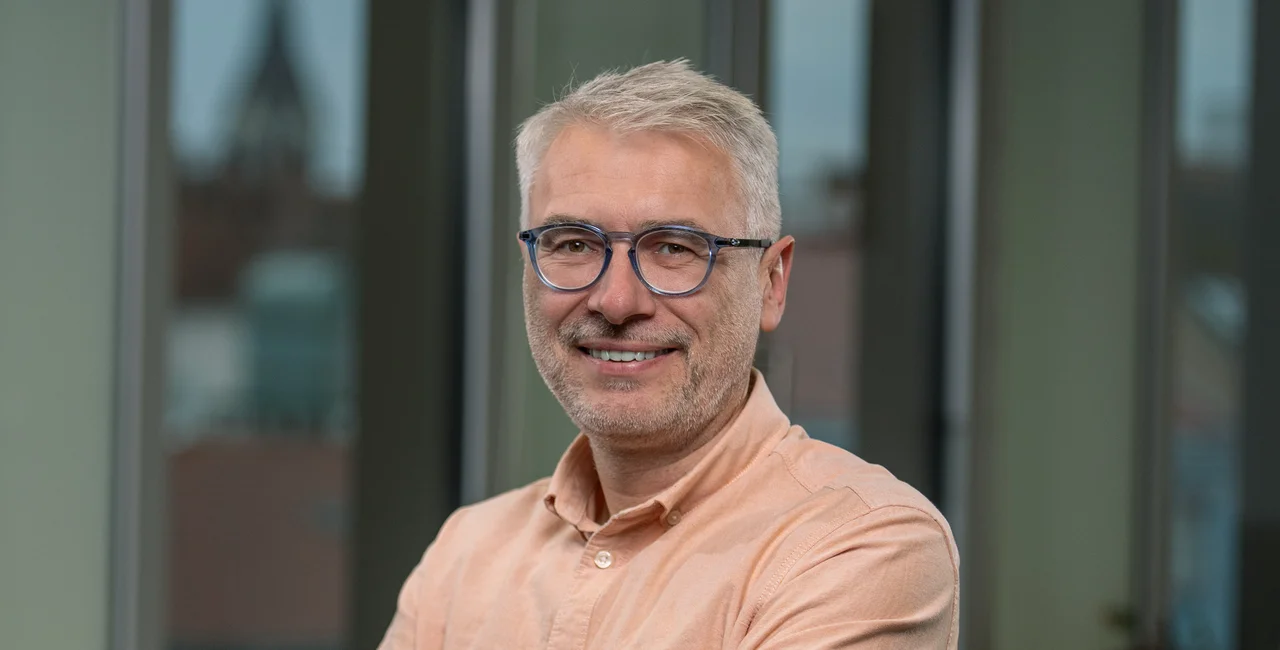

 Summary for: Meet the Czech automation pioneer questioning the urgency around AI
As companies across Czechia rush to adopt artificial intelligence, many are under pressure to cut costs and streamline operations. That often means navigating a crowded market of tools, unclear returns on investment, and internal systems that were never designed to work with AI.
For business leaders weighing where AI can actually deliver value, Zdeněk Kabátek, co-founder of technology consultancy Neoops, says the first priority should be improving how work is organized, before adding new technology.
Neoops implements robotic process automation, or RPA: software bots that imitate routine actions normally performed by employees, such as copying data between systems, processing invoices, or checking customer information. The company says this automation has saved clients millions of crowns. Expats.cz spoke with Kabátek about how businesses can combine AI with existing automation tools — and where each approach makes the most sense.

Why new technology won’t fix broken processes
Asked whether AI should replace every repetitive human task, Kabátek recalls the 1993 Czech science-fiction novel Továrna na zázraky ("The Factory of Miracles"). In the story, an engineer becomes the world’s richest man after designing a factory that can cheaply produce almost anything people desire.
The novel explores the unintended consequences of technology that promises to solve every human need. For Kabátek, it offers a warning to those who expect AI to solve every business problem.
"I can’t predict where AI is going," he admits. "But any effort to use AI to replace every human need could create serious problems."
When clients ask for AI productivity solutions, Kabátek first asks them to explain their goal, their existing processes, and the systems they use. This often reveals that the real problem is how the work is structured, rather than a lack of AI tools.
In many cases, he says, the client does not need a sophisticated AI system. It needs intelligent automation: a combination of clearly defined processes, software bots and, where useful, AI.
AI is the brain, and the robots are the hands
"For AI to be useful, it must be able to access a company’s data and communicate with its existing software systems," Kabátek says. "Many large organizations still use systems that cannot easily connect with modern AI tools."
Many businesses in Czechia still rely on older desktop programs and internal systems that were not built for AI. RPA bots can work with these programs in much the same way a human employee does — by opening windows, clicking buttons, copying information and filling in fields.
"In some cases, RPA alone might solve the problem. In others, we can combine AI and RPA to increase efficiency," Kabátek says.

One example is invoice processing. AI can read an invoice and extract information because it can interpret the document. An RPA bot can then enter that information into an older internal system that the AI cannot access directly.
Human employees are not removed from the process entirely. They continue to oversee the process, check unusual cases, validate results and make decisions when the software encounters something unexpected.
"AI is the brain and RPA is the hands," Kabátek adds.
AI has also expanded the range of tasks these bots can handle.
One Neoops client receives around 30,000 emails a month. AI sorts the messages into categories, and software bots then transfer the relevant information into the company’s internal systems.
However, as companies adopt more advanced systems designed to work directly with AI, Kabátek predicts that solutions based only on RPA will gradually become less common. Where does that leave Neoops?
"We will transform organically to implement AI workflow platforms that coordinate automated tasks across an entire organization, rather than within a single department," says Kabátek. "We’re already looking closely at these types of products."
Rejecting corporate structure in favor of direct impact
Kabátek’s preference for practical solutions over fashionable technology is closely connected to his own career. A chemical engineer with a Ph.D. in DNA analysis, he may seem like an unlikely specialist in automated business processes.
But in 1993, the native of a small village in the Liberec District was already using computers for scientific research, at a time when software skills were far less common. "I fell in love with programming," he says. Kabátek went on to hold senior IT roles at Czech and international companies, including a multi-year stint in Singapore.
He later sought management experience and became a team leader at a multinational corporation. The experience convinced him that rigid corporate hierarchies can stand in the way of innovation.
He recalls asking a visiting American boss whether his Prague-based team could help select the software they would be expected to implement. "The boss responded, ‘No, there is a different team for that. Any other questions?’"
Kabátek wanted a more integrated, hands-on role in supporting clients. That shift in mindset later shaped his work at Neoops, where the focus is on practical solutions rather than rigid structures.

From football pitch to founding a company
Following a short stint as a stay-at-home father, Kabátek connected with his future Neoops co-founder, Jan Rapala, through a mutual friend at a weekly football game. The pair were not complete strangers: both had previously worked on process-efficiency projects at Accenture.
Between goals and tackles, Rapala described the robotic process automation technology he wanted to introduce in Czechia and beyond. Produced by the British company Blue Prism, RPA was still largely unknown when Rapala began promoting its potential.
The technology automates repetitive, rule-based tasks such as entering invoice information or verifying customer identities.
"When Jan showed me how it works, I was like, man, that’s magic," Kabátek admits. He joined Neoops in 2014 as a co-owner and head of professional services.
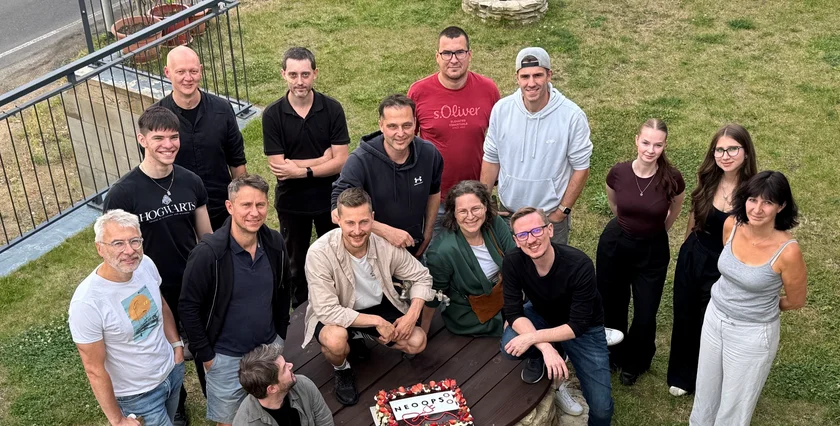
Neoops, founded in 2013, says it has made a profit every year and now serves 130 clients globally, including banks, insurers, utility companies and accountancy firms.
Kabátek is cautious about expanding the client base too quickly. Unlike the ambitious engineer in The Factory of Miracles, he is focused less on growth for its own sake and more on maintaining the trust of existing clients as their workflow needs evolve.
"As a smaller consultancy, we have the advantage of having genuinely personal relationships with our clients," Kabátek says. "They know that if the best solution is to buy a product we do not sell, we will tell them."