



 Reading time: 6 minutes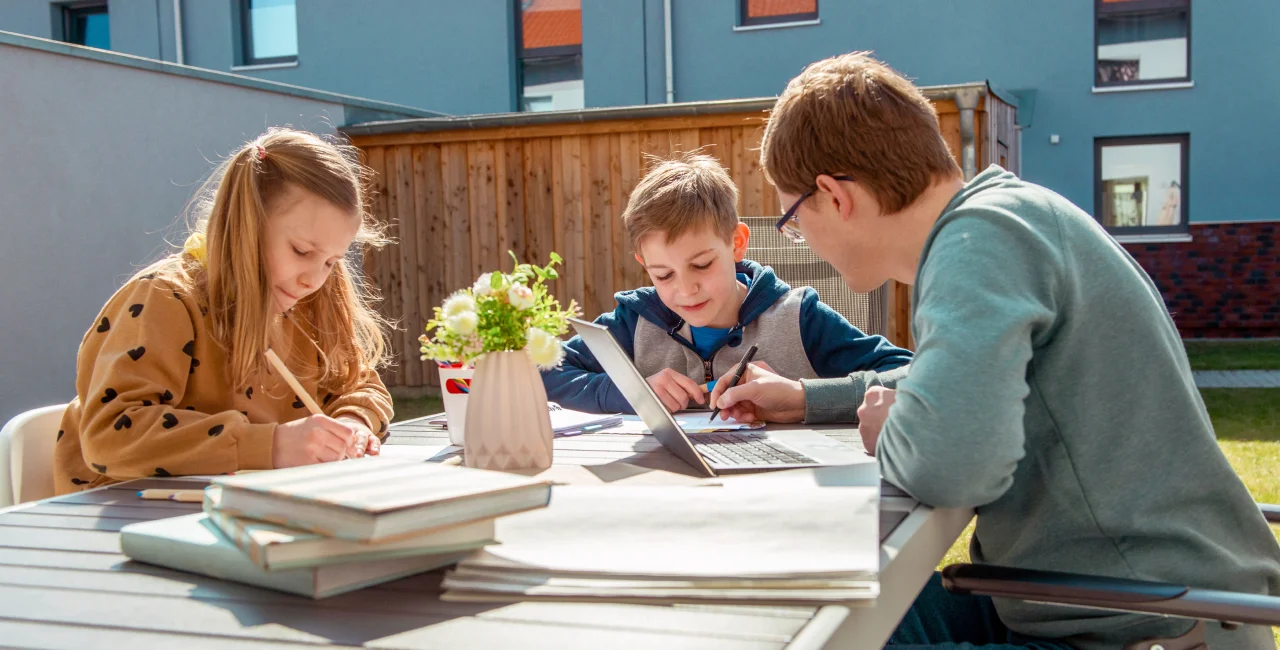

 Summary for: Homeschooling surges in Czechia: An expat parent's guide to the latest rules
Once considered a fairly niche choice, more than 7,500 children are now being homeschooled in Czechia, the highest number since this option was first introduced two decades ago, according to data from the Ministry of Education.
To put that in perspective, only 546 children took this path when it debuted in 2005. Yet, despite this massive growth, homeschoolers still represent a marginal slice of the student population – accounting for just 0.76 percent of all children in compulsory education.

For international families considering alternatives to the rigorous public education system, individuální vzdělávání – or individual education – can sound tempting.
But unlike the free-form version people often imagine from the UK or the US, homeschooling in Czechia is tightly regulated and comes with a lot of rules and paperwork. Understanding the ins and outs of how this system works here is essential before making any decisions.
Nationality not a factor
Individual education is available to children at the primary-school level, covering roughly grades 1 through 9 or ages 6 to 15. It was first allowed for lower primary in 2005 and extended to upper primary in the 2016/2017 school year. It is currently not an option for secondary-school students.
Nationality is not a factor, but families must meet the same strict conditions. The child must be officially enrolled in a Czech mainstream school, which is responsible for regularly assessing their academic progress while they are homeschooled. If your child fails to pass routine exams, they could be forced to return to the classroom.
Who can homeschool in Czechia?
- Primary school only: Restricted to grades 1–9 (ages 6–15): currently available at the secondary level.
- Equal access: The track is open to Czech citizens and foreign nationals equally.
- Residents (Over 90 days): If you hold a residence permit or registration, your child is bound by Czech compulsory school law and must use this official system.
- Short-stay visitors (Under 90 days): You fall outside the Czech jurisdiction and may use any global or online distance curriculum freely.
Specific reasons: Bullying or time abroad
Families cannot simply opt in. Authorities expect substantive justification, not simply a general preference for home education.
In practice, headteachers and counseling centers look for specific, serious reasons: these frequently include severe social friction or bullying within a peer group, an extraordinary sports or artistic workload, or instances where parents spend a significant amount of time working abroad.
What you need to apply
- Official enrollment: The child must first be enrolled in a mainstream Czech public or private school, which acts as the legal guarantor.
- A recognized "serious reason": The school director requires a valid justification (e.g., mental health/anxiety, severe bullying, parent working abroad, or elite sports/arts training schedules).
- Teacher credentials: Proof of education for the person teaching the child. Note: A high school graduation diploma (maturita) is required for grades 1–5; a university degree is required for grades 6–9.
- A formal PPP recommendation: A mandatory, pre-obtained assessment stamp from an official Czech pedagogical-psychological counseling center.
- The resource list: A declared list of the textbooks and learning materials you intend to use.
For families considering it seriously, the most important first step is to identify a school you can work with and have an honest conversation with the headteacher before submitting any paperwork. The relationship with the school will define much of your experience.
Parents must submit a written application with basic identification details, the requested period, and a detailed explanation of their reasons for homeschooling. The application must also outline how teaching will be organized and a description of the learning environment and safety conditions.

Applicants must provide proof of the educational qualifications of the person who will teach the child. A list of textbooks and materials is required. An assessment from a pedagogical and psychological counseling center is also mandatory and must be obtained in advance.
Approval is granted by the headteacher of the public school where the child will be officially enrolled, and that school will remain the legal guarantor during the homeschooling period. Schools have broad discretion to refuse applications.
Approved: What's next?
Once approved, the child remains legally enrolled at a local school, which is responsible for assessing the student twice a year, usually at the end of each semester. The school decides how to conduct this assessment, which can range from written tests to portfolios of work.
The Czech School Inspectorate (ČŠI) reports no systemic errors in how home education is managed, noting that success hinges entirely on clear communication and regular check-ins between the school and the parents.
The school is also expected to provide methodological support, including curriculum guidance and meetings with parents, although the level of support differs from school to school. Families typically cover most costs themselves, including learning materials and tutoring, while basic textbooks may be provided.

Once you're approved
- Twice-yearly exams: The child must return to the guarantor school at the end of each semester for mandatory academic evaluations.
- The language rule: You can teach at home in English or any other language, but all semester examinations are conducted strictly in Czech.
- Communication is key: The ČŠI reports no systemic errors in this framework, explicitly noting that success hinges entirely on regular communication and a good relationship with the school principal.
Community-based learning a growing trend
There is no single model for homeschooling in Czechia. Some families follow a structured curriculum closely aligned with the state syllabus. Others take a more flexible, child-led approach often described as “unschooling,” where learning is integrated into daily life rather than scheduled lessons.
Community-based learning is also a growing trend, with groups of families sharing teaching responsibilities and organizing joint activities. For expat families, this flexibility can help maintain a child’s first language while still meeting Czech assessment requirements and adapting learning to fit individual needs.
In fact, Stanislava Kratochvílová, founder of the educational support project Učit nebo neučit, notes that this adaptability often gives homeschooled children a distinct edge.
She observes that these students frequently display higher levels of media literacy and English proficiency than their peers in daily attendance, largely because their learning isn't confined to traditional classroom methods.
Growing number of Czechs turn to homeschooling
Czech Television reports that a growing number of families are turning to individual education due to mental health concerns such as anxiety, school refusal, or psychiatric difficulties. School psychologists and counselors have reported increasing demand for this route in recent years, rather than purely ideological reasons.
Libor Mikulášek, director of the Pedagogical and Psychological Counseling Center in Brno, confirms a distinct spike in these health-related requests.
While the legal framework does not change, the reason for applying can matter. Health-related motivations are often taken seriously during assessment, especially when supported by a report from a counseling center.
Practical considerations for families
For non-Czech families, language is one of the most important factors. Teaching at home can take place in any language, but examinations are always in Czech, so children need sufficient Czech skills to be assessed.
Not all schools are equally experienced with individual education plans. In Prague and larger cities, some schools are more familiar with the process and more open to it, while others may be less willing to take it on. Choosing the right school is often the first major step.
Support networks can also make a difference. The Asociace pro domácí vzdělávání is the main organization connecting homeschooling families in Czechia and offers practical guidance and peer support.
For parents exploring the option, community groups are often as important as official guidance. One active starting point is a Czech homeschooling Facebook group where families share experiences, legal updates, and school recommendations.
Sources: Ministry of Education data, the Czech School Inspectorate (ČŠI), and the Government Citizen Portal.