 Reading time: 3 minutes

 Summary for: Echoes of 1989 on Letná: Prague protest largest since Velvet Revolution
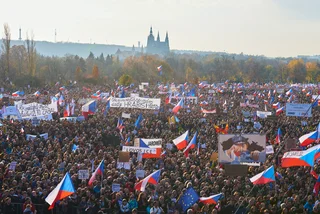
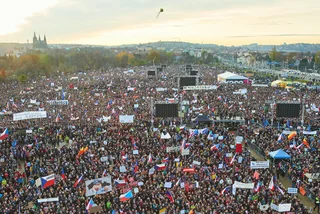
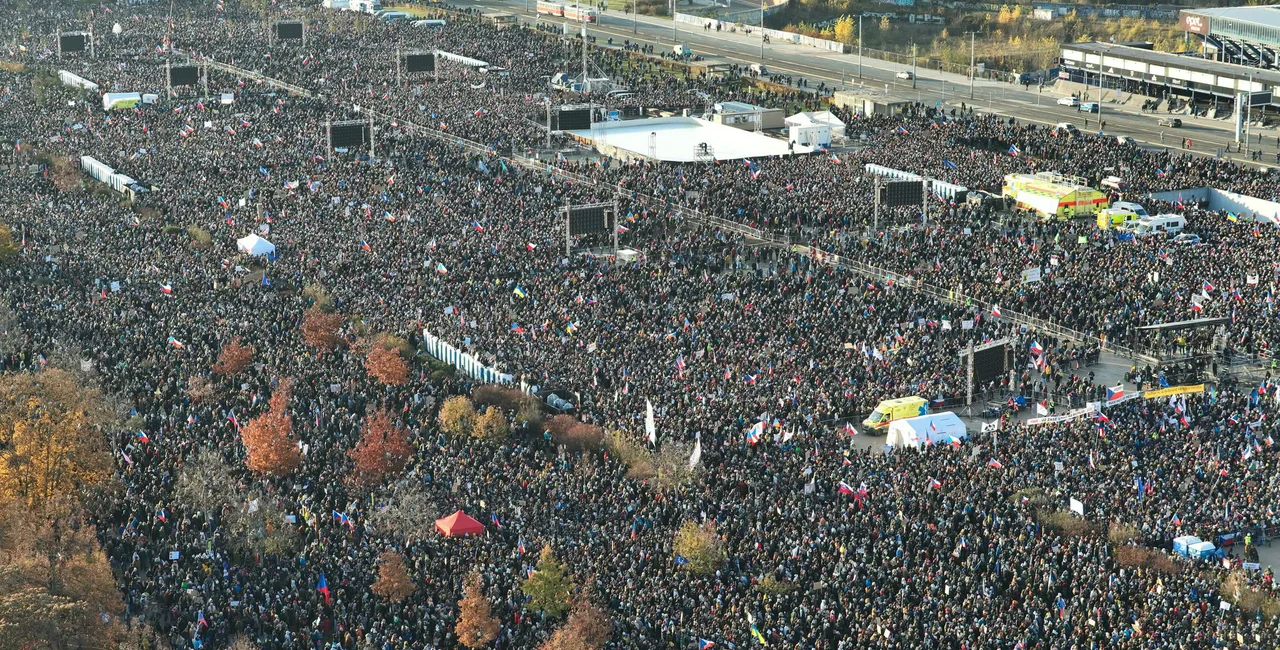
Czech flags, calls to protect independent institutions and a vast crowd on Letná: two days before the Velvet Revolution anniversary, Prague’s best-known protest ground is again the setting for a demonstration with potentially historic numbers.
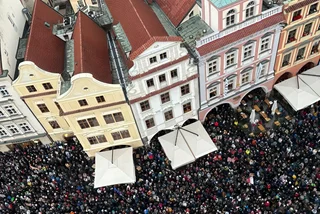
Between 350,000 and 450,000 people have attended Sunday’s rally in support of public-service media, according to Mikuláš Minář, chairman of organizing group Milion chvilek. If confirmed, that would make it the largest demonstration in Czechia since the revolutionary gatherings of late 1989.
That remains an organizer’s estimate. Prague police spokesperson Eva Kropáčová told Czech News Agency that police would not publish an estimated count, leaving the precise size, and any record claim, officially unverified.
Why hundreds of thousands are gathering
The protest’s name, “Letná against 4:36,” refers to the early-morning parliamentary vote on Oct. 24 that advanced legislation changing how Czech Television and Czech Radio are financed.
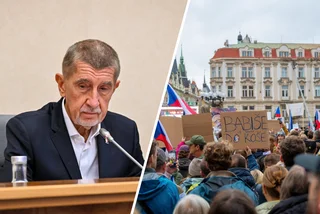
The proposal would replace license-fee funding with money from the state budget. Opponents fear this could make the broadcasters more vulnerable to political pressure. Prime Minister Andrej Babiš and other coalition politicians reject those concerns and deny seeking political control.
The bill has advanced to its second reading; it has not completed the legislative process.
For organizers, the dispute also concerns how the government exercises power. Minář criticized legislation being pushed through hurriedly, overnight and without sufficient discussion. Participants responded with chants of “We care,” while signs included “We won’t give up the media.”

Representatives of students, journalism, theater, business, churches and sport have been taking turns onstage. According to organizers, all designated sectors filled shortly after the rally began, with participants also standing in the adjoining park.
How today compares with Prague’s biggest protests
Letná carries an obvious historical association. On Nov. 25, 1989, approximately 750,000 people gathered there during the Velvet Revolution, according to the Institute for the Study of Totalitarian Regimes. More than half a million returned the following day.
Sunday’s estimated attendance remains below those revolutionary crowds, but its potential significance lies in the comparison with demonstrations since the fall of communism.
Contemporary reporting records the differing 2019 estimates, while police estimated approximately 70,000 at the September 2022 protest. Organizers put this March’s Letná rally at about a quarter of a million.
Even the lower end of today’s organizer estimate exceeds the widely reported figures for both major 2019 Letná rallies.

A familiar location, a different political moment
The proximity to Nov. 17 gives Sunday’s gathering additional resonance. In 1989, mass demonstrations helped end communist one-party rule. Today’s participants are protesting decisions by an elected government within a democratic system.
The connection is therefore one of place, timing and the defense of institutions—not an equivalence between the two political situations.
Public broadcasting also gives the anniversary a particular relevance: the argument concerns whether institutions intended to serve the public can retain sufficient independence from those holding power.
Minář has urged demonstrators to remain peaceful and report provocations to police or anti-conflict teams. By around 4:30 p.m., police had reported no major problems.
What organizers want next
Milion chvilek is demanding withdrawal of the media-funding bill, an apology for the overnight parliamentary proceedings and substantive public discussion about the broadcasters’ future.

Its demands extend to removing Tomio Okamura as parliamentary speaker and taking the Defense Ministry away from SPD. The group accuses SPD of undermining national security.
Minář has invited the government to a public debate at Švandovo divadlo on Dec. 2 at 7 p.m. He also announced a nationwide warning action for 4:36 p.m. that day.
For Prague residents, the immediate impact is transport disruption. Police say traffic on Milady Horákové and access to the Blanka tunnel will be significantly restricted as participants leave, although trams will continue running.
The demonstration was expected to finish around 4:30 p.m. Its final attendance and the government’s response remained unresolved at the time of writing. Reporting reflects information available at 4:30 p.m. on Nov. 15, while the demonstration was ongoing; we will update as more data is made available.