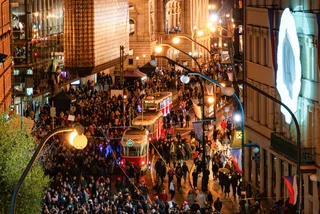
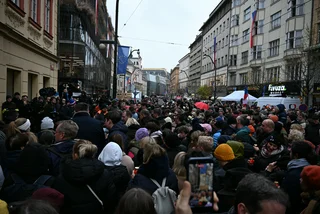
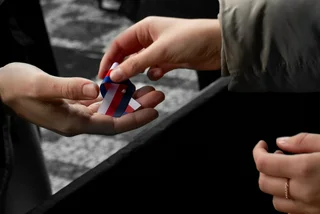
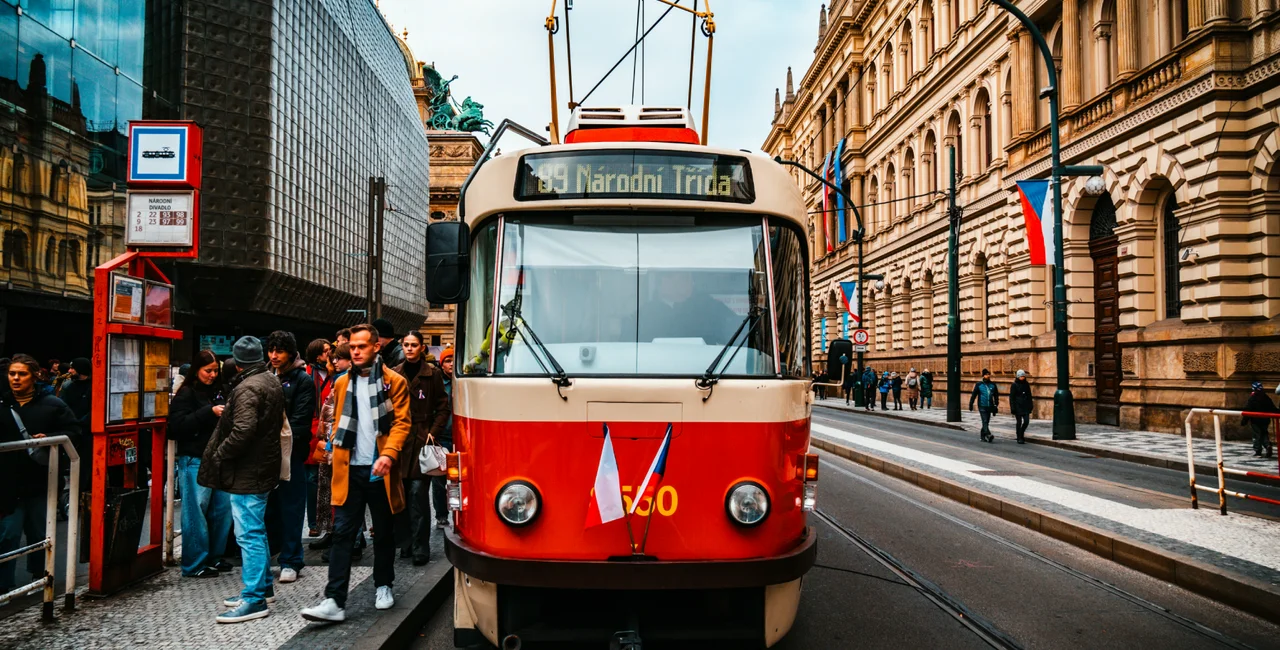
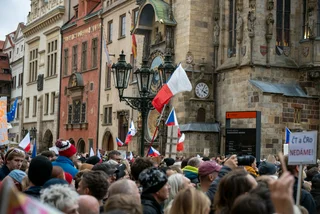
Candles gather beneath a plaque on Národní třída. Czech tricolors appear on coat lapels, and streets normally filled with trams become places for music, conversation and remembrance.
For newcomers, Nov. 17 can feel different from Czechia’s other public holidays. Its history is still within living memory, and its commemorations often connect the past with debates about democracy today.
PARTNER ARTICLE
This year, Nov. 17 falls on a Tuesday. Officially the Struggle for Freedom and Democracy Day and International Students’ Day, it remembers events in 1939 and 1989, separated by exactly 50 years.
There is also a practical difference from September and October’s holidays: large shops can stay open.
Two student protests, two different regimes
The earlier story begins on Oct. 28, 1939, when demonstrations marking Czechoslovakia’s founding challenged the Nazi occupation.
Medical student Jan Opletal was shot during the protests and died on Nov. 11. His funeral on Nov. 15 became another demonstration, providing the occupiers with a pretext for a sweeping crackdown.
On Nov. 17, the Nazis closed Czech universities, executed nine student representatives and sent approximately 1,200 students to Sachsenhausen concentration camp. In 1941, the date was designated International Students’ Day.
Fifty years later, a student commemoration of those events became a turning point in the struggle against communist rule.
On Nov. 17, 1989, police violently dispersed demonstrators on Prague’s Národní třída. The crackdown prompted public outrage, student and theater strikes, and increasingly large demonstrations.
The events set the Velvet Revolution in motion. A general strike followed on Nov. 27; parliament removed the Communist Party’s constitutionally guaranteed leading role on Nov. 29. Václav Havel was elected president on Dec. 29.
The holiday commemorates both student victims of Nazi persecution and the movement that ended communist rule, not simply a single protest or a change achieved overnight.
What’s closed, and what can stay open?
Supermarkets and shopping centers can remain open on Nov. 17. The holiday is not covered by the legislation requiring larger stores to close on selected dates, including Sept. 28 and Oct. 28. Individual retailers still set their own opening hours.
Schools and public offices will observe the public-holiday closure of normal teaching and routine administrative services. Most private offices will also close for the public holiday.
While no mandatory mandatory holiday retail closure applies, check individual branches to confirm. Many restaurants and cafés will also remain open, although opening hours remain venue-specific.
Several museums and galleries offer holiday openings, but admission arrangements differ.
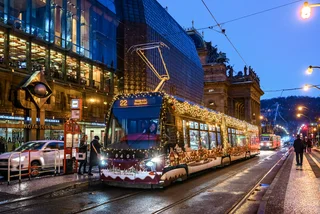
If you are heading into central Prague, check your route in the PID Lítačka app or on the DPP website before leaving. Street celebrations bring crowds, and a normal Tuesday journey may need adjusting.
How to spend Nov. 17 in Prague
Join the celebrations on Národní třída
Korzo Národní turns Národní and its surroundings into a festival of exhibitions, performances, discussions and family activities.
Outdoor exhibitions open from 8 a.m., with the main program running 10 a.m.–8 p.m. Most activities are free; some require reservations, while the brunch and Rock Café afterparty are ticketed.
A central moment comes at 5:11 p.m., when the traditional song Modlitba pro Martu (A Prayer for Marta) sounds from the balcony of Palác Metro. This year, it forms part of the window performance Dům všech, beginning at 5 p.m.
Organizers recommend arriving earlier with small children or strollers: the street becomes particularly crowded before the song. For a quieter act of remembrance, they suggest lighting a candle at the Václav Havel heart sculpture on náměstí Václava Havla.
See art without buying a ticket
The National Gallery Prague offers free admission to its listed collection exhibitions from 10 a.m.–6 p.m. on Nov. 17.
Options span medieval art, Old Masters and modern collections, including 1918–1938: First Republic and 1939–2021: The End of the Black-and-White Era.
The offer covers specified collection displays, not automatically every temporary exhibition.
Step inside a state palace
Lichtenštejn Palace on Kampa, at U Sovových mlýnů 4, opens free to visitors from 10 a.m.–6 p.m., with the last tour starting at 5 p.m.
Tours depart every 15 minutes, with no advance registration required. Visitors can explore state reception rooms and an exhibition of diplomatic gifts received by Czech prime ministers.
Across the river, Straka Academy will be illuminated in the colors of the Czech flag from 5–10 p.m.
Finish with music—or explore beyond Prague
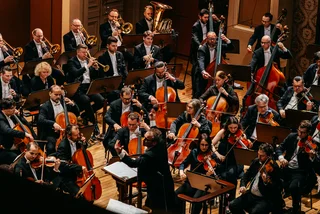
Koncert pro budoucnost brings music and public discussion to Wenceslas Square, offering another major gathering point during the holiday.
Consultant(e) en recrutement – Marché français
French
Prague • CZK 46,500 - 150,000
Teacher - IB Psychology
English
Prague
Outside the capital, Freedom Week runs through Nov. 17, connecting exhibitions, screenings, theater and discussions across Czechia. Check individual listings for dates, reservations and language accessibility.
And if you prefer machines to crowds, the National Technical Museum confirms that its Prague main building and Postal Museum will open on Nov. 17. Holiday opening does not, however, mean free admission.