The government is trying to lock the crown into the constitution as a hedge against the euro, and it doesn't have the votes; researchers are tracking a tick species that delivers an untreatable fever, spreading north into Czechia; and Michal Strnad just got another 140 billion crowns richer. Good morning, here's your headline mix.
This morning's top story
Crown, cash face long odds for consitution
Coalition leaders have drafted a constitutional amendment enshrining the Czech crown as the national currency and guaranteeing the right to pay with cash, with submission expected next week. The move doubles as insurance against the euro – if passed, the crown couldn't be abolished by a simple parliamentary majority, even though Czechia is treaty-bound to eventually adopt the common currency.
The math is the problem: The coalition holds 108 of the 120 votes needed, and TOP 09, STAN, the Pirates, and KDU-ČSL have all signaled they won't help make up the difference. Part of ODS is reportedly open to it, less out of principle than a genuine split among its MPs over the euro itself.
More top headlines
Strnad tops richest Czechs list again
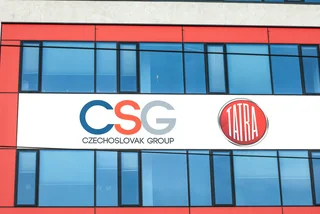
Michal Strnad, owner of the CSG arms group, remains Czechia's richest person for a second year running, with assets now put at CZK 470 billion by Euro magazine's annual ranking. Daniel Křetínský moved into second place at 432 billion, with the Kellner family third at 385 billion; both Strnad and Křetínský added well over 100 billion crowns apiece this year.
Bigger picture: The combined wealth of the top 100 hit CZK 4.069 trillion, up almost a fifth from last year, with 69 entrants on the list richer than before.
Ambassador pitches Texas to Czech business
New Washington ambassador Jakub Kulhánek says he sees his role as part-diplomat, part-dealmaker, and is steering Czech-U.S. relations toward business rather than politics alone. He singled out Texas and its startup scene as especially promising ground for Czech companies, alongside talk of a potential long-term Czech contract for U.S. liquefied gas that would bolster energy security.
Also on his radar: In the same interview, Kulhánek touched on Iranian threats against the Prague-based Radio Farda and strained U.S.-Canada relations.
A tick-borne fever is edging toward Czechia
Crimean-Congo hemorrhagic fever, spread mainly by Hyalomma ticks, has been turning up further north in Europe in recent years, with cases in Spain and Portugal and the ticks themselves confirmed in France. The species has already been found in Czechia – first on a horse near Nesyt pond in South Moravia in 2020 – though the virus itself hasn't appeared here yet. Scientists point to climate change allowing the ticks to survive in previously unsuitable regions.
Why it matters: The disease carries roughly a 30 percent mortality rate among hospitalized patients and has no vaccine or specific treatment, which is why researchers are pushing for closer tick surveillance now rather than after it arrives.
New you can use
Czech Railways adds seats as holidays end
Czech Railways is adding hundreds of extra seats on routes into Prague – especially from Moravia, South Bohemia, and eastern and western Bohemia – as the summer holidays wrap up this weekend, with reserve cars staged in Prague and Olomouc for last-minute reinforcement.
Book ahead anyway: Reservations are mandatory on the Ostrava–Prague line, and school routes suspended in July and August resume Sept. 1.
Pick & Mix
Free at a discount? Free admission days at state castles and chateaux on Aug. 30 and Sept. 27 have spawned a small resale market, with booked-out tickets popping up "at a discount" online. Culture Minister Oto Klempíř is warning the public not to pay for what was free to start with.
The art of Anna. The National Gallery in Prague opens its two big fall shows soon: "Anna Jagiellon, Queen on the Threshold of a New Era" on Oct. 23, and a Surrealist group retrospective on Nov. 26. Both run into 2027 and coincide with the gallery's 230th anniversary.
Klezmer kaput. A Třebíč Jewish culture festival canceled a klezmer band's set days before the show over the musicians' public criticism of the Israeli government, paying 80 percent of the agreed fee. The band calls it censorship; the organizer calls it staying out of geopolitics.