



 Reading time: 3 minutes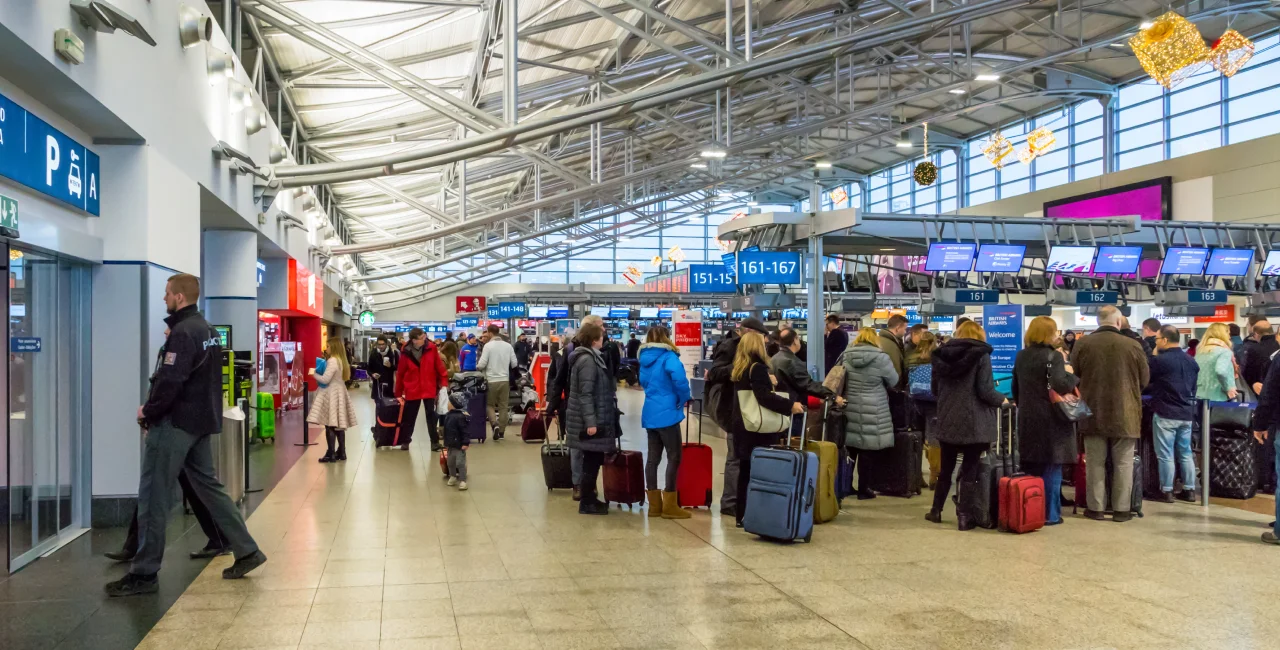

 Summary for: Prague Airport's biometric system debut marred by chaos, non-functioning kiosks
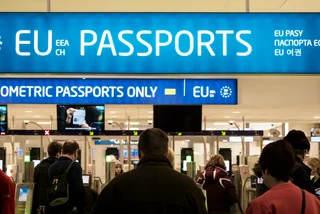
Long lines formed Sunday at Prague Airport as the EU rolled out its new Schengen area Entry-Exit system (EES), requiring the collection of fingerprints and facial biometrics from travelers from non-EU countries.
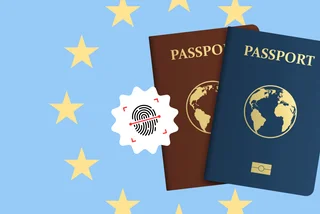
Czechia, along with Estonia and Luxembourg, is among the few EU nations that implemented full biometric checks from day one (Oct. 12). The EES replaces passport stamping for non-EU visitors with a digital system that records fingerprints, facial images, travel documents, and entry and exit dates at every crossing.
Travelers faced waits of up to 90 minutes at Prague Airport on Sunday as the European Union’s new biometric border system experienced significant technical problems on its first day of operation, British news outlet The Independent reports.
The Entry-Exit System (EES), which requires non-EU visitors to provide fingerprints and facial scans, launched on Oct. 12 across the Schengen area. However, dozens of self-service kiosks installed at Prague's Terminal 1 to process biometric data remained non-operational, forcing border staff to manually process all arriving passengers at desks.
Czechia is one of only three EU countries, along with Estonia and Luxembourg, to implement full biometric checks immediately, making Prague Airport the busiest hub applying the system from day one.
Non-functioning self-service kiosks not functioning’
According to The Independent, passengers arriving from London, Turkey, Egypt, and the United Arab Emirates experienced the longest delays.
"I just fought through the queues. No machines [kiosks were] operating," one passenger arriving from London told the news outlet.

Another passenger, traveling from Prague to the English city of Leeds, observed: “All machines are still switched off…for about an hour now. Fingers and eyes [biometrics] are being done at the passport control desk.”
Although dozens of border registration kiosks had been installed in Terminal 1 to collect biometrics before passport control, staff instead processed travelers at the desks, prompting queues lasting up to 90 minutes.
Just landed in Prague. The non-EU immigration queue stretches all the way across the airport. Never seen anything like it in all the years I’ve been coming here. Staff said a load of delayed flights arrived together. EU citizen channel was empty. Thanks, Nigel 😞 pic.twitter.com/J9J4HMnmnd
— Hamilton Nash (@HamiltonNashHR) October 12, 2025
Some passengers reported that Australian and British passport holders were eventually allowed to use the EU channel to reduce congestion.
Delays are expected
The EES replaces traditional passport stamping with digital records that capture fingerprints, facial images, and entry-exit dates for all non-EU nationals entering the Schengen area. The biometric data is stored in a centralized EU database and remains valid for three years.
Travel industry leaders had predicted disruptions. Michael O’Leary, CEO of Ryanair, told The Independent ahead of the launch: "I’m pretty certain it’s going to go wrong.” Travel associations advised passengers to allow three to four hours for entry procedures during the initial rollout period.
The Schengen area includes most EU countries plus Iceland, Norway, and Switzerland, and sees over 500 million crossings annually. All Schengen member states must implement the EES within 180 days of the Oct. 12 start date.
Travelling to Europe just got easier. Manual passport stamping will be largely replaced by the digital and fully automated Entry/Exit System, which – with some exceptions - will record non-EU nationals’ biometric data, data from the travel document & travel dates. pic.twitter.com/hR1CazvTi8
— Prague Airport (@PragueAirport) October 12, 2025
Speaking to Expats.cz last week, before Sunday's problems emerged, Czech Foreign Police spokesperson Josef Urban said Prague Airport had taken steps to prepare for the changes.
"Given the more complex border controls and expected higher amount of passengers, Prague Airport has boosted personnel. Navigation and signage at passport control have also been adjusted to make it easier for passengers to find out which passport counter to go to with their document," Urban said.
The airport's preparations appear to have focused on staffing and signage rather than ensuring the automated kiosks functioned properly.
Expats.cz reached out to Prague Airport and the Czech Foreign Police for further comment. Urban responded, cautioning against delays. "Prague Airport has launched announcements every 15 minutes informing passengers about the EES...expaining the border control process takes longer than usual."
Urban also tells us: better early than sorry. "We recommend that passengers arrive at the airport well in advance, ideally at least three hours before departure," he noted today.