Three in four Czechs have received wrong answers from AI, survey finds

Half of Czechs trust AI-generated information, but just 16 percent always check it, according to an Eset survey examining chatbot use.

Expats.cz Staff

Written by Expats.cz Staff Published on 02.11.2026 05:24:00 (updated on 02.11.2026) Reading time: 2 minutes
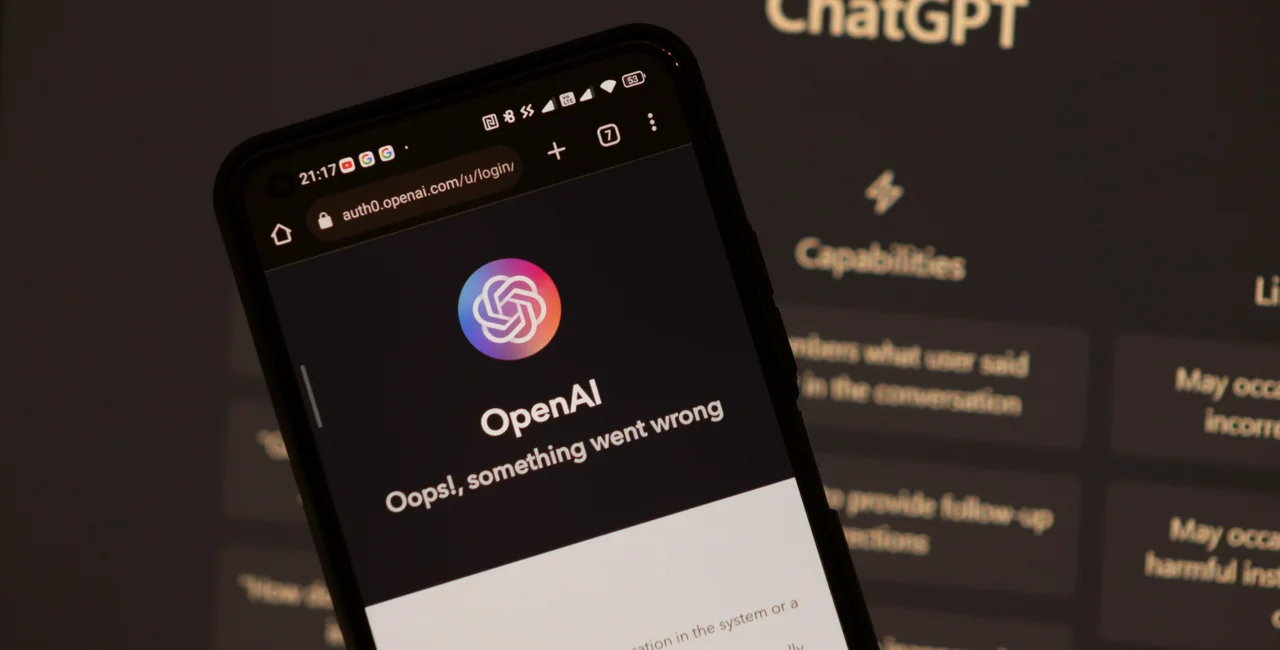
Three-quarters of Czechs say artificial intelligence tools have given them misleading or incorrect answers, yet half trust AI-generated information and only 16 percent always verify its accuracy.

The findings come from an October survey of 1,042 respondents conducted by cybersecurity company Eset. Most respondents already use tools such as ChatGPT, Copilot, Gemini or Claude, with adoption highest among younger people, Prague residents and those with higher levels of education.

The results point to a gap between people’s experience of AI mistakes and their willingness to rely on its answers, including when discussing health concerns and personal decisions.

Personal information enters the conversation

Searching for information, explaining complicated subjects, completing assignments and drafting text are among the most common uses of AI, according to the survey.

But conversations also extend into more sensitive territory. Around a third of respondents share photographs or videos with chatbots, while a quarter disclose health information.

That includes 13 percent who describe their mental health and related difficulties, and 12 percent who share medical reports or other health details.

Only half of respondents know that AI tools can supply links to nonexistent or potentially harmful websites, Eset said.

Jakub Tomanek, an analyst at the company, warned that malicious instructions hidden in online content could influence a chatbot’s response when it processes that material.

The risk becomes greater with agentic AI, which can carry out tasks with limited supervision, he said.

The survey also asked about fears surrounding AI-enabled fraud. Some 44 percent worry about misuse of their own voice or likeness, while 41 percent fear impersonation of a friend or relative.

Other concerns include fraudulent online stores and websites, as well as personalized phishing messages delivered through email or text.

Trust outpaces verification

Lukáš Benzl, director of the Czech Association for Artificial Intelligence, said users should understand that AI is not a database of verified facts. It generates probable answers from available data, which can sound convincing even when they are wrong.

FEATURED EMPLOYERS

He urged particular caution with information concerning health, finance or security, saying important claims should be checked against trustworthy sources.

Rejecting AI altogether is not the answer, Benzl added. Greater digital and AI literacy would help people recognize both the technology’s capabilities and the situations in which they cannot rely on it unconditionally.

Creative Dock CEO Gabriela Teissing said the findings also matter for employers introducing AI into their operations. Adoption is moving faster than people’s ability to critically assess the results, she argued.

Companies should teach employees when to verify outputs and how to recognize the technology’s limits, she said. AI’s value lies in saving time and improving efficiency, while responsibility for decisions remains with the people using it.

Did you like this article?

Czechia’s latest news

Read all the headlines
Want to see more from us? Select Expats.cz as a preferred source on Google.