 Reading time: 5 minutes

 Summary for: St. Martin’s Day 2026: Where to find goose, wine and Czech traditions
Before Christmas markets fill Czech squares, another seasonal celebration brings out the wine glasses. Restaurant menus turn to roast goose, winemakers introduce their latest vintage, and a Roman soldier on a white horse rides through town to announce the coming winter.
St. Martin’s Day falls on Wednesday, Nov. 11, this year, with celebrations extending into the following weekend. Prague’s program includes a procession across Charles Bridge, wine and goose on Náplavka, and a food festival at the National Agricultural Museum. In Moravia, Brno and Mikulov offer opportunities to celebrate closer to the vineyards.

Behind the festivities lies a combination of religious legend, agricultural custom and modern wine marketing. Understanding how those elements fit together makes the occasion more interesting, and helps explain why not every young wine is officially Svatomartinské.
A saint, some noisy geese and the end of the working year
Martin of Tours was a fourth-century Roman soldier who became a Christian bishop. His best-known legend concerns an act of generosity: encountering a poorly clothed beggar, he cut his cloak in two and shared it.
His feast day, Nov. 11, marks the date of his burial in Tours in 397. In Czech folk tradition, Martin arrives on a white horse, a reference to the first snow rather than a reliable weather forecast.

The goose comes with its own explanation. According to one legend, Martin was reluctant to become bishop and hid among geese, whose honking betrayed his whereabouts. Another says the birds interrupted his preaching. Both stories offer memorable explanations for their subsequent appearance on the dinner table.
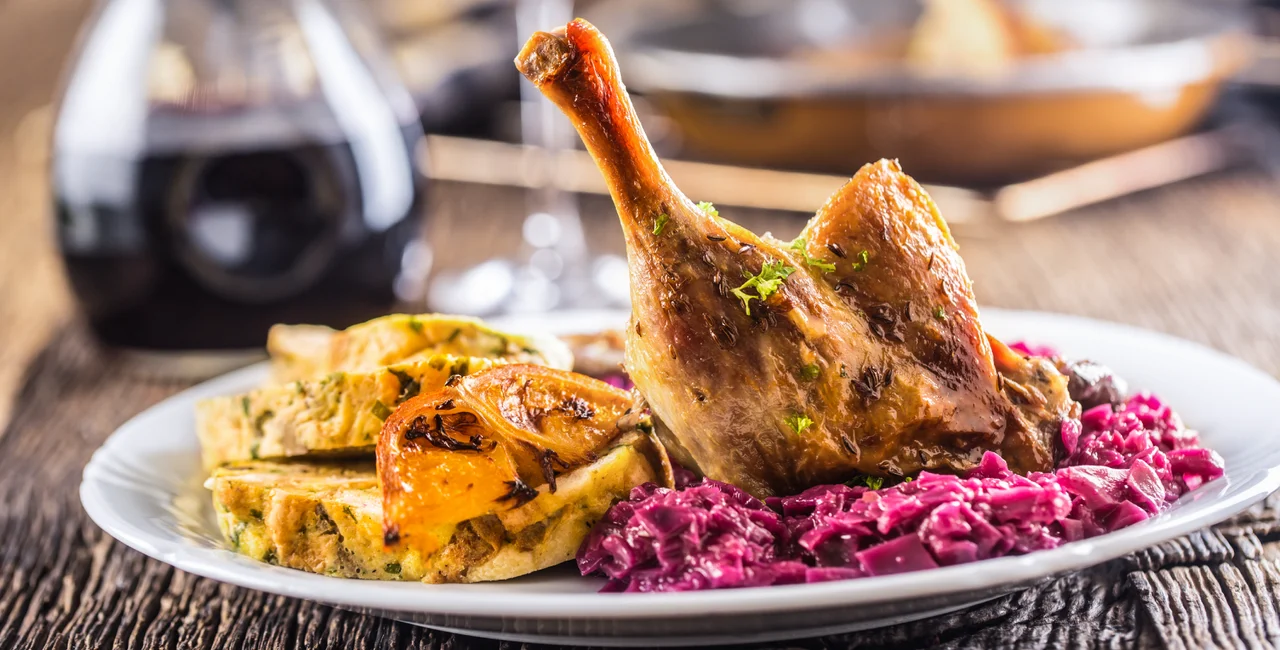
There was also a practical reason to eat goose in November: the birds had been fattened, the harvest was stored, and the busiest agricultural work was over. The Regional Museum in Mělník documents invitations to eat “Martin’s goose” as far back as the 15th century.
For farmworkers, the date could mark a more substantial change than the dinner menu. Annual service agreements ended, wages were paid, and workers either renewed their employment or sought another household. Municipal workers, including shepherds and night watchmen, also made agreements around this time.
The museum connects another surviving food tradition to those departures: crescent-shaped St. Martin’s pastries, sometimes called “horseshoes,” were given to departing servants as provisions for their journey. Filled with poppy seeds or fruit preserves, they offer a sweeter alternative to the goose-centered celebrations.
The young wine tradition has modern rules
Drinking the autumn’s new wine has historical roots, but the coordinated national celebration familiar today is considerably newer. The Czech Wine Fund launched its Svatomartinské brand in 2005.
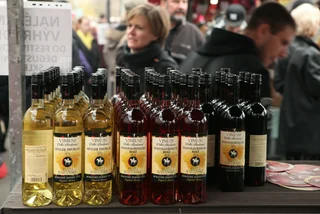
The name identifies wines from the current vintage made from specified early-ripening varieties. These include Müller Thurgau and Muškát moravský among the whites, and Modrý Portugal and Svatovavřinecké among the reds. Wines must pass an expert assessment to use the designation; look for the logo showing St. Martin on horseback.
There is a useful detail for anyone planning an early celebration this year: official Svatomartinské wines cannot go on sale before Nov. 11, 2026.

The rules allow an earlier Friday release when the feast falls on certain days of the week. This year’s Wednesday date means sales begin on the day itself, a requirement the Wine Fund has explicitly reminded producers and distributors to observe. Earlier goose dinners and young-wine events can still take place, but the protected label has its own timetable.
These are wines intended to be enjoyed young. Their appeal lies in freshness and fruit rather than extended aging, making the season an accessible introduction to Czech and Moravian producers.
Where to celebrate St. Martin’s Day in 2026
Charles Bridge, Prague: Nov. 11
For the most theatrical introduction, the Charles Bridge Museum’s procession starts at 11:11 a.m. beside the bridge’s 11th pier.
Eleven geese and their attendants lead the way, followed by Martin on a white horse, Roman soldiers and a wagon carrying symbolic snow. The procession crosses to Křižovnické náměstí, where a market offers roast goose, seasonal pastries and wine from Mělník. Free museum tours are also part of the celebrations.
Vyšehrad, Prague: Nov. 11
Families can join a different expression of the holiday at the St. Martin’s lantern procession. The afternoon program begins at 4 p.m., with the main procession scheduled for 5:30 p.m.
Bring your own lantern and mug. The route leads toward the Rotunda of St. Martin, connecting the celebration with one of Prague’s historic buildings dedicated to the saint. Admission is free.
Náplavka, Prague: Nov. 14
The Svatomartinské slavnosti a pečená husa festival returns to Rašínovo nábřeží from 10 a.m. to 8 p.m. Saturday, Nov. 14.
Expect Czech and Moravian wines, roast goose with dumplings and cabbage, and live music. A tasting set containing a glass, producer guide and pencil costs CZK 150; a glass alone costs CZK 100, and visitors may bring their own. Wine samples are charged separately at prices set by each producer.
Letná, Prague: Nov. 14
The National Agricultural Museum’s Letenská husa runs from 10 a.m. to 5 p.m. at Kostelní 44.
 English
 German
Alongside wine and seasonal food, the program explores traditional skills, including feather stripping and making pastry brushes. There are children’s activities and guided wine tastings, making this a particularly relevant setting for discovering the agricultural background to the feast.
Standard admission is CZK 100, reduced admission CZK 50. Guided tastings cost extra and have limited capacity; the culinary workshop is already fully booked.

Brno: Nov. 11
Brno’s Svatomartinský košt centers on náměstí Svobody, with Martin’s arrival scheduled for 10:45 a.m. and the ceremonial bottle opening at 11 a.m.
The program begins with a wine blessing at St. Thomas Church on Moravské náměstí at 10 a.m., followed by a procession to the square. Music and tastings continue through the day.
Advance packages available through Nov. 10 cost CZK 135 for five samples, CZK 210 for 10, or CZK 285 for 15, including a glass and electronic tasting credit.

Mikulov: Nov. 11–15
For a longer wine-country visit, Svatomartinský Mikulov combines markets, music, tastings and family activities.
Martin arrives in the main square at 11:05 a.m. Nov. 11, followed by the wine opening at 11:11 a.m. Markets continue Nov. 13–15, while Saturday’s program includes a goose procession with children’s folklore ensembles.
A separate wine-blessing event takes place in the castle’s Gajdoš Hall on Nov. 13 from 4 to 8 p.m., with admission costing CZK 300. The wider celebration includes free outdoor programming alongside separately priced activities.
Whether you choose a lantern procession, a tasting square or a restaurant table, the celebration rewards a little planning. Check the date of the individual event, distinguish tasting credit from admission, and reserve ahead if roast goose is the main reason for your visit.