 Reading time: 4 minutes
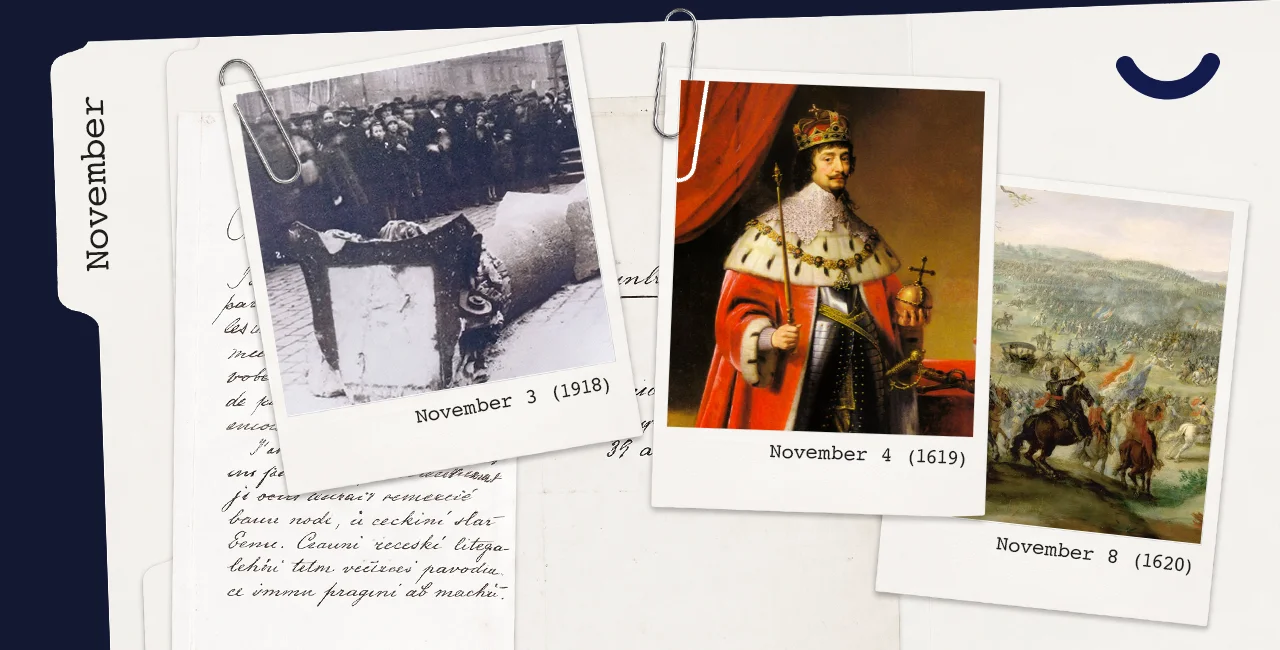

 Summary for: This week in Czech history: Prague vandalism, Winter Kings and White Mountains
It's one of Prague's key central squares, visited by thousands of tourists every day and rich with history, remembrance and ghosts from the past. But how much do you really know about what happened on Old Town Square?
In this week's history column, we take a look at a few events - from gruesome executions to civic-minded vandalism - that took place on and around the square.
November 3 (1918): Prague’s Marian Pillar is destroyed
Now clear that Prague was no longer an imperial capital and had been overlooked in favor of Vienna, a new national consciousness awakened among Czechs and Slovaks around the start of the 19th century.
Possibly also because education had been made compulsory across the Austro-Hungarian empire one generation earlier, clamors for self-determination kept getting louder. And when Czechoslovakia finally gained independence in 1918, some enterprising individuals set their nation-proud eyes on the Marian Pillar on Prague’s Old Town Square.
But what exactly was wrong with it?
Installed in 1648, the pillar was like all others a Plague Pillar – built to thank God for sparing the survivors of the Black Death. But the year is significant as it marks the Prague citizens' successful defense of the city against the invading Swedish forces and the end of the Thirty Years War.
As such, the pillar was also an imposing piece of Catholic propaganda, and a physical demonstration of the success of the Counter-Reformation and re-Catholicization of the Czech Lands.
Within a week of the proclamation of the new republic in 1918, František Sauer – a Czech writer and one of the best friends of Jaroslav Hašek, author of 'The Good Soldier Švejk' – stood on the square, looking at the massive statue of Jan Hus confronted by the Marian Pillar that stood for Viennese subjugation in the name of God.
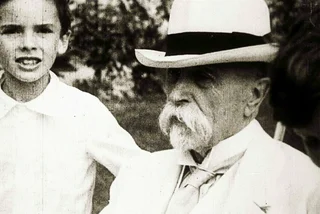
In a fit of nationalist passion, he had it brought down and destroyed - an act the new benevolent president Tomáš Garrigue Masaryk viewed as beautifully public-spirited.
The replica we see on the square today is from 2020.
November 4 (1619): The Winter King is crowned
Kings of Bohemia were always elected aristocratically, rather than democratically. But something interesting happened in 1618: the Czechs' choice was not respected.
In the early 17th century, the Hussites approached the Holy Roman Emperor, Rudolf II, and requested a "Letter of Majesty" (currently on display at the Waldstein Riding School as part of the Anne Jagiellon exhibition) confirming their religious freedoms in perpetuity.
An obliging soul in many respects, Rudolf II gave them the document, but overly excited Hussites then went on and murdered 14 Catholic monks in Prague's New Town, at the monastery today located next to Café Truhlárna.

Chaos ensued, Hussites defeated the army, marched to the Prague Castle and forced the abdication of Rudolf II, who then continued to live at the Castle on a public pension, surrounded by his art collection and pet lion and tiger. Czechs got his brother Matyáš to become king instead, who himself chose as his own successor a Catholic king from Austria. The Czechs, on the other hand, elected Frederick V of the Palatinate, a Protestant king from Germany.
Arriving at the Prague Castle in 1618, the Catholic king’s advisors were subjected to the renowned Czech welcome treatment and thrown out the window. This was the Third Defenestration of Prague and marked the start of the Thirty Years War.
In November 1619, Frederick V of the Palatinate was crowned by the Czechs and became known as the Winter King because his unrecognized reign lasted only a fleeting winter until…
November 8 (1620): The Battle of White Mountain seals the Hussite fate
The Battle of White Mountain rounds off the short period following the Third Defenestration of Prague. At the time, White Mountain was miles outside of Prague; today, tram 22 will take you there.

Before the battle, the Hussites wrote to a German king promising him the Kingdom of Bohemia in exchange for military assistance. This appeared to work so well that they replicated the idea a few more times. Eventually, all the different German kings spoke to each other and realized the Hussites were taking them for a ride.
The Hussites’ strategy for the Battle of White Mountain relied on keeping the Spanish Catholic reinforcements away – a task that befell on the King of Saxony, one of those who had been lied to by the Hussites and who, therefore, reneged on his promise. The Spanish arrived at the battle, and after a short and intensely bloody four hours, the Hussites lost.
Today, white crosses can be seen on the ground of Old Town Square, right next to the Old Town Hall. It is considered bad luck to walk on them, as they mark the spot where the 27 Hussite leaders were executed after the Battle of White Mountain.
Their execution lasted four hours, requiring a total of four swords, and was carried out by Jan Mydlář, a medically trained executioner who was famous across Europe for not using a chopping block. Instead, the condemned were simply asked to stand in front of him and wait for a single fatal blow.