 Reading time: 6 minutes

 Summary for: Meet the theater troupe adapting Czechs' ‘untranslatable’ cultural gem into English
Many portray him as some kind of Czech Leonardo da Vinci, a Prague-born Michelangelo, a Bohemian Renaissance man, jack of all trades and genius of incomparable depth and innumerable talents; a man, a mind and a myth famously voted by the public as the greatest of all Czechs who ever lived.
And yet, the question lingers. Who, exactly, was Jára Cimrman?
A Czech cultural treasure
“If you want to understand anything about Czech culture, you have to understand Cimrman,” Brian tells me as we chat in the café opposite the Jára Cimrman Theater in Prague’s Žižkov district, a short walk away from the Lipanská or Viktoria Žižkov tram stops.
This is what Brian’s (now ex-) Czech girlfriend Emília Machalová told him more than 12 years ago. And this is what he would repeat today to anyone asking about the omnipotent significance of Jára Cimrman in Czech culture, history and theatrical lore.
Trying to pinpoint what exactly makes Cimrman so uniquely Czech is no easy task, Brian admits, saying that many people tend to draw a comparison with what the Monty Pythons represent and stand for in English culture.
“It’s a mixture of things, it’s extremely surreal, rooted in a deep knowledge of Czech literature and history, based on a lot of word plays and double entendres,” Brian says.
The Cimrman multiverse
Scientist and researcher, inventor, playwright, sportsman, mathematician, utter genius and self-taught gynecologist: Cimrman is, first and foremost, the quintessential Czech polymath; he is, secondly, a complete fiction. Cimrman doesn’t exist, yet Cimrman is everywhere, at least within the borders of his native country where he has risen to the cult status of cultural icon, the very personification of the Czech spirit.

Cimrman the myth was born in the mid-1960s on the Czechoslovak airwaves of a “live broadcast” issued from a fictional Prague pub, a unique experiment where mystification, pseudo-science and humor intertwined to confuse listeners and baffle their understanding of what’s real, what’s made up, or what lies on the edge of reality and fiction.
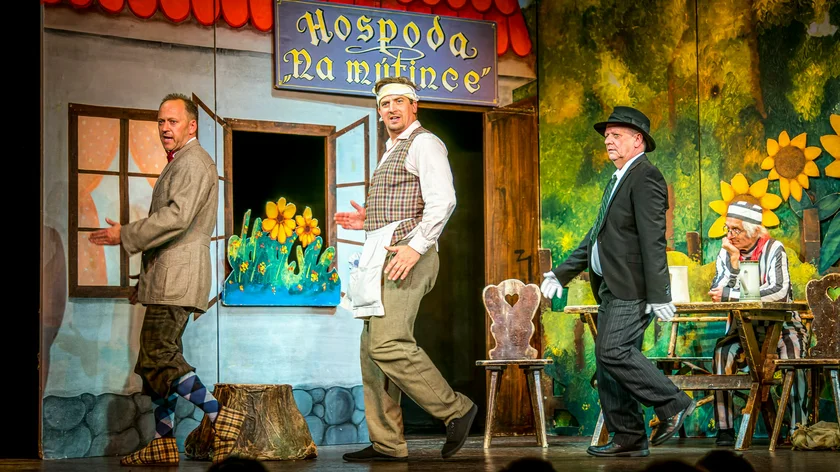
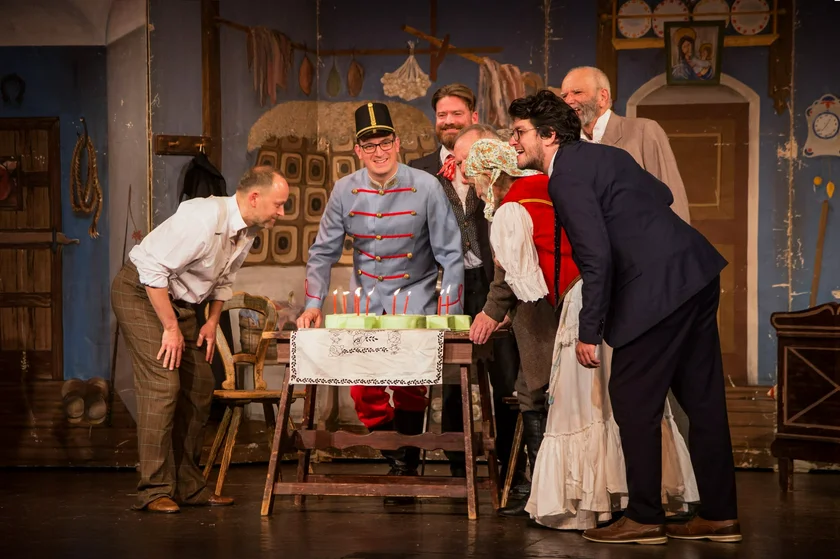

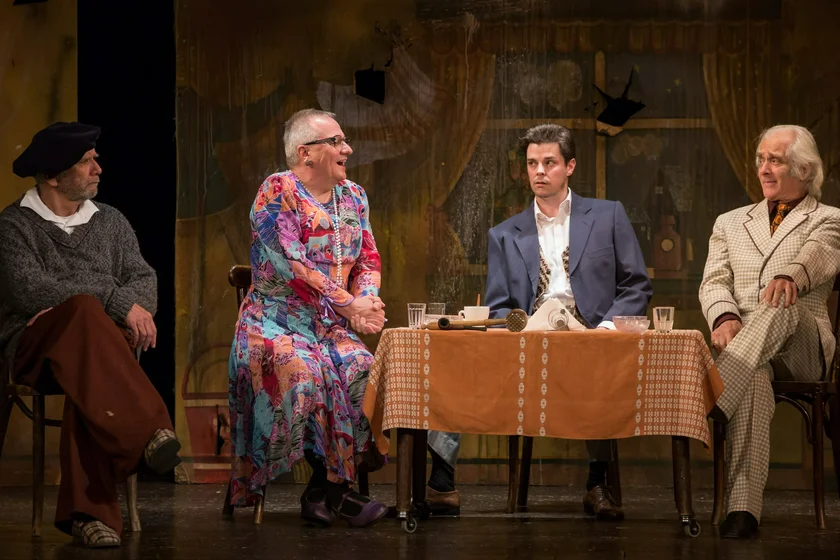
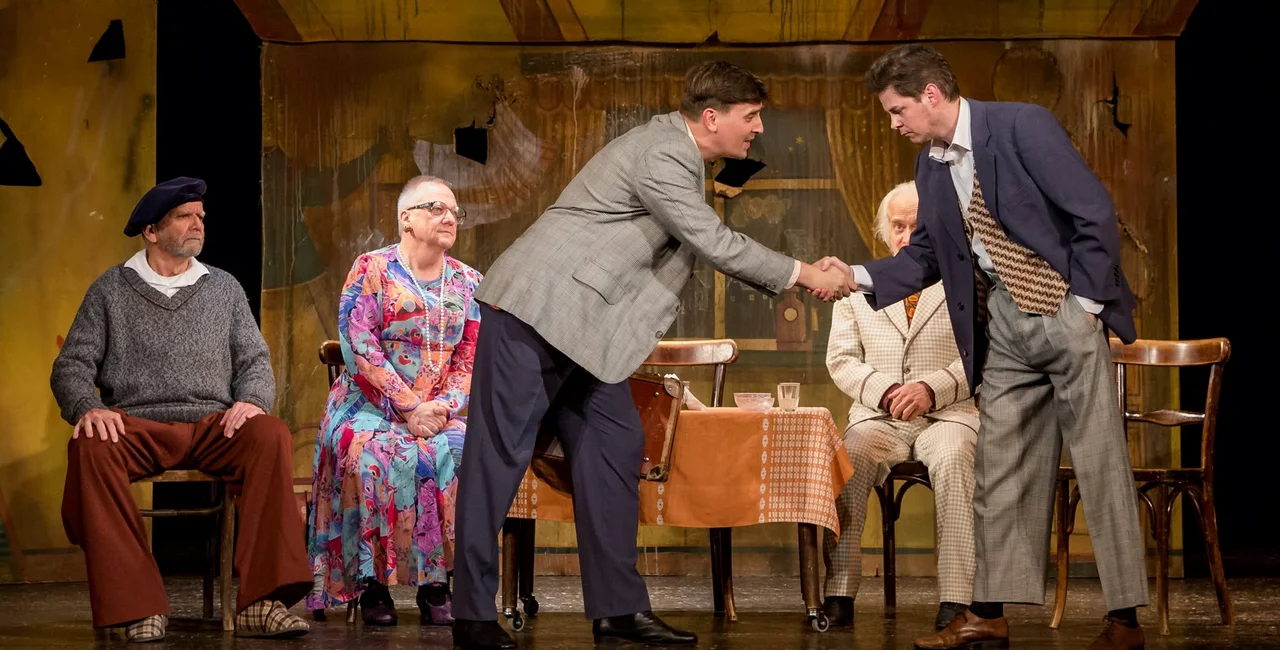
Out of the initiative of Jiří Šebánek, who teamed up with Miloň Čepelka, Ladislav Smoljak and of course Zdeněk Svěrák, the Jára Cimrman Theater was born shortly after. Written by Svěrák, The Act became the first play of what would, over years and decades, eventually become the extensive repertoire of the Cimrman multiverse.
Arguably not the most accessible of all its plays, it was for an English-language performance of The Act that we visited the Jára Cimrman Theater (Žižkovské divadlo Járy Cimrmana) earlier this month.
“People usually need a more gradual introduction to Cimrman before coming to watch ‘The Act’”, Brian, who goes by the stage name Ben Bradshaw, explains. “I love ‘The Stand-In’, it’s the most accessible, or ‘The Conquest of the North Pole’ as well.”
We need to talk about Jára
It was back in 2013 that Brian and his then-partner Emília set out to translate and adapt some of Cimrman’s plays for non-Czech speakers.

“A lot of people think Cimrman cannot and shouldn’t be translated,” Brian says, suggesting part of this resistance stems from a protective sense of national pride. “To this day, people come to our show and sit in the front row almost as if they had a clipboard to tick off whether the jokes work or not, almost as if saying ‘come on, I dare you to make me laugh.’”
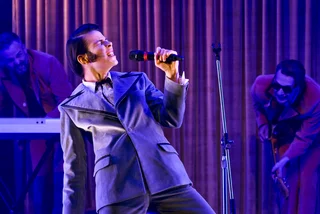
Convincing Svěrák and other skeptics to bring the Czechest of all Czechs to non-Czech audiences was not easy, yet a rehearsed-reading of The Stand-In with English actors from the Abbey Theatre, St. Albans was the breakthrough that started it all.
“When I showed Svěrák the tape and he saw that people were laughing at all the right places, that was it,” Brian tells us, reminding of Svěrák's positive and cautious vote of confidence: "Krok za krokem' ('step by step')", he agreed. Svěrák’s own daughter Hanka Jelínková, an English teacher, was brought on board to scrutinize the translation work, with the constant and rigorous goal of safeguarding the inherent ‘Czechness’ of the text, language and references.
“We try very hard to keep the word plays and maintain the Czech spirit as much as we can,” Brian says, also explaining how they keep the many Czech cultural and historical references that non-Czech may not be familiar with. “It’s kind of like scaffolding, we lay down the idea at the start, explain what it is, then mention it again further along, so that when we get to the actual joke, the audience gets it.”
Another difference between the Czech and English-language shows is the interpretation. “Czech actors tend to act in a flat or neutral way, the main aim being to focus on the words and the language. We approached it quite differently, we started as six actors who wanted to act and interpret, so we did. Svěrák does tend to say that we act too much,” he smiles.

Spreading the word
The Cimrman English Theatre (CET) has now been going on for more than ten years, today holding two monthly shows out of a curated repertoire of six translated plays performed by a rotating cast of actors on the stage of the historic Jára Cimrman Theater in Žižkov. All the performances have English surtitles to accommodate English speakers of all levels.
Every single performance starts with a ‘Seminar about the Life and Work of the Genius Jára Cimrman’ – short, informative and humorous speeches that introduce the audience to the character, weaving themes that will be developed later in the play – followed by the play itself.
“There is an audience for it, many people still haven’t heard of Cimrman or know what he’s about,” Brian tells us. “Our shows are intended for both foreigners and Czechs, younger generations, people from their 20s to their mid-40s, essentially Czechs who as kids used to listen to Cimrman audio tapes in the car every weekend on the way to the family chata. Many know the Czech versions by heart but, for example, have non-Czech partners whom they want to introduce the ‘Cimrman phenomenon’ to”.
A testament to Cimrman’s universal appeal, Brian and the rest of the CET troupe went on tour in the U.S. in 2017. “People there knew nothing about Cimrman or what to expect, but they loved it. It just shows how good the humor and the original material are, and that the plays reveal attitudes and characters which we can recognize in everyone,” Brian tells us.
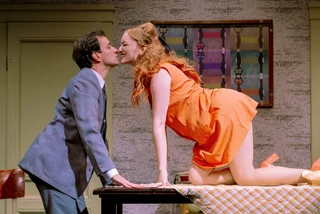
Although they are the only authorized Cimrman translations, they have yet to be published, so a visit to the Žižkov theater is for now the only way to enter the absurdist world of the quintessential Czech.

“Our producer keeps telling us not to do any new plays. But I would like to do a seventh. Lucky seven, that’s a good number, isn’t it?” he asks rhetorically. “Just one more. We’ll see what happens. We’ve been doing this for over ten years ago, I just hope we keep going.”